Tiny astronauts, outsized suspicions
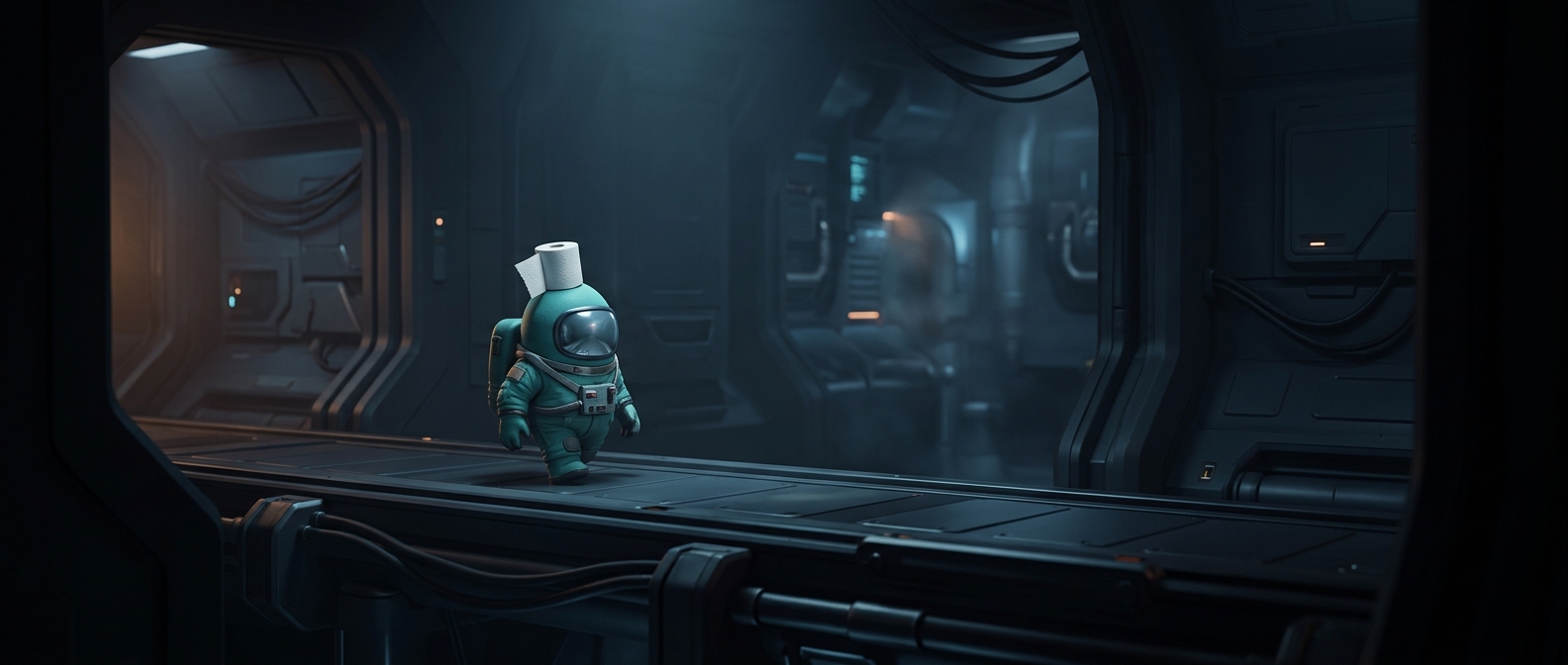
In Among Us, players investigate a sabotage-prone spaceship while trying to work out which crewmates are secretly impostors. The characters are deliberately simple to read: small, rounded figures whose colors and accessories remain recognizable as players move through rooms or gather for a discussion.
That simplicity gives hats and outfits room to do their job. A toilet-paper hat is easy to spot on a compact character, and a costume can make one crewmate memorable without changing the basic shape everyone is tracking.
Dressing up without changing the stakes
These accessories are cosmetic: they alter a character’s appearance, not the central task of watching behavior and judging competing accusations. That separation matters in a social-deduction game, where an outfit can become part of a player’s identity in the room but is not evidence of guilt.
The result is a useful contrast. Players may be debating who sabotaged the ship while staring at a teammate dressed like a walking joke. The silliness softens the presentation, but it also makes the serious part more vivid: the game asks players to suspect one another even when everyone looks a little ridiculous.