Why the Bike Stops at the Door
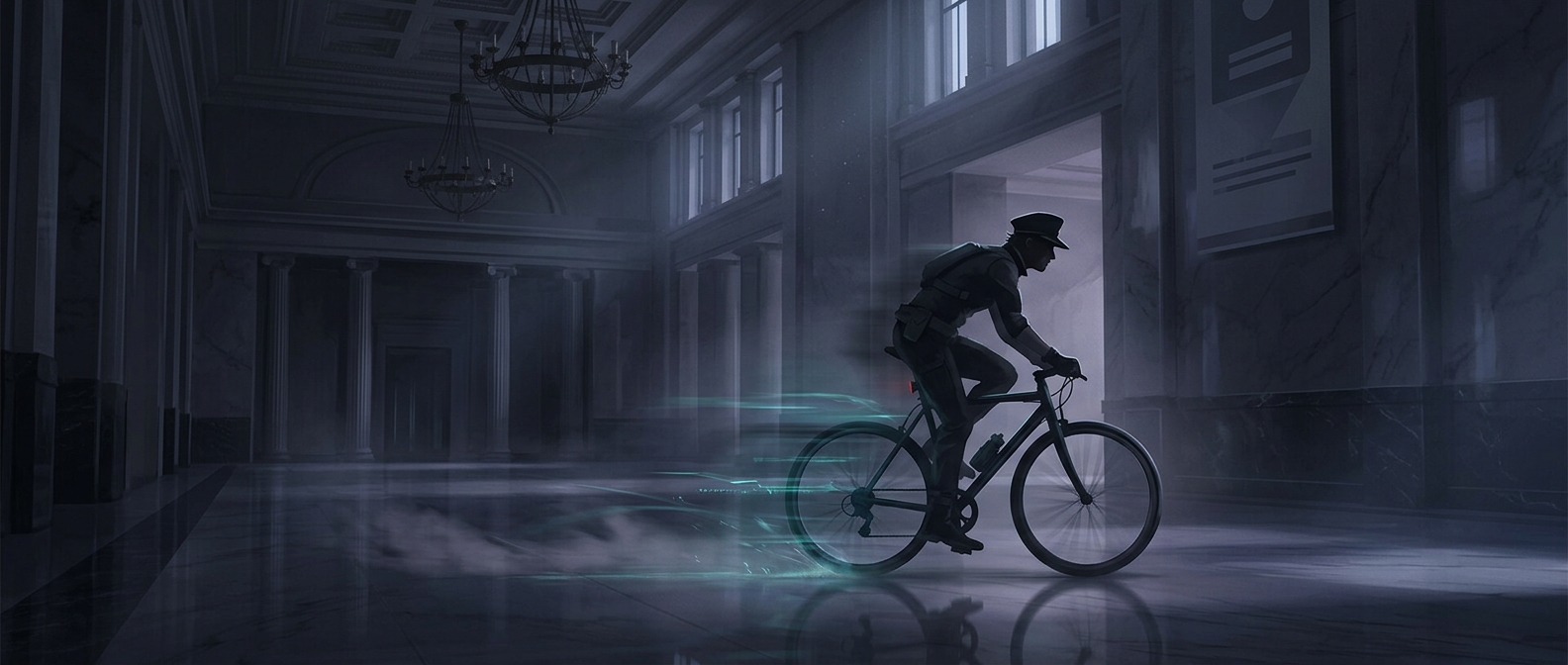
A Pokémon bike is more than a different-looking way to walk: it changes how quickly the player moves through the map. On long outdoor routes, that speed makes travel less of a slog. In a small shop or house, the same speed would be awkward. A few steps could carry the player past a person, doorway, or counter before they had a chance to interact.
So interiors become a simple boundary between two kinds of movement. Outside, the bike helps cover distance; indoors, the game returns the player to ordinary walking, which makes narrow rooms easier to navigate and people easier to approach. The unseen character’s reminder turns that rule into an in-world instruction rather than leaving the player to wonder why the bike stopped working.
A Small Rule That Keeps Rooms Playable
The restriction also gives indoor spaces a consistent feel. Shops, houses, and other compact rooms are designed around deliberate movement and face-to-face interactions, not fast travel. Letting the bike work there would add little convenience while making those encounters harder to control.
It is a modest design choice, but it does useful work: the player can move quickly across a route, then slow down automatically when the game shifts to a place where careful positioning matters. The bike’s abrupt stop is a reminder that Pokémon maps are built for different rhythms, not just different scenery.