A household pot becomes a tiny treasure chest
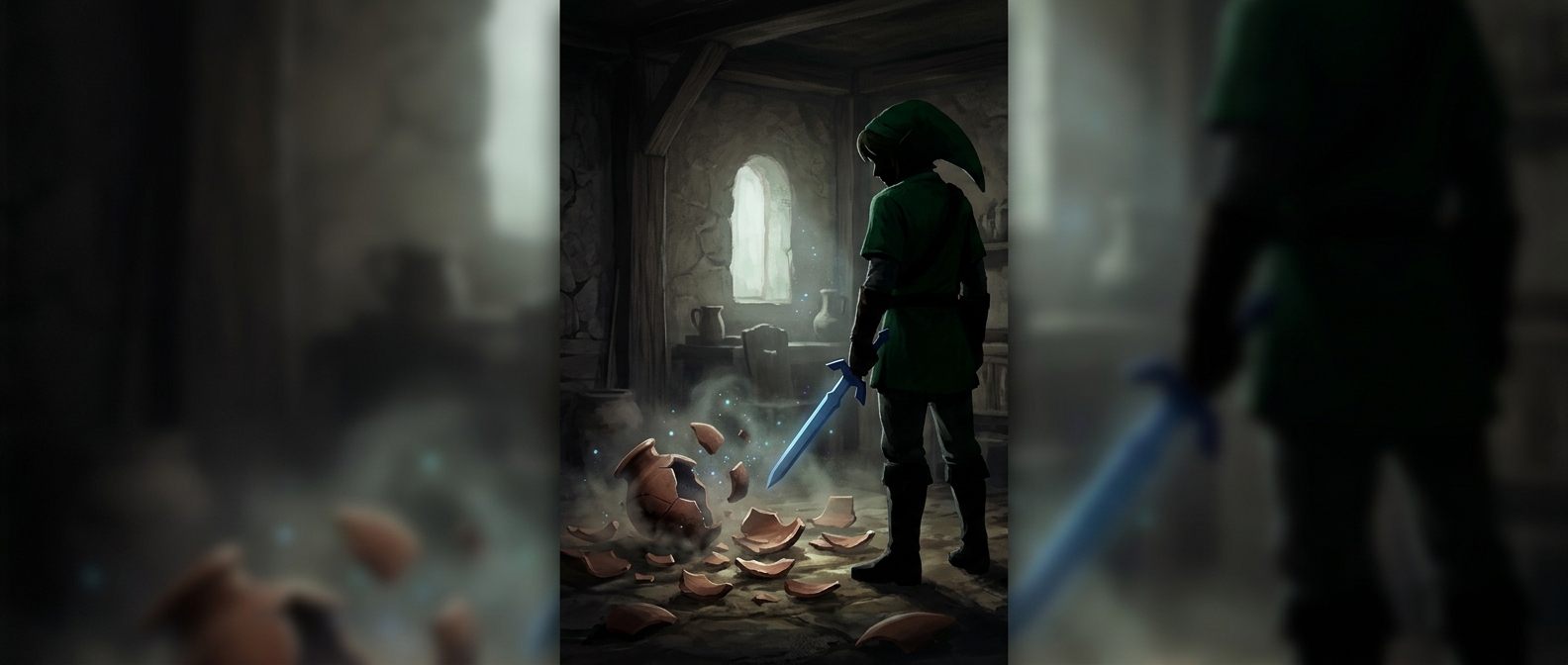
In many The Legend of Zelda games, a pot is more than decoration: it is a breakable container that may hold rupees, hearts, or other useful items. Link can lift and throw one, or smash it with a weapon, turning a quiet room into a quick search for supplies. The reward is uncertain, but the action is simple and satisfying: break the object, see what spills out, keep moving.
Why the game makes destruction feel useful
Pots help teach the game’s basic logic through the environment rather than a tutorial. If a cracked jar can hide a prize, then other ordinary-looking objects may be worth examining too. That nudges players to experiment, and the small chance of finding a rupee gives them a reason to check corners and rooms they might otherwise hurry through.
The breakable containers also fit the series’ rhythm. Exploring can leave Link short on health or money; a pot offers a fast, low-stakes chance to replenish either. It is a compact reward loop—curiosity, a quick action, a possible payoff—that makes wandering feel active without requiring a major battle or puzzle.
The joke is in the mismatch
That useful design choice creates an amusing contrast. Link is framed as a hero on a mission, yet the game may let him enter someone’s home, wreck the furnishings, and leave with the household currency. In many installments, the act carries little or no social consequence, so players can treat it as routine scavenging rather than a serious moral choice.
The pots are therefore both practical game objects and a lasting joke about heroic priorities: when a reward might be inside, even someone else’s crockery becomes part of the adventure.