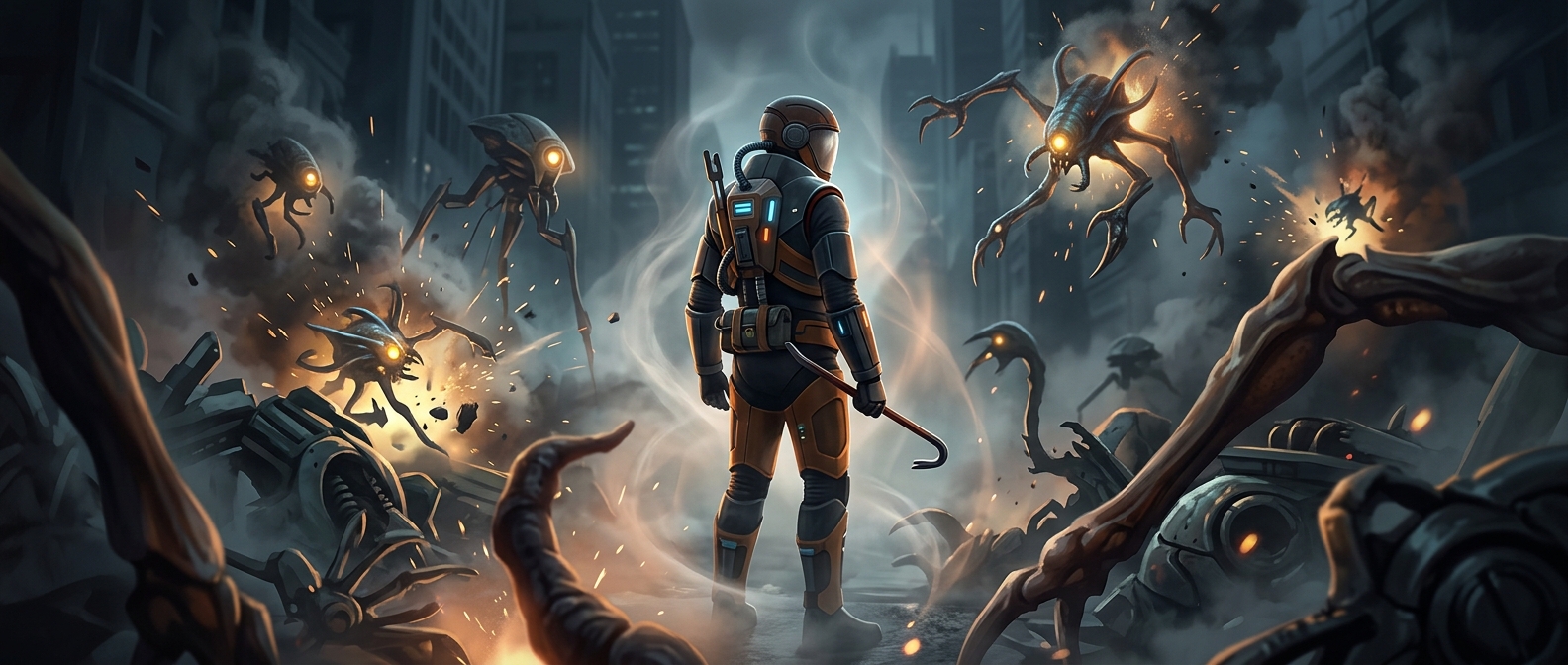
A hero-shaped space in the story
Gordon Freeman’s silence is a design choice that keeps the player’s point of view at the center of Half-Life. In a first-person game, the world arrives through the character’s eyes; giving that character spoken lines would add a voice and personality the player can’t control. By leaving Gordon mute, the games let players imagine their own reactions without interrupting the action with dialogue scenes.
But silence does not make Gordon a blank slate. He is a physicist whose actions drive a tightly scripted story, and the people around him treat him as a recognizable person with a history and a role to play.
The world speaks for him
Other characters explain plans, warn of danger, and respond to what Gordon does. That creates an unusual rhythm: Gordon never answers, yet conversations continue as though he has. The player supplies the missing half of each exchange, while the game supplies the consequences—whether that means following someone’s instructions, escaping a threat, or fighting back.
This approach also helps keep the camera inside the action. Instead of cutting away to show Gordon talking, the game can leave the player looking at the person addressing him or at the danger unfolding nearby. The story moves through the same space the player is navigating.
Silence is not choice
The tradeoff is that Gordon’s quietness can suggest more freedom than the story actually offers. Players decide how to move and fight, but they generally cannot choose what Gordon says or steer the plot through conversation. His silence leaves room for personal interpretation, while the events still give him a fixed place in the resistance.
That contrast is part of the series’ distinctive effect: the player controls Gordon’s hands and viewpoint, while everyone else supplies the voice that makes him a hero.