A Bathroom Became a Makeshift Choir Room
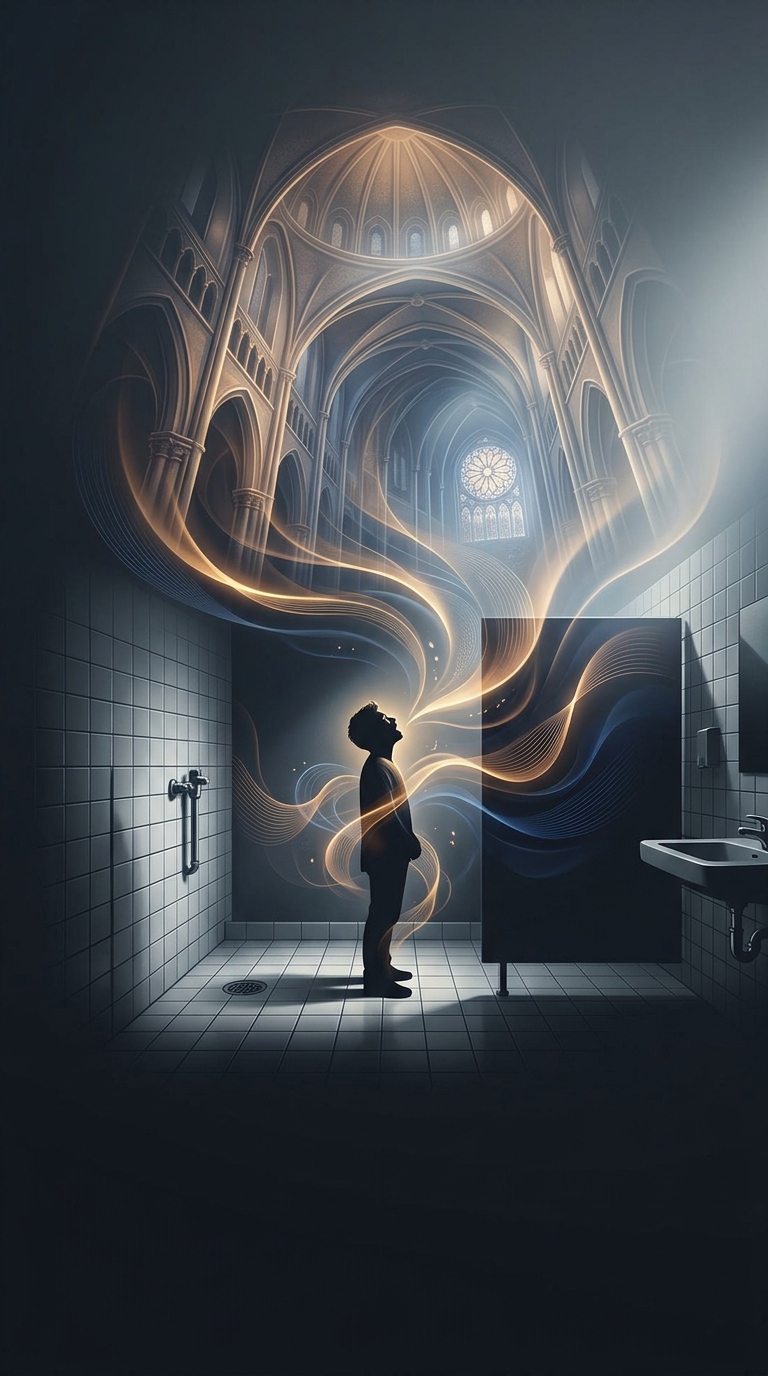
The original Halo menu’s monk-like chant was not captured in a cathedral. Bungie’s composers sang it themselves in a tiled public restroom, working around the time and budget they had rather than booking a grand acoustic space.
That choice mattered because a voice recorded in a room carries traces of the room. Sound waves bounce off hard surfaces and arrive back at the microphone a moment later, creating reverberation—the lingering tail that makes a sound seem to fill a space. Tile reflects sound instead of absorbing much of it, so a bathroom can give voices a resonant, enclosed quality without elaborate equipment.
Turning a Constraint Into Atmosphere
The result helped the menu feel unlike an ordinary game interface. The chant’s slow, ceremonial character suggests something ancient and solemn, while its roomy sound gives that impression a physical texture. Players encounter it before they enter the action, so the music quietly frames the world as mysterious and consequential.
A cathedral would have supplied a more imposing setting, and a studio could have offered tighter control. But the restroom provided a usable acoustic effect immediately. The episode is a small example of how game sound can emerge from practical compromises: a location’s ordinary surfaces become part of the instrument, and a limited recording setup can still produce a distinctive sense of scale.