Why Selenite Is Used to “Cleanse” Other Stones
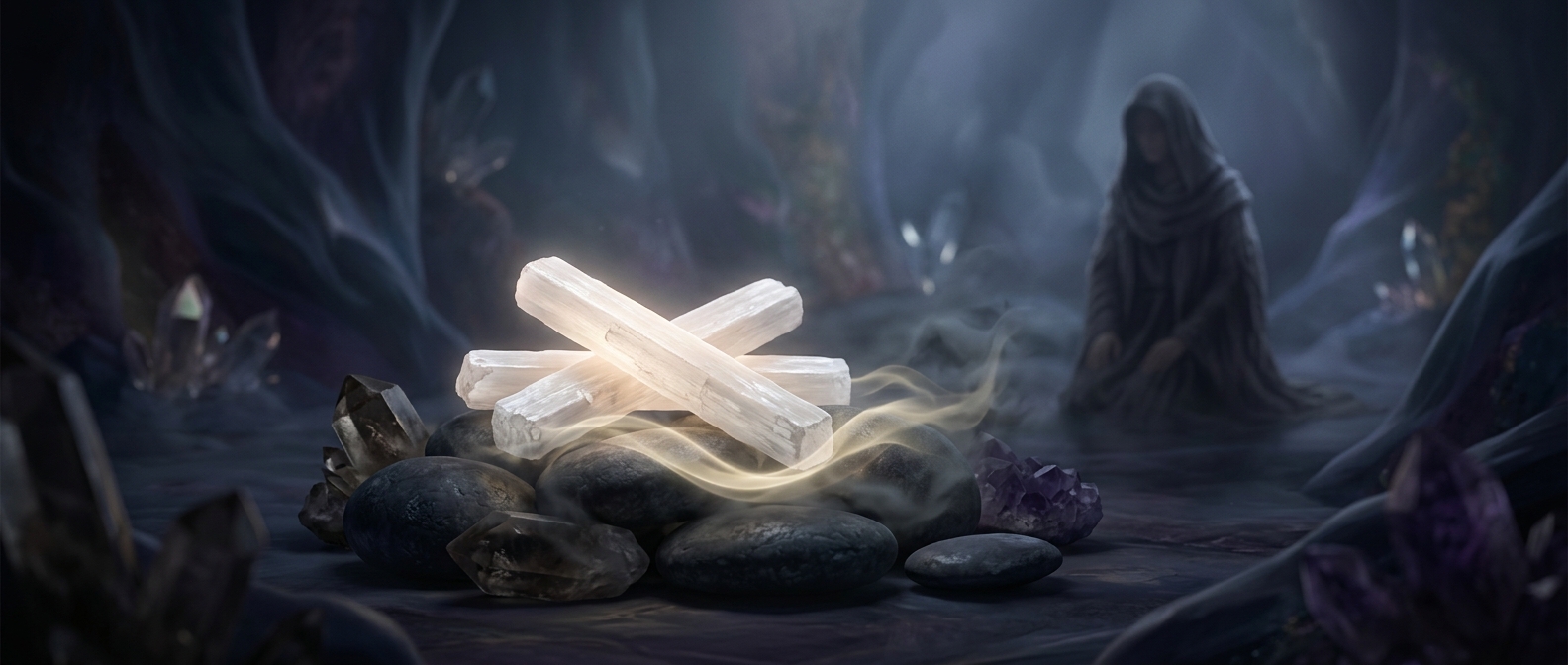
The chalky wands sold for crystal cleansing are usually called selenite, a common name for a translucent form of gypsum. In crystal-collecting traditions, people place other stones on or near a selenite wand to symbolically clear away unwanted energy and restore the stones’ vitality. That meaning belongs to the practice; it is not a scientifically established effect of the mineral.
A Soft Mineral With a Practical Catch
Gypsum is unusually soft—soft enough to be scratched by a fingernail—and its crystal structure contains water. That makes selenite easy to cut into smooth bars and wands, but also easy to scratch, chip, or dissolve if left in water. Despite its polished appearance, it is not a durable tool for scrubbing or washing other crystals.
The ritual works through placement rather than a measurable cleaning process: the selenite serves as a dedicated resting place, while the owner’s intention gives the act its significance. This can create a simple routine for handling a collection, separating stones set aside for cleansing from those being worn or displayed.
Meaning Without a Physical Charge
In this belief system, “energy” means a spiritual quality, not electricity or another quantity that can be measured with an instrument. A selenite wand may therefore matter as a symbol or focus for a personal practice, even though there is no demonstrated mechanism by which gypsum removes negative energy from another mineral. Its most concrete role is modest: a soft, distinctive mineral that makes a ritual easy to repeat—and one that should be kept dry.