Why Clear Quartz Was Called “Petrified Ice”
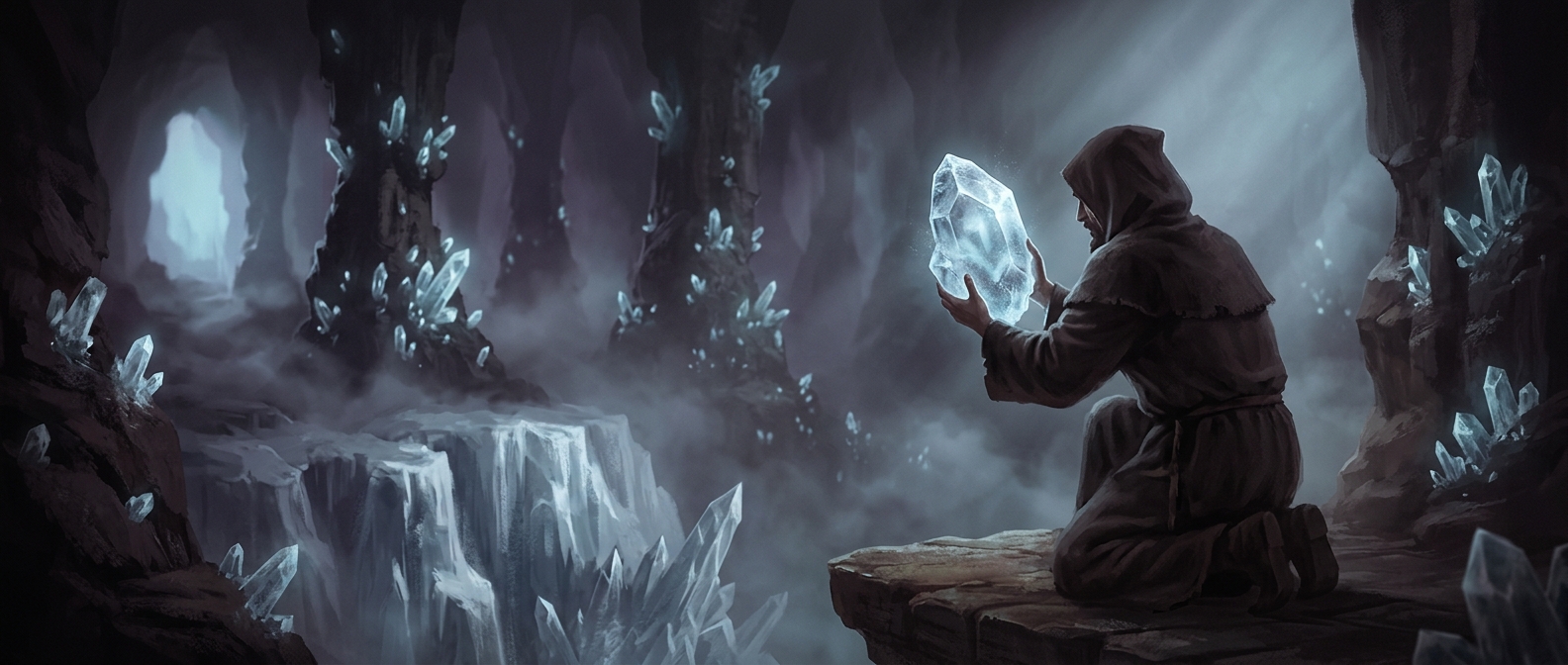
To ancient and medieval naturalists, a transparent crystal could look less like a mineral than like water caught permanently in winter. The Greek word krystallos meant “ice,” and the name for clear quartz carried that older meaning. Pliny the Elder described crystal as water frozen so thoroughly that it could no longer thaw; he associated its formation with intense cold in high places.
That explanation followed a familiar logic: crystal was clear like ice, hard like ice, and cold to the touch. If ordinary water could freeze, perhaps enough time and cold could make the transformation irreversible. The idea belonged to early natural history, when people reasoned from visible properties and inherited accounts rather than from modern chemistry.
A Mineral, Not Water That Stayed Frozen
Quartz is a mineral made of silicon and oxygen, arranged in a repeating structure. Its transparency and glassy surfaces can resemble ice, but its hardness and resistance to melting come from that structure—not from water having frozen for an exceptionally long time.
The old explanation persisted because the resemblance was persuasive and the true process was invisible. Quartz crystals grow as mineral-bearing fluids cool and atoms settle into an orderly pattern. What looks like frozen water is, in fact, a solid built atom by atom from different ingredients.
The name preserves the original comparison: when someone calls a clear quartz specimen “crystal,” they are using a word whose history began with ice.