Why quartz looked like permanent ice
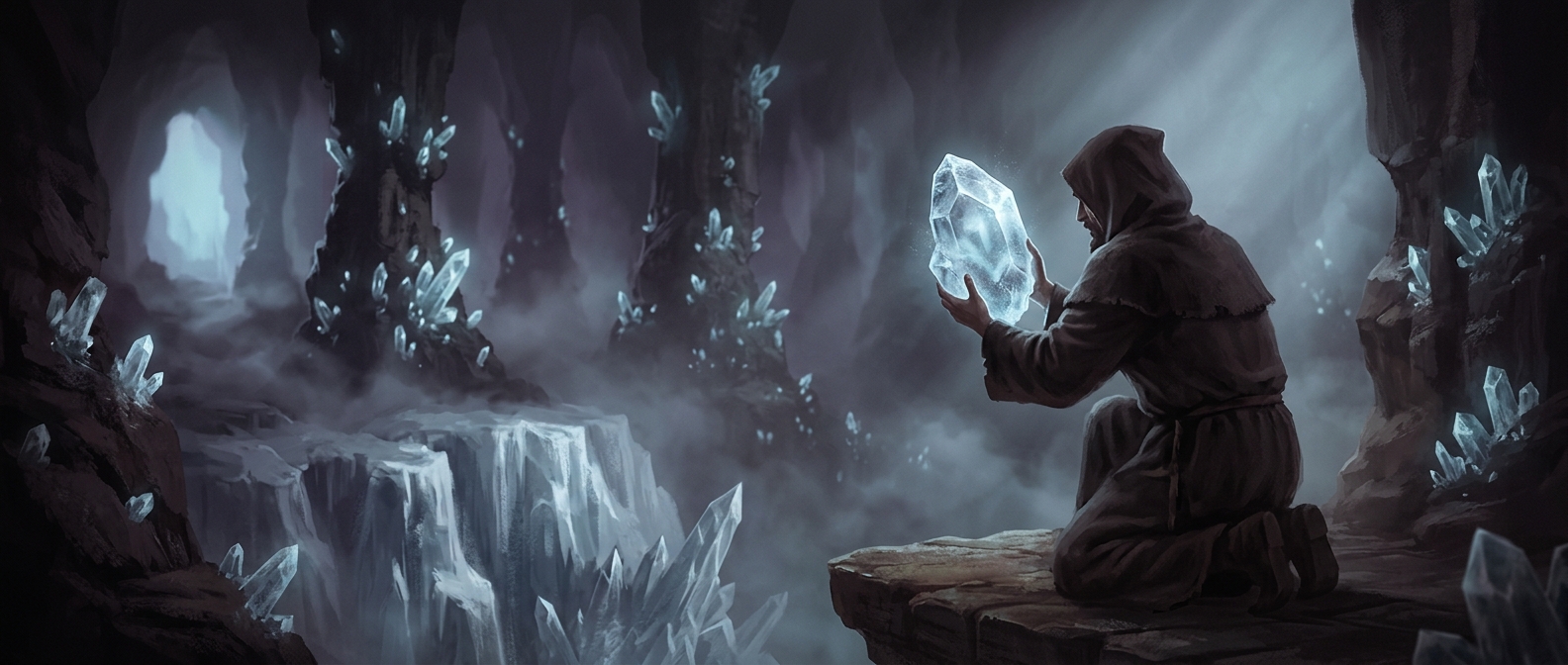
To an ancient observer, clear quartz could resemble a piece of ice that had somehow survived the warmest weather. The Greek word krystallos was associated with ice, and ancient writers repeated the idea that crystal was water frozen so deeply that it could never thaw. Pliny the Elder recorded this view in his Natural History, a vast Roman-era compilation of information about the natural world.
That description reflects an old explanation for the stone, not its actual origin: quartz is a mineral, not frozen water. But the ice comparison mattered because it gave the crystal a supposed quality—intense, lasting cold—that could be put to medical use.
From cold stone to a remedy
Ancient medicine often explained illness through the balance of bodily humors, or fluids with different qualities such as hot and cold. Dysentery—a serious illness marked by bloody diarrhea—could be understood as a disorder that called for cooling. If quartz was believed to embody unchanging cold, crushing it and swallowing it might seem to bring that quality directly into the body.
Pliny’s account preserves this remedy as part of Roman natural knowledge. It shows how an idea about a material’s appearance and origin could shape treatment: the crystal seemed like ice, ice signified cold, and cold was thought capable of correcting a bodily imbalance. The treatment’s logic depended on what people believed quartz was, not on evidence that it could cure the disease.