An impact made the glass, not the meteorite
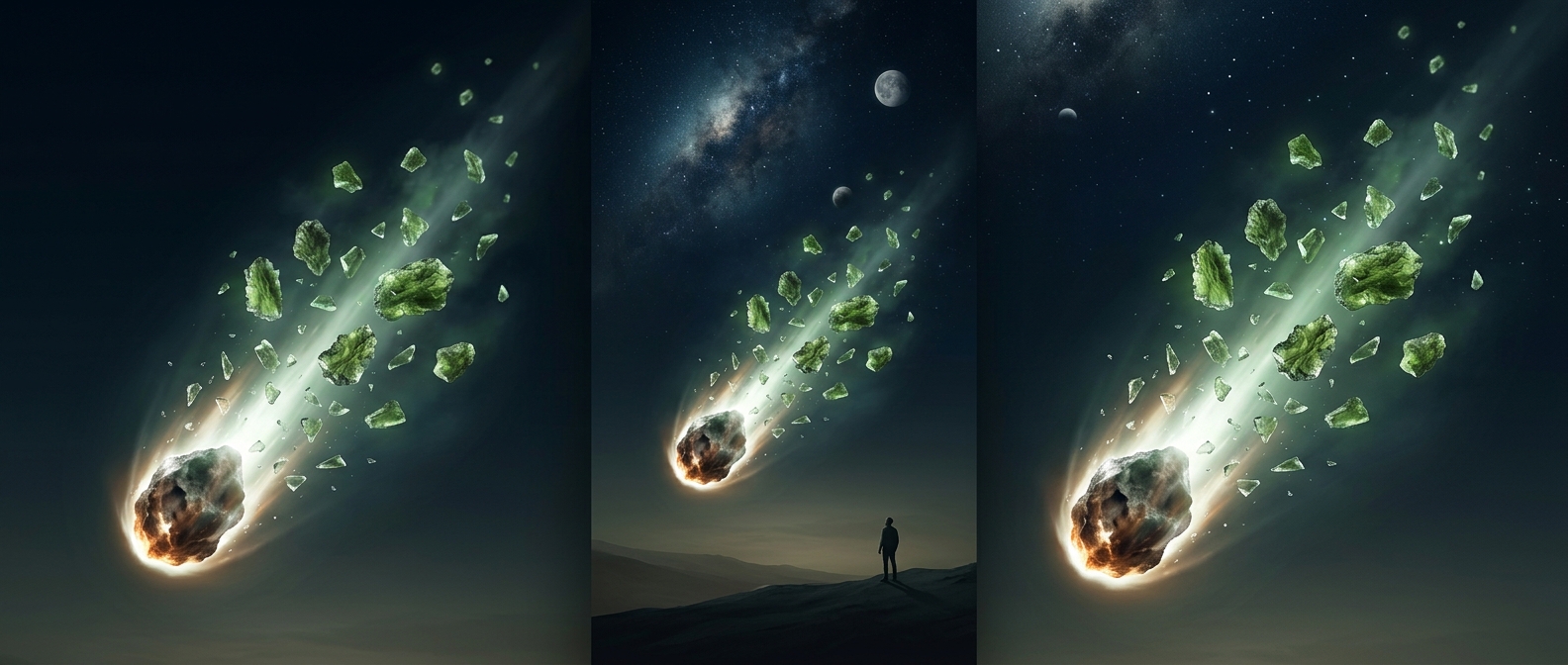
Moldavite belongs to a family of natural glasses called tektites. They form when an impact blasts melted Earth material away from a crater. About 15 million years ago, the impact that created Germany’s Nördlinger Ries crater heated local rocks and sent molten droplets flying. As those droplets traveled through the atmosphere, they cooled into glass.
That distinction matters: moldavite is not a piece of the incoming space rock. The meteorite supplied the impact; the glass came from material on Earth. Moldavite is found mainly in parts of what are now the Czech Republic, far from the crater that produced it.
Why it looks unlike ordinary glass
The droplets did not all land as neat spheres. Their shapes were altered during flight and later by natural wear, leaving moldavite pieces with varied outlines and textured surfaces. Their green color and unusual forms make them recognizable, but the word “crystal” can mislead: glass lacks the orderly internal structure of a true crystal.
A stone with a story attached
Moldavite’s rarity and dramatic origin have helped make it a focus of modern crystal and spiritual traditions. Some people assign it transformative or mystical properties; those are beliefs, not effects established by its geological origin. The physical story is striking enough on its own: a collision in one place launched melted pieces of Earth that cooled into green glass elsewhere.