The leprechaun’s trade came before the treasure
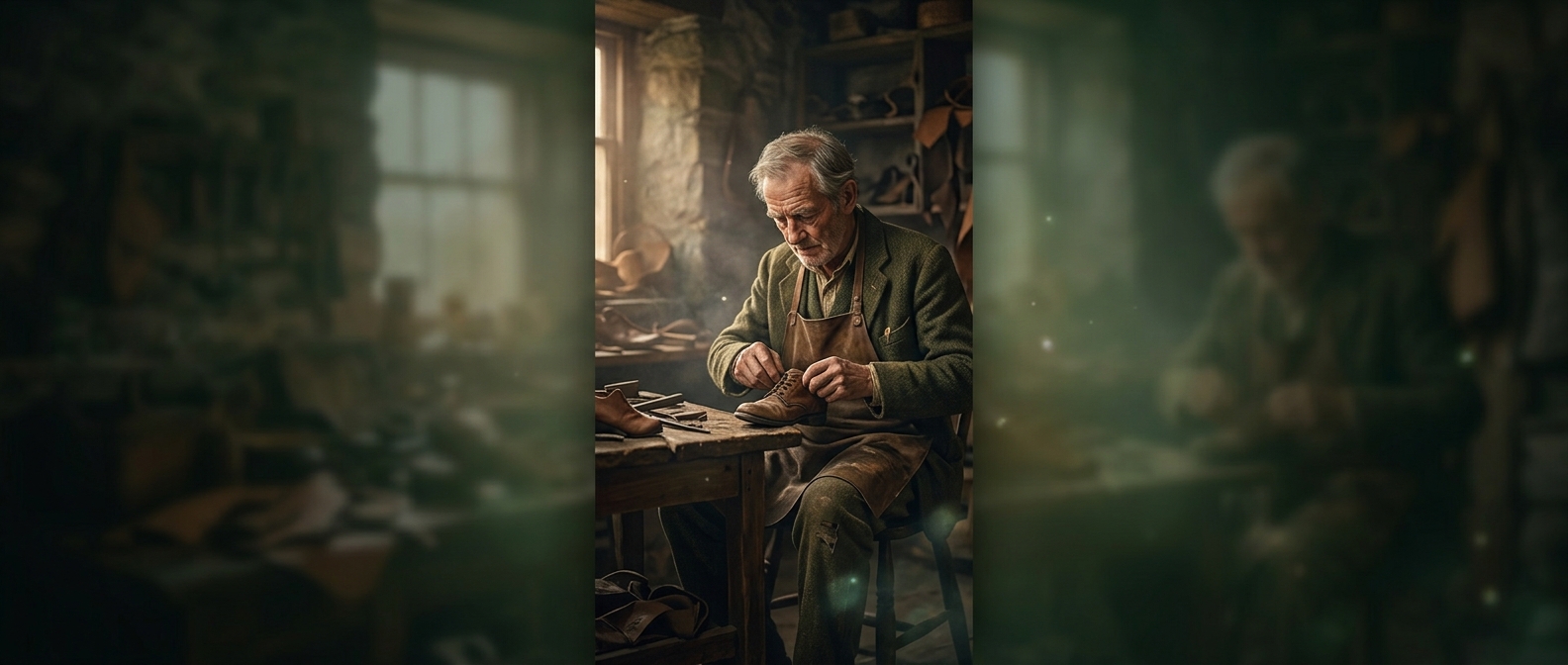
In many Irish folktales, a leprechaun is first encountered not as a guardian of gold but as a solitary shoemaker. The trade gives the hidden fairy a concrete, everyday presence: a person may hear the tiny tapping of a hammer, follow the sound, and catch sight of the worker at a bench. The encounter then becomes a contest of attention and wit. If the leprechaun is distracted or seized, a human might try to make him reveal where his wealth is hidden.
That craft also explains the familiar image of a small figure busy at work. The shoemaker is not simply a whimsical costume detail; he is the point at which an invisible world briefly leaves evidence in the ordinary one—the sound of a tool, a finished shoe, or a glimpse of someone who vanishes when watched too closely.
How a cobbler became a keeper of gold
The treasure belongs to the stories’ other recurring concern: what happens when people try to bargain with, capture, or outsmart a fairy. A leprechaun’s hidden riches give the human character a reason to pursue him, while the leprechaun’s craft makes him feel like a working local figure rather than a distant, grand supernatural being. The two images fit together, though versions of the folklore differ and do not all tell the same story.
So the gold did not erase the cobbler. It changed what audiences remembered most. Beneath the modern image of a tiny treasure-guard, the older tale still has a practical little scene at its center: a shoemaker at work, and someone trying to turn a glimpse into a fortune.