Why the Transition Is Part of the Race
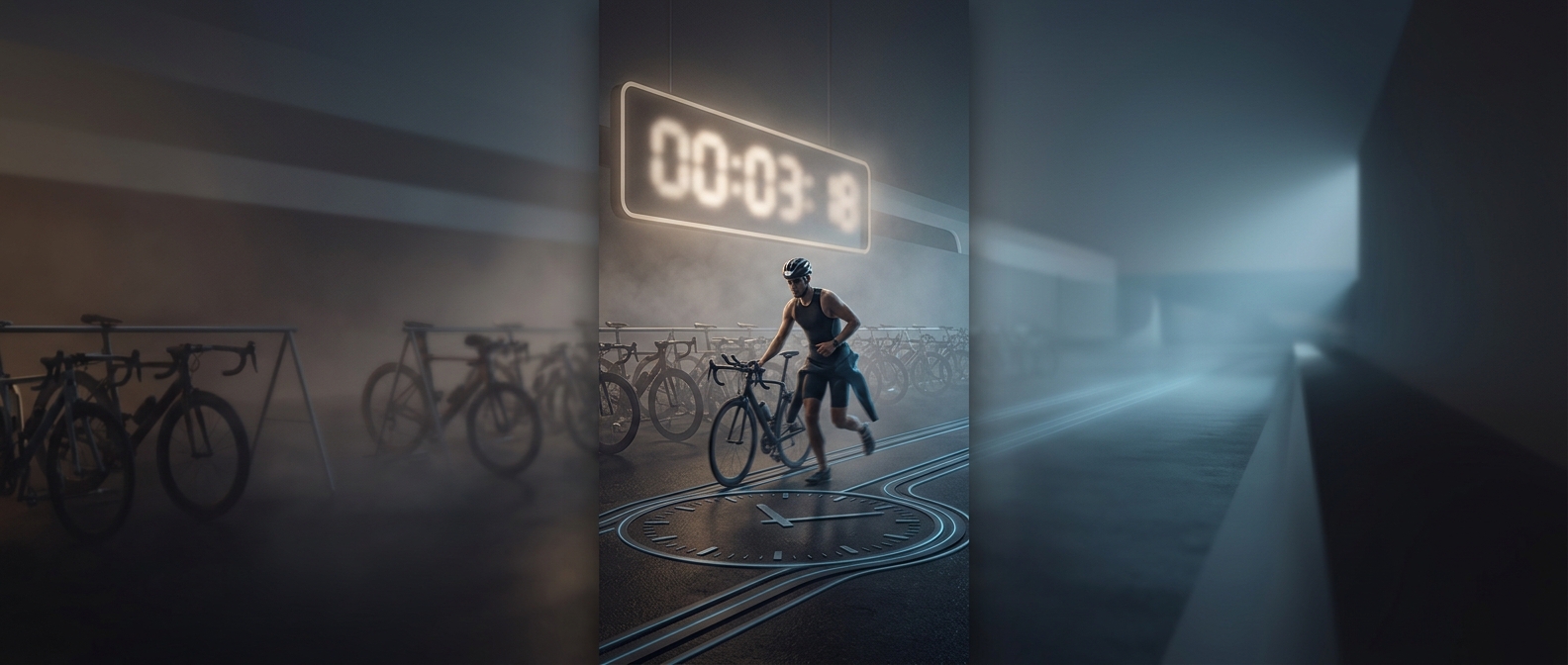
A triathlon is timed as one continuous effort, not as three separate races with breaks in between. The swim ends, but the clock keeps running while an athlete gets ready to ride; it keeps running again while they change from cycling gear to running gear. These changeovers are called T1 (swim to bike) and T2 (bike to run).
That makes the transition area a working part of the course. Athletes arrive from one discipline, locate their own equipment among many bikes and gear setups, change what they need to, and leave for the next leg. A transition that feels like a pause to spectators is still part of the athlete’s recorded time.
Speed Depends on Preparation
The challenge is not simply changing clothes quickly. Athletes have to make the next set of equipment easy to find and use while tired, wet, or breathing hard. A misplaced item or a fumbling change can cost time; rushing can create its own problems if essential gear is missed or put on incorrectly.
That is why competitors rehearse the sequence and arrange their equipment before the start. In T1, for example, they may need to remove a wetsuit and get set for cycling. In T2, they switch out of bike gear and prepare to run. The exact setup varies by athlete and event, but the underlying task is the same: make a safe, orderly change without letting the clock stop.
Small Delays Can Change the Result
Because the transition is included in the overall result, athletes cannot treat it as time outside the competition. A few awkward moments may be enough to lose ground to a nearby rival, especially when competitors finish close together. The transition is therefore a distinct skill: not a fourth sport, but a timed test of organization and execution between the three.