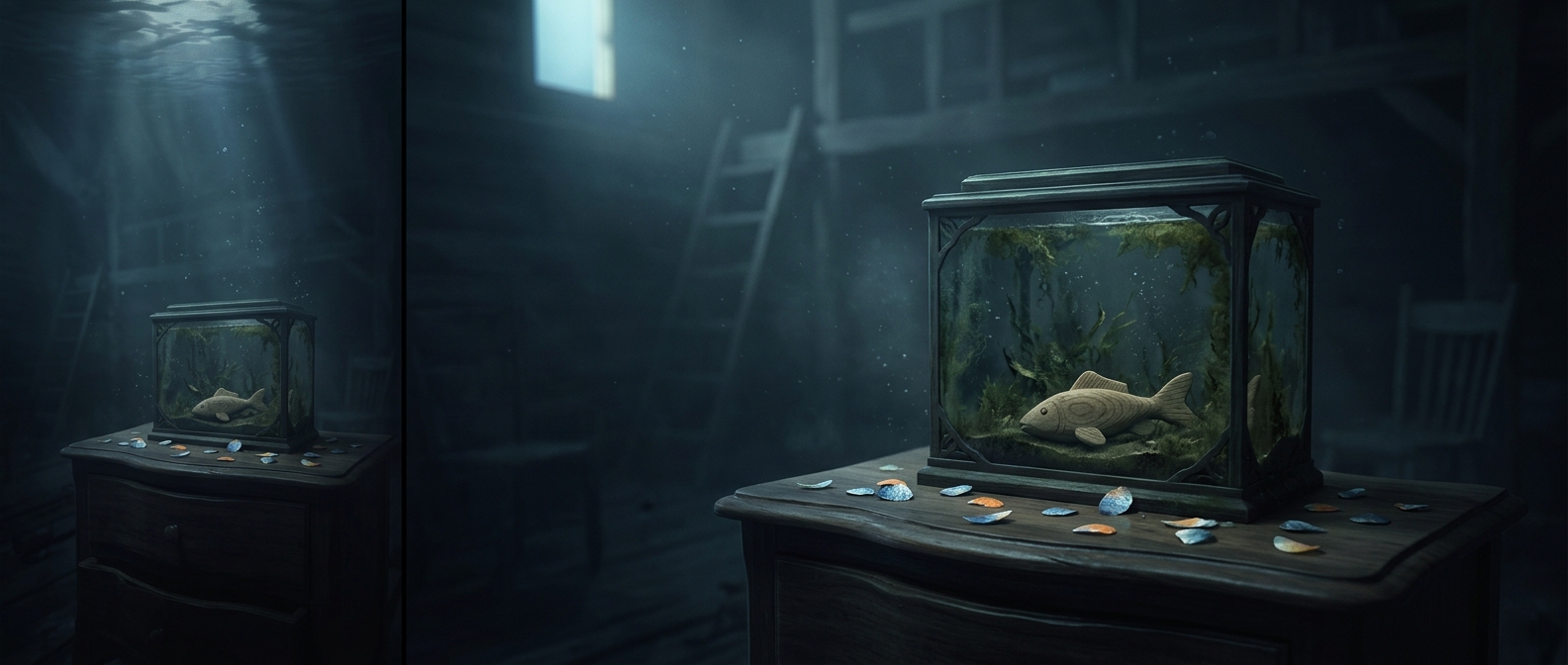
A tiny routine inside a galaxy-sized crisis
A personal aquarium gives a game’s starship a patch of ordinary life: a place to pause, look around, and tend something that is not a mission objective. Feeding the fish turns that quiet corner into a small system the player must remember. If enough in-game time passes without care, the fish die.
That consequence is deliberately modest. It does not decide the fate of a planet or erase hours of progress. Instead, it makes the ship feel as though it continues to exist between dramatic assignments. The aquarium has a kind of persistence—the game remembers what the player did, or neglected, after leaving the room.
Why a small chore can feel surprisingly sharp
The contrast is the point. A player may be racing to answer a galactic emergency, while the fish require a routine that has no comparable urgency on the mission screen. The game makes competing priorities tangible: attention spent on the crisis is attention not spent on maintenance.
Because the cost is visible and personal, neglect lands differently from missing an abstract bonus. Returning to an aquarium with dead fish turns a forgotten interaction into a small consequence in the player’s own space. The galaxy may still be saved, but the ship carries evidence of what got overlooked along the way.