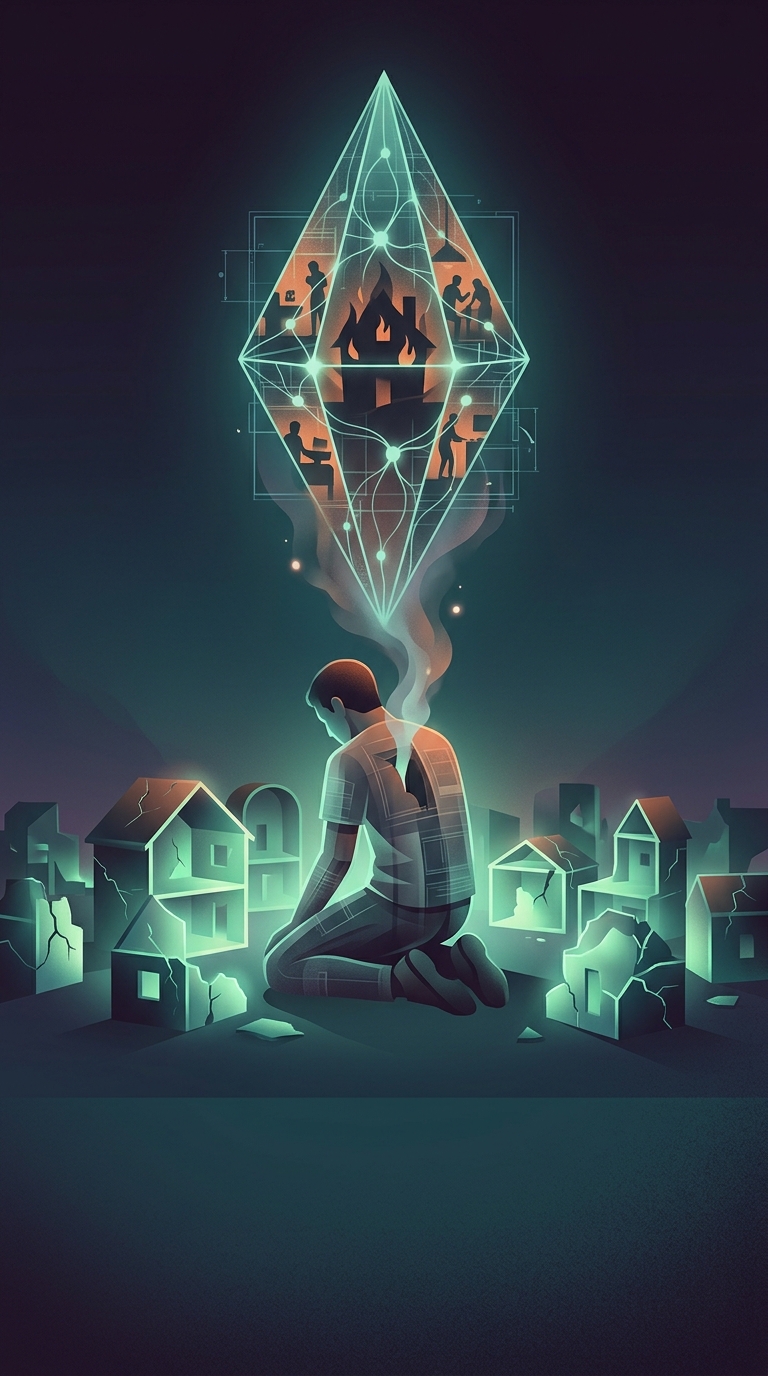
A wildfire turned homebuilding into a game idea
The real-life disaster behind The Sims was the 1991 Oakland Hills firestorm in California. The fire destroyed thousands of homes, including game designer Will Wright’s. Rebuilding forced him to think closely about how a house is laid out, furnished, and made into a place to live.
That experience became an unlikely starting point for a game. Wright first imagined a program focused on designing and furnishing homes. As the idea developed, the people living in those homes became just as important: players could shape their routines, relationships, and surroundings.
From rebuilding a house to simulating a life
The game’s familiar cycle—build a home, furnish it, then guide its residents through everyday needs—reflects that shift. A room is not only decoration: its layout affects what characters can do, while money and space limit the choices available. The house becomes a system the player manages, rather than a static backdrop.
The fire did not supply a ready-made story for the game. Instead, it gave Wright a concrete reason to explore how people construct homes and organize life around them. A personal experience of losing a house helped spark a franchise built around making one—and deciding what happens inside it.