A familiar shedding game, made easier to read
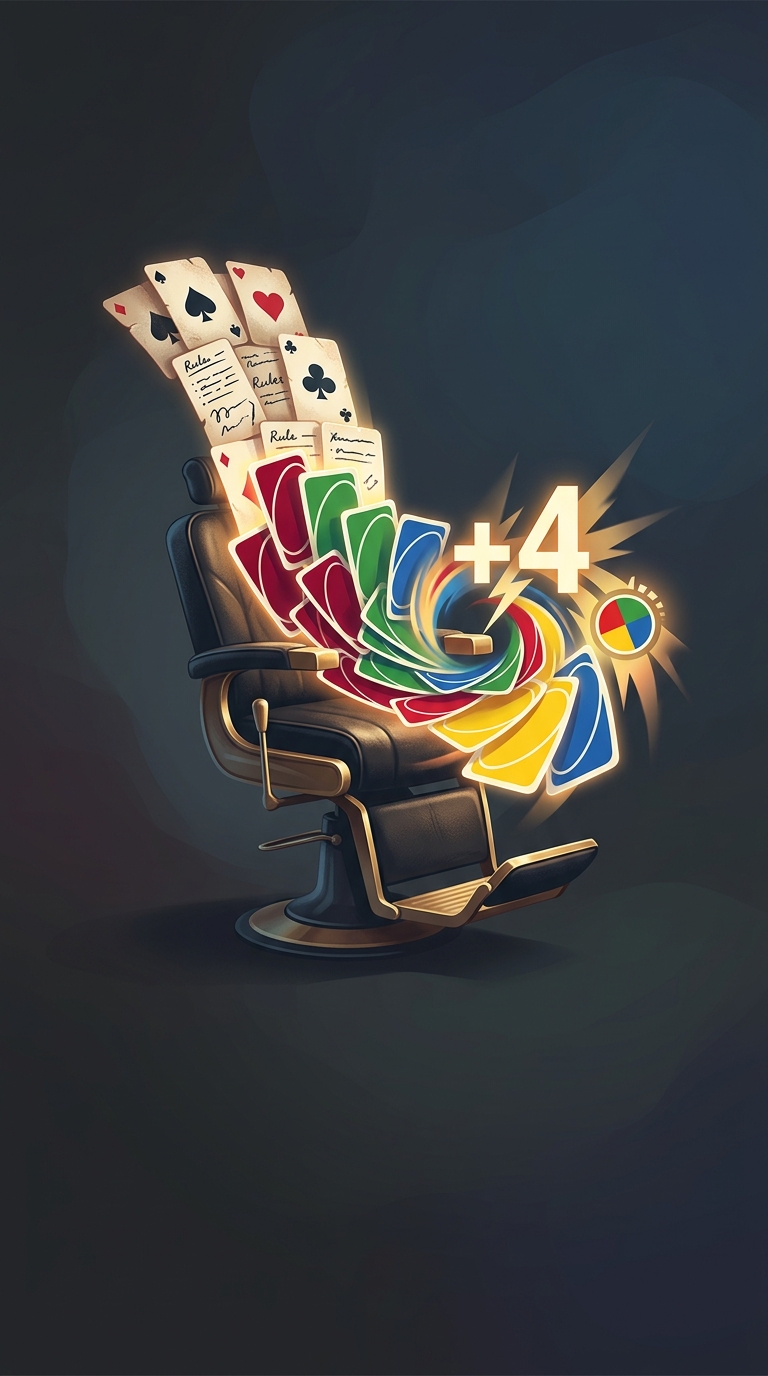
Crazy Eights belongs to a family of card games built around one simple task: get rid of your hand by playing a card that matches the one on the pile, usually by rank or suit. An Ohio barber’s adaptation kept that quick, turn-by-turn structure but replaced the standard deck’s suits and face cards with a purpose-built visual system.
In Uno, colors and numbers make the basic match visible at a glance. Symbols mark cards that change what happens next, so players need not translate a special rule into the conventions of an ordinary playing card. The deck itself carries the game’s instructions in recognizable form.
Why a dedicated deck mattered
A custom deck did more than give the game a new look. With its own colors and symbols, Uno could be taught and played without first explaining which standard cards stood for which actions. The same design also made the game easy to identify: the cards were not interchangeable with a household deck, because their markings were the game.
That shift turned an adaptation of a familiar pastime into a self-contained product. Players could recognize the central idea immediately—match what is showing, then watch for a symbol that alters the turn—while still having to adapt to the special cards. The result is a game whose basic logic is simple enough to grasp quickly, but whose dedicated deck gives it a distinct identity.