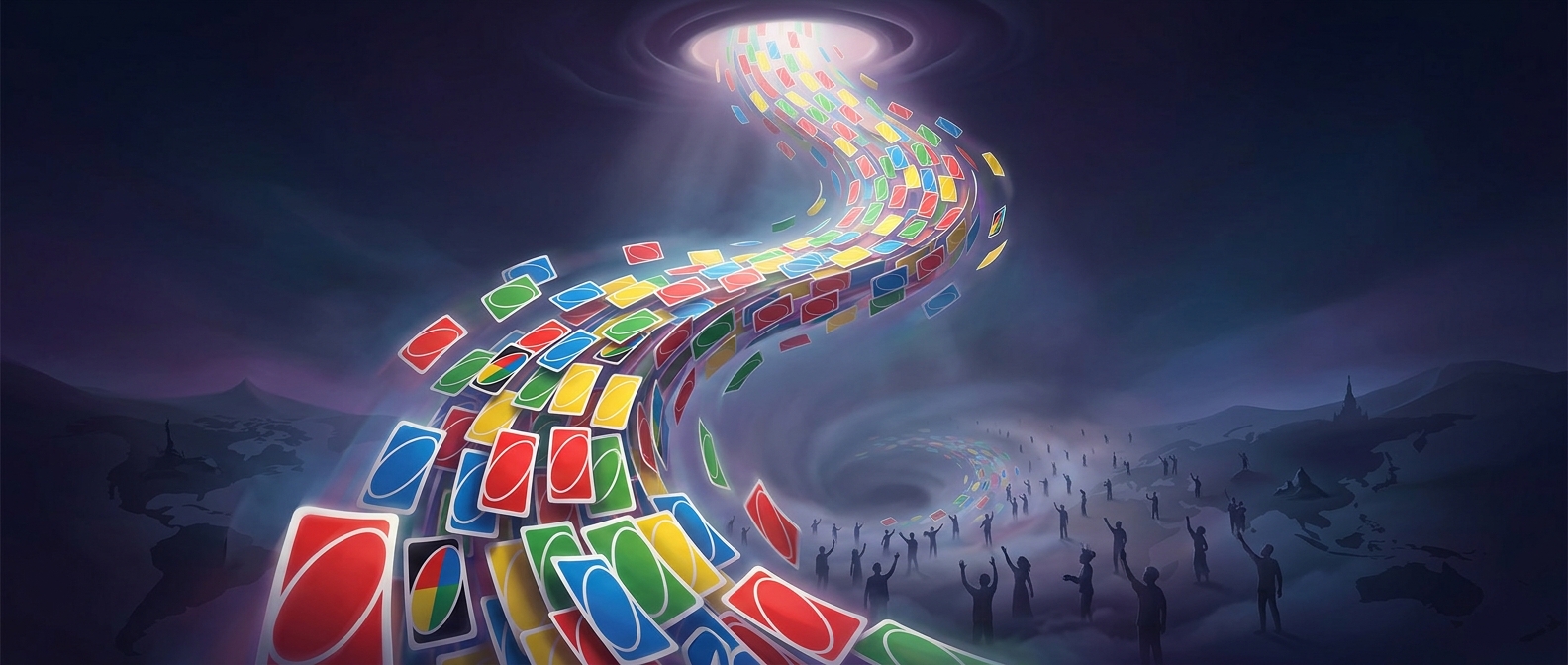
A small deck creates a changing problem
UNO’s staying power is built into a simple loop: match a card in your hand to the color or number on the discard pile, or play a special card that changes what happens next. Because the visible target changes with every turn, players do not need to memorize a long strategy or plan far ahead. They can join quickly, then adapt as the situation shifts.
That simplicity leaves room for surprises. A Draw Four can force a rival to pick up cards, while a change of color can make a hand that looked stuck suddenly playable. The rules are easy to explain; the consequences of a single card are not always easy to predict.
The social engine is the suspense
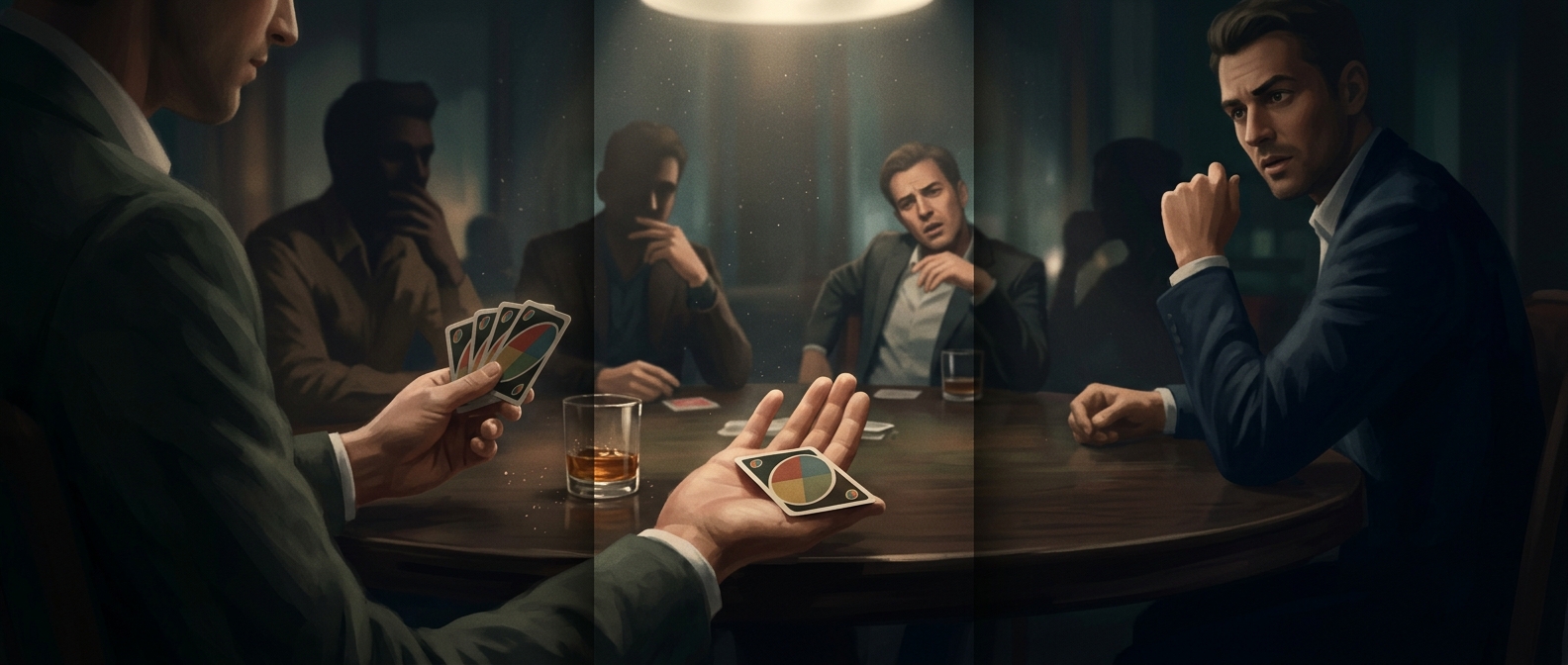
UNO works as a group game because each turn is brief, but everyone is watching the same few things: the discard pile, the colors in play, and who is close to emptying a hand. Players can take part without needing a dedicated board, a long setup, or equal levels of experience. That makes it easy to bring out across ages and in settings where a more involved game might be hard to start.
A sales rate is an average, not a promise that a box leaves a store every few seconds on a perfectly steady schedule. Its significance is the scale of repeated demand for a game whose appeal depends on a compact cycle: match, disrupt, and see how the table reacts. One card can change the next move for everyone—which is why a deck small enough to pack away can keep a whole table engaged.