Why a Draw Card Ends Your Turn
In standard UNO, a Draw Two or Wild Draw Four is not an invitation to answer with another penalty card. It is an instruction for the next player: take the specified cards and miss your turn. Since that player’s turn is skipped, there is no opportunity to play a Draw card and pass the growing total along.
That distinction is easy to miss because stacking feels like a natural extension of the game. But it changes what the penalty cards do—from a fixed cost imposed by one play into a running bill that players can keep redirecting.
Stacking Changes the Game’s Stakes
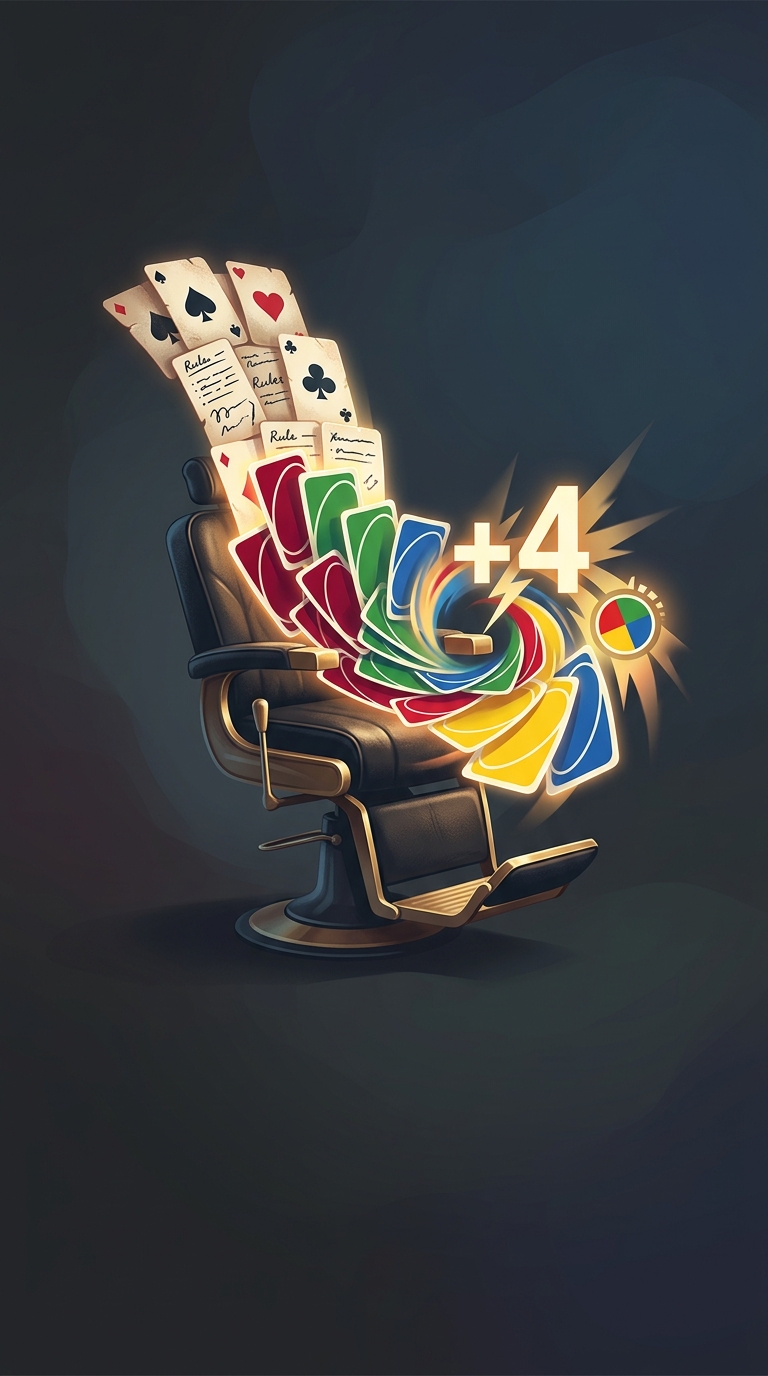
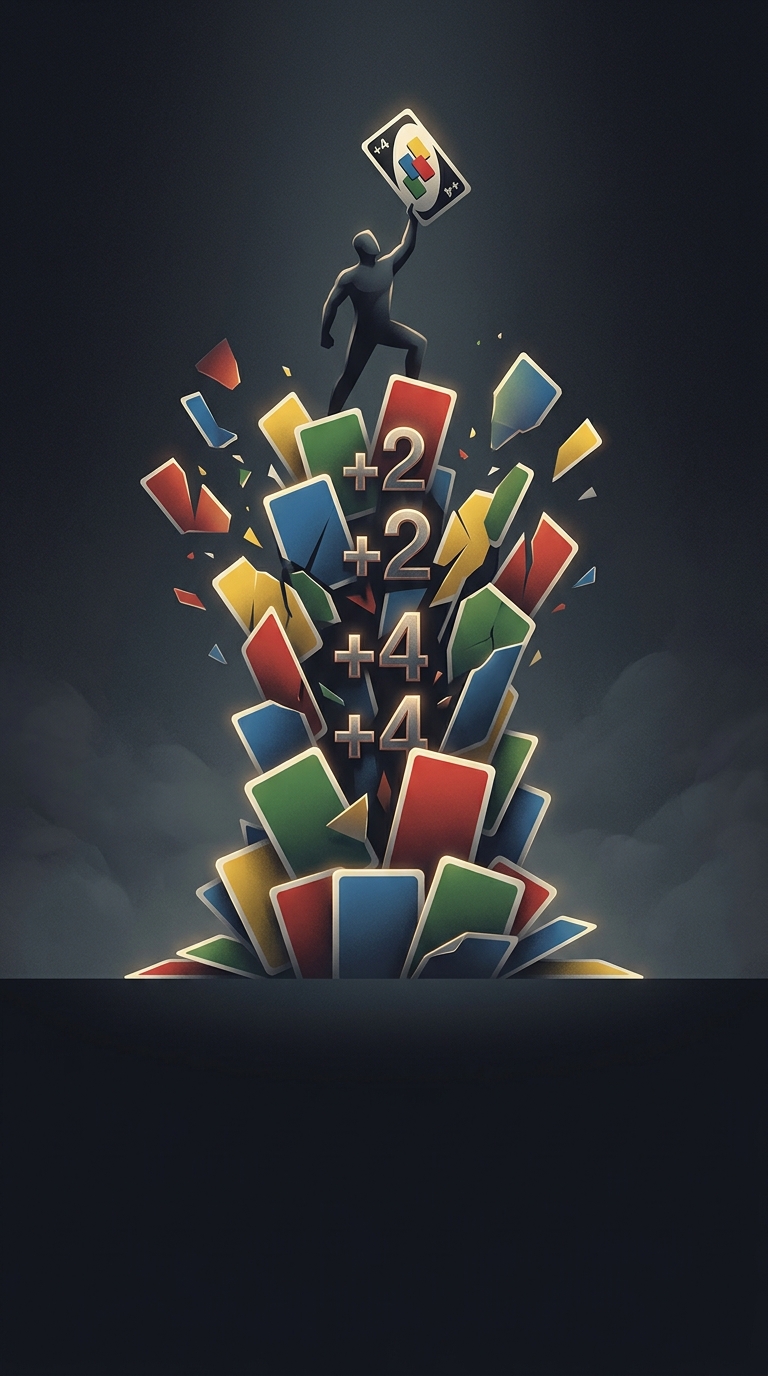
With stacking, a player who cannot add another penalty card may have to draw the accumulated total. A chain of Draw Twos and Draw Fours can turn a small setback into a hand-burdening pile, making it more important to hold a penalty card than to match colors or get rid of ordinary cards.
Without stacking, the penalty is limited to the card just played. A Draw Four can still be challenged under the game’s rules if the player who used it may have played it illegally, but that is a separate rule—not a way to counter it with another Draw card.
House Rules Need a Shared Agreement
Many groups prefer stacking because it creates suspense and dramatic reversals. It works as a house rule, provided everyone agrees to it before play; otherwise, players may be following different versions of the game without realizing it. The practical difference is simple: under standard rules, the penalty stops with the player who draws, while stacking makes the next penalty card the start of a chain.