The roll works by changing when a hit can count
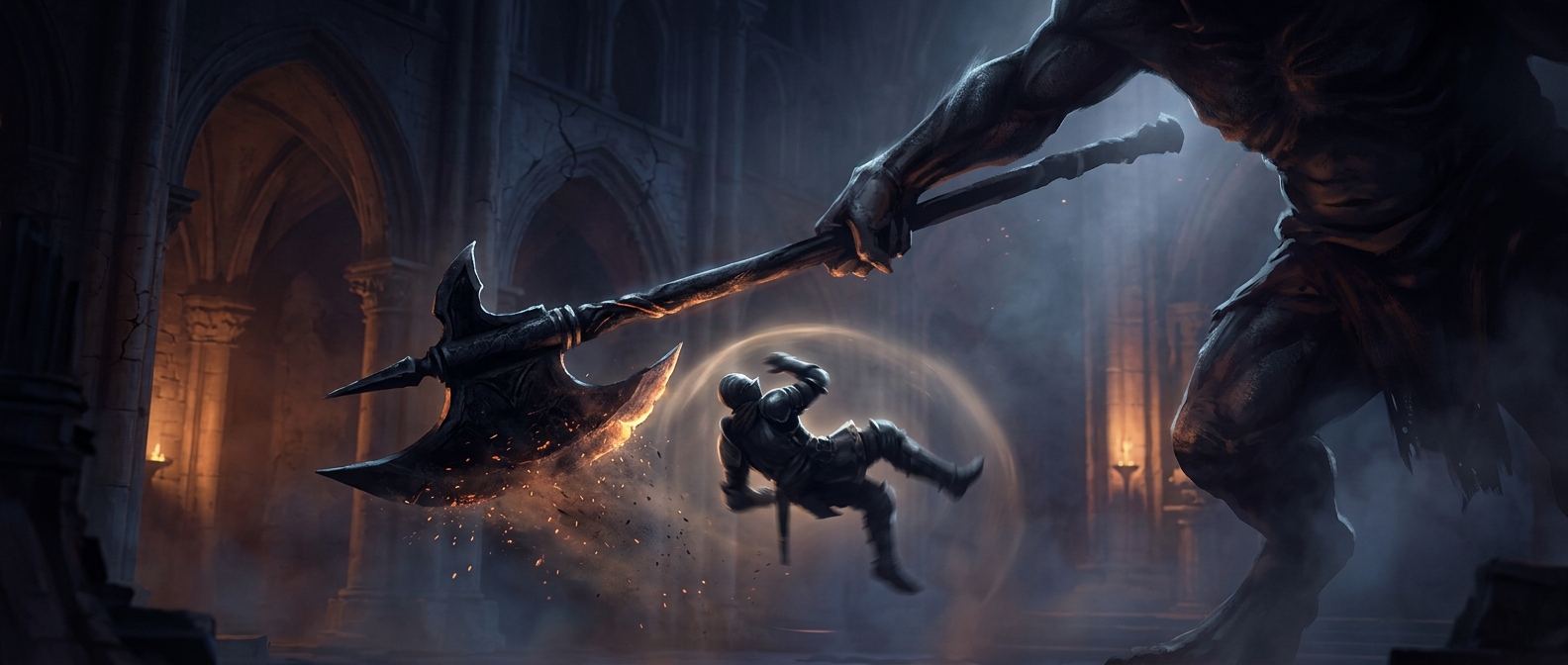
A dodge roll in Dark Souls is more than a quick way to move out of an attack’s path. During a short portion of the animation, the character is invulnerable: if an enemy’s strike reaches the knight during that window, the game treats it as a miss, even if the weapon appears to pass through the armor.
That brief protection is often described through “invincibility frames,” or i-frames—individual moments in the game’s animation and combat logic when damage is ignored. The roll does not make the knight invulnerable from start to finish. Press too early, and the protected moment may pass before the blow arrives; press too late, and the hit may land before it begins.
Timing is only half the decision
A roll commits the player to a movement and recovery animation. While recovering, the knight may be unable to attack or dodge again, so a successful evade can still leave them exposed to a follow-up strike. The player must read the attack’s timing, choose a direction, and account for where the enemy will be when the roll ends.
Stamina—the resource spent on actions such as attacks and dodges—also makes rolling a tradeoff. Spend too much on repeated rolls, and there may be little left for a counterattack or another escape. Equipment load affects how the character moves, so the same threat can demand different spacing and timing depending on the build.
A hit becomes a timing problem
The mechanic shifts combat away from simply enduring a blow behind armor. A dragon’s sweep can be avoided by moving clear, but a roll can also carry the knight through the attack at the moment it would otherwise connect. The player is betting on a narrow window of protection, then on having somewhere safe to land. That is why a roll that looks almost reckless can succeed—and why a small timing mistake can turn it into a direct hit.