The boards stir more than they strike
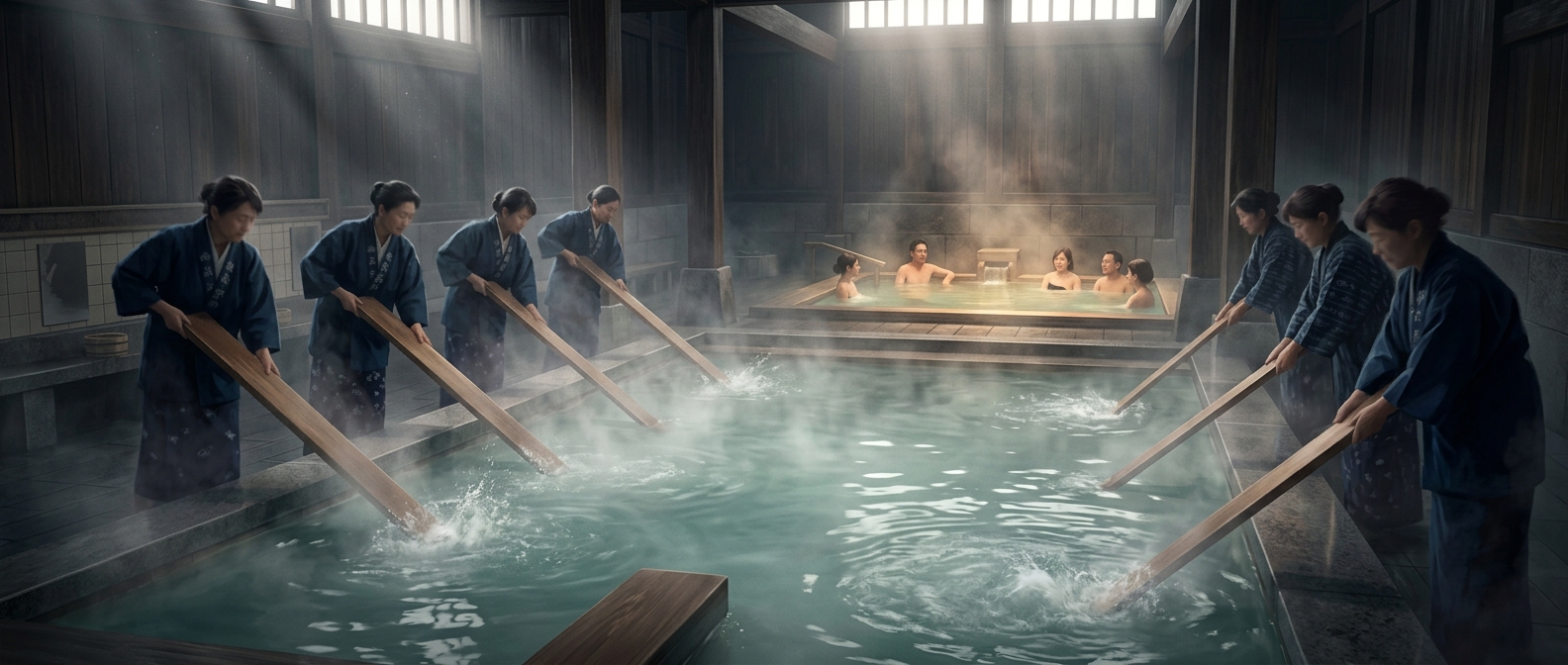
At Kusatsu, the long planks are used in a practiced stirring motion—not simply to pound the spring water. Each sweep moves hotter water from one part of the pool into contact with cooler air and helps even out the temperature. Some heat escapes from the exposed surface, while mixing reduces hot and cool pockets, making the water more comfortable to bathe in.
The method is called yumomi, a traditional way of cooling hot-spring water. Adding cold tap water would lower the temperature faster, but it would also dilute the spring water. Stirring lets workers adjust the heat while keeping the water undiluted.
Rhythm makes the work possible
A six-foot plank is cumbersome, and repeated strokes take coordination. Singing gives the group a shared rhythm, helping workers move together through the pool. The songs are part of the recognizable public presentation of yumomi, but the motion has a practical job: keep the water moving as it cools.
That makes the spectacle a visible record of an old tradeoff. The spring arrives too hot for comfortable bathing; rather than changing the water, workers change its temperature through labor and careful mixing. At Kusatsu, the planks are both tools and a reminder that preparing a hot spring once meant working with the water, not just turning a tap.