How a Wool Thread Becomes a Local Livelihood
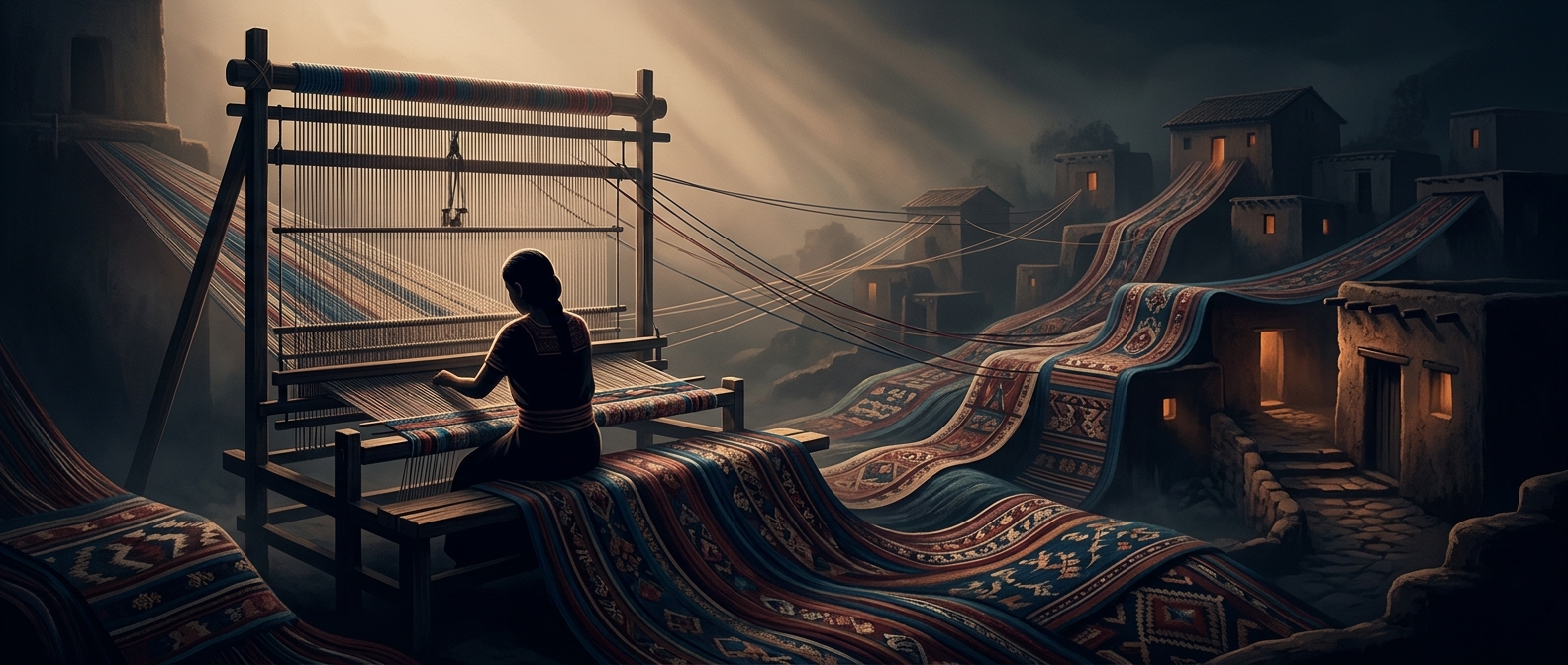
In Teotitlán del Valle, the work behind a woven textile begins before it reaches the loom. Wool is spun into yarn, then colored and woven through skills learned within families. Each step adds labor and knowledge to a material that would otherwise have little value as a finished household or decorative piece.
One distinctive source of color is cochineal, a tiny insect whose crushed bodies yield a red dye. The color is made into a dye bath for the yarn, so the craft depends not only on the weaver’s hand but also on preparing materials before weaving begins.
Craft, Value, and Continuity
That sequence helps explain why weaving can support a local economy: families can turn raw materials and specialized skill into finished textiles, while keeping the work rooted in the community. The techniques are not simply a pattern to copy; they include practical knowledge about spinning, coloring, and building a design thread by thread.
Passing those skills from one generation to the next preserves more than a recognizable style. It keeps the ability to make the textiles—and the work associated with making them—close to home. A finished piece carries the accumulated labor of its production, from wool to dyed yarn to woven cloth.