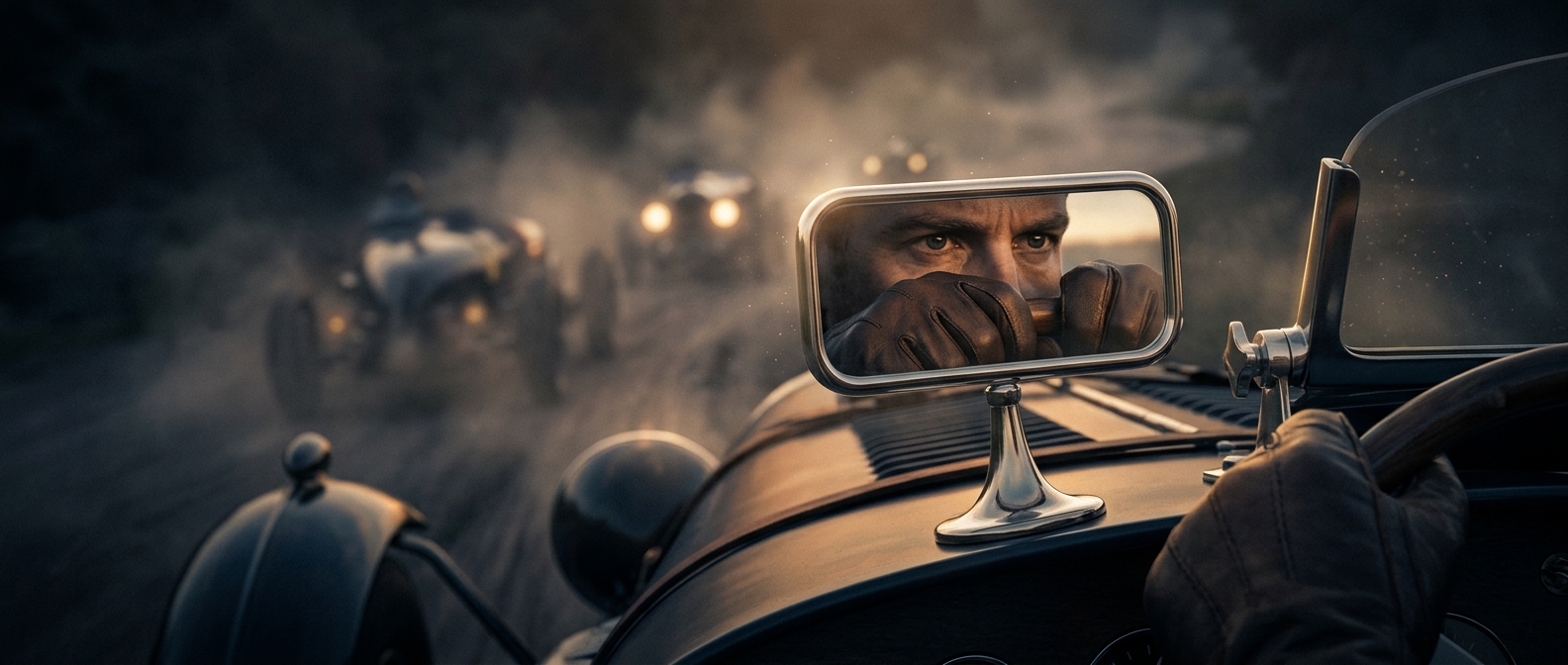
A mirror changed what the driver had to carry
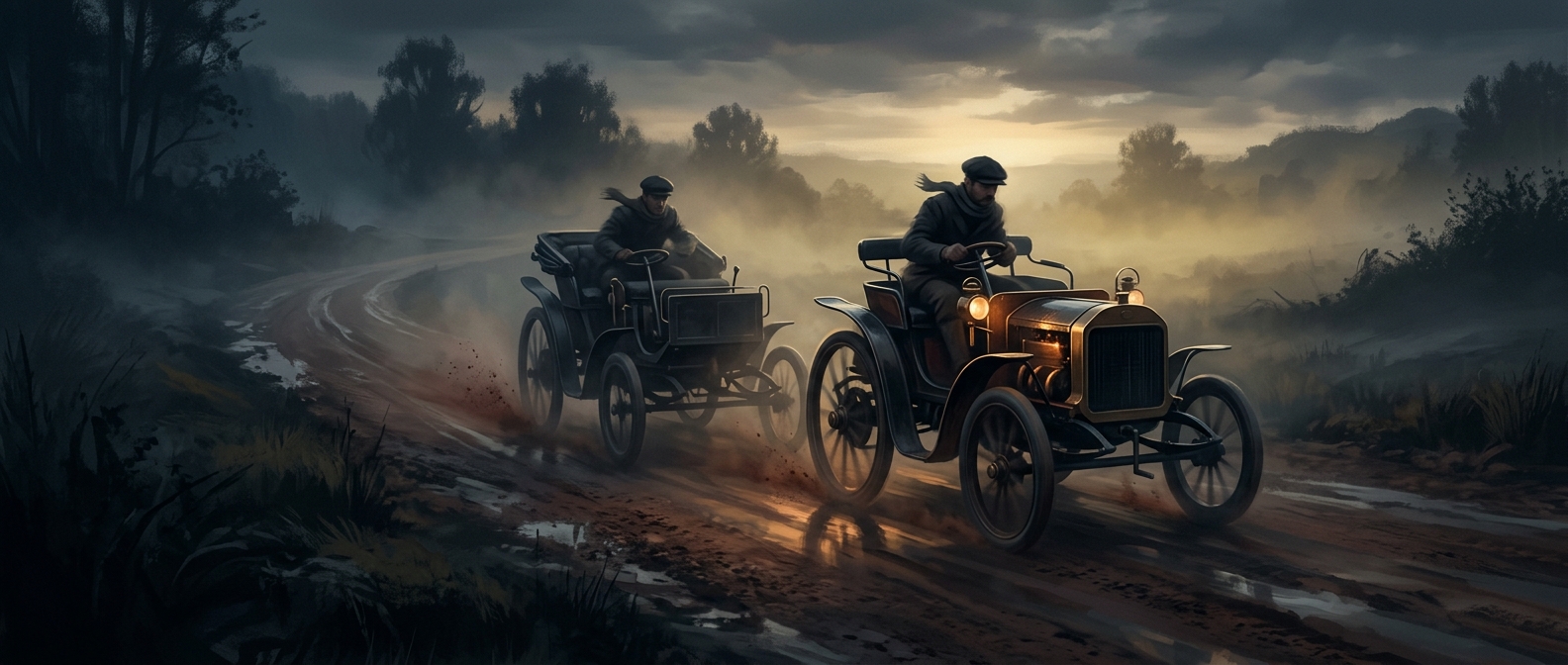
Early race cars offered drivers little chance to check what was happening behind them. The bodywork and seating position restricted the view, and turning around meant taking attention away from the track ahead. A riding mechanic could watch for approaching competitors and alert the driver—a useful extra set of eyes, but also another person and their weight aboard the car.
Harroun’s mirror shifted that task from a passenger to a piece of equipment. Instead of relying on someone else to notice a rival and communicate it, the driver could glance at a reflection. That made the mirror more than a convenience: it altered the car’s working arrangement by giving the driver information without requiring a second crew member.
A small device with a lasting tradeoff
A mirror cannot provide the same broad, moving awareness as a person who can scan in different directions. It shows only what its angle and reflective surface capture, and the driver still has to look away from the road to use it. But it offers a steady view of one slice of what is behind, available whenever the driver needs it.
That practical compromise helped make the mirror’s value easy to understand beyond racing. As cars became everyday vehicles, drivers also needed a way to monitor traffic approaching from behind without turning their bodies around. The racing solution pointed toward a new expectation of the car: the driver should be able to check behind using the vehicle itself, not another person riding along.