A “death” that meant surrendering control
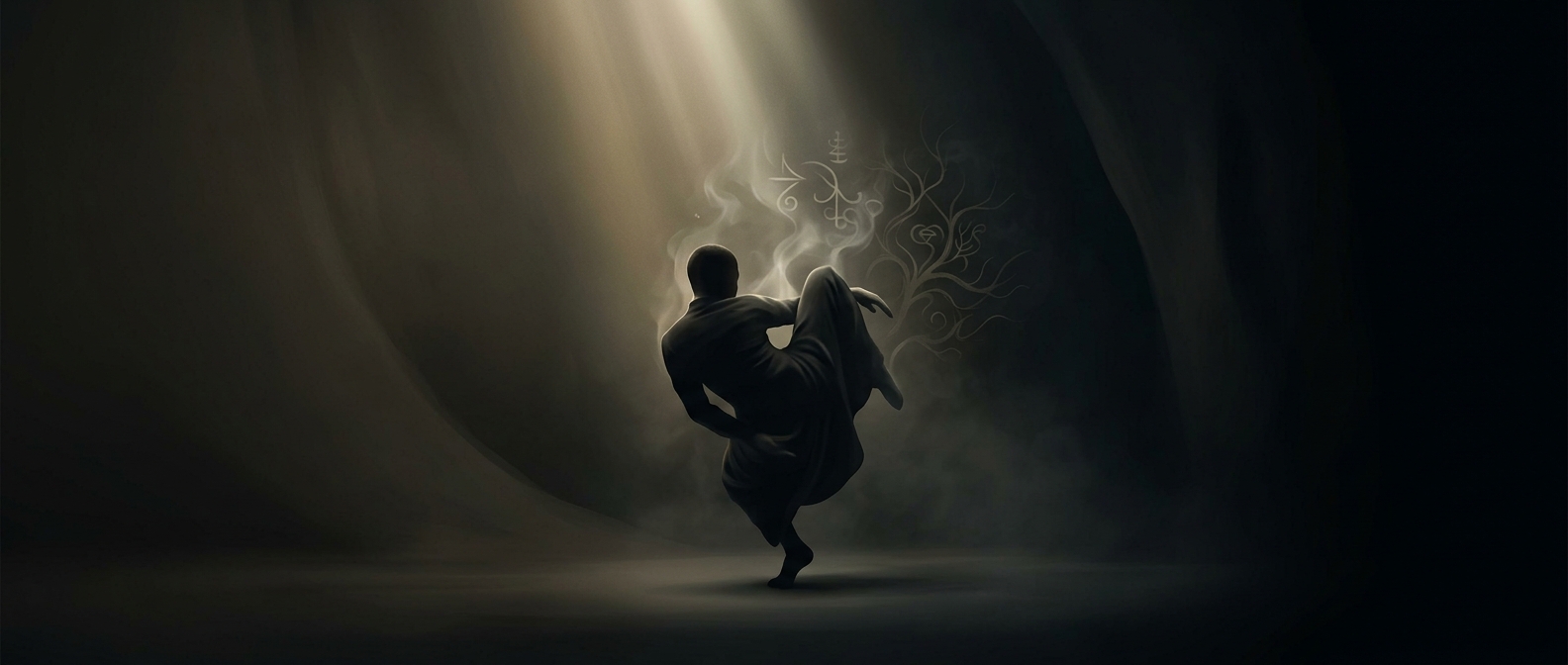
Austin Osman Spare’s “death posture” was not a claim that the practitioner literally died. It belonged to his approach to magic, in which a person tried to move an intention out of ordinary, deliberate thought and into what he regarded as a deeper part of the mind. Spare is also associated with sigils—personal symbols made to represent a wish or aim.
The posture was meant to create an abrupt break in normal awareness. Strain, breathlessness, and the onset of unconsciousness could overwhelm the steady inner commentary that usually evaluates and revises a thought. In Spare’s theory, that interruption offered a moment when an intention could pass beyond conscious interference. The blackout was therefore treated not as the goal itself, but as a threshold in a ritual.
Why the method fit Spare’s magic
The logic was to avoid repeatedly concentrating on a wish. Rehearsing it consciously might invite doubt or second-guessing; instead, the practitioner charged the intention and then sought a state in which ordinary attention let go of it. The posture made that “letting go” physical and dramatic, rather than merely a matter of deciding not to think about something.
That distinction helps explain the method’s appeal without treating its magical premise as established fact: it turned an abstract idea about the mind into a bodily procedure. It also made the practice hazardous. Deliberately hyperventilating or trying to faint can cause injury, so the posture is best understood as a historical ritual technique, not a safe exercise to imitate.