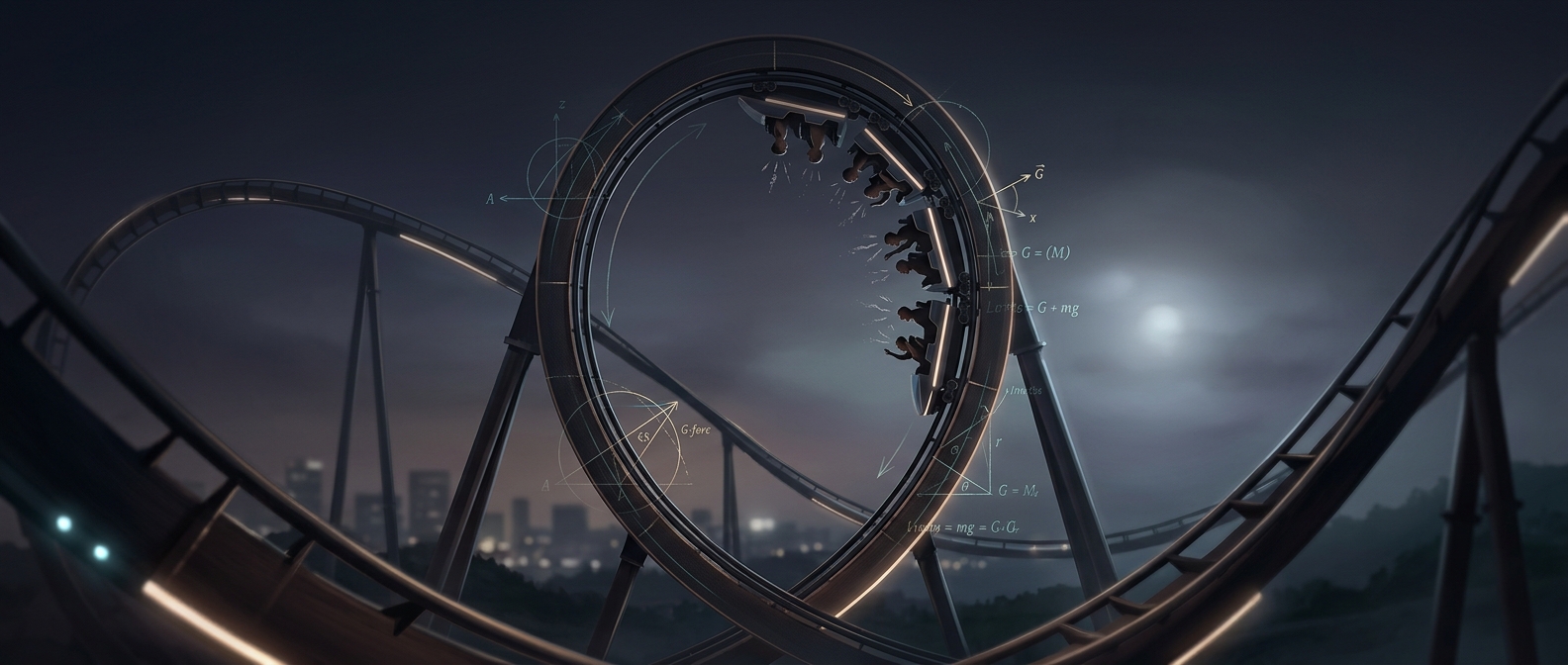
What Actually Sets a Ride in Motion
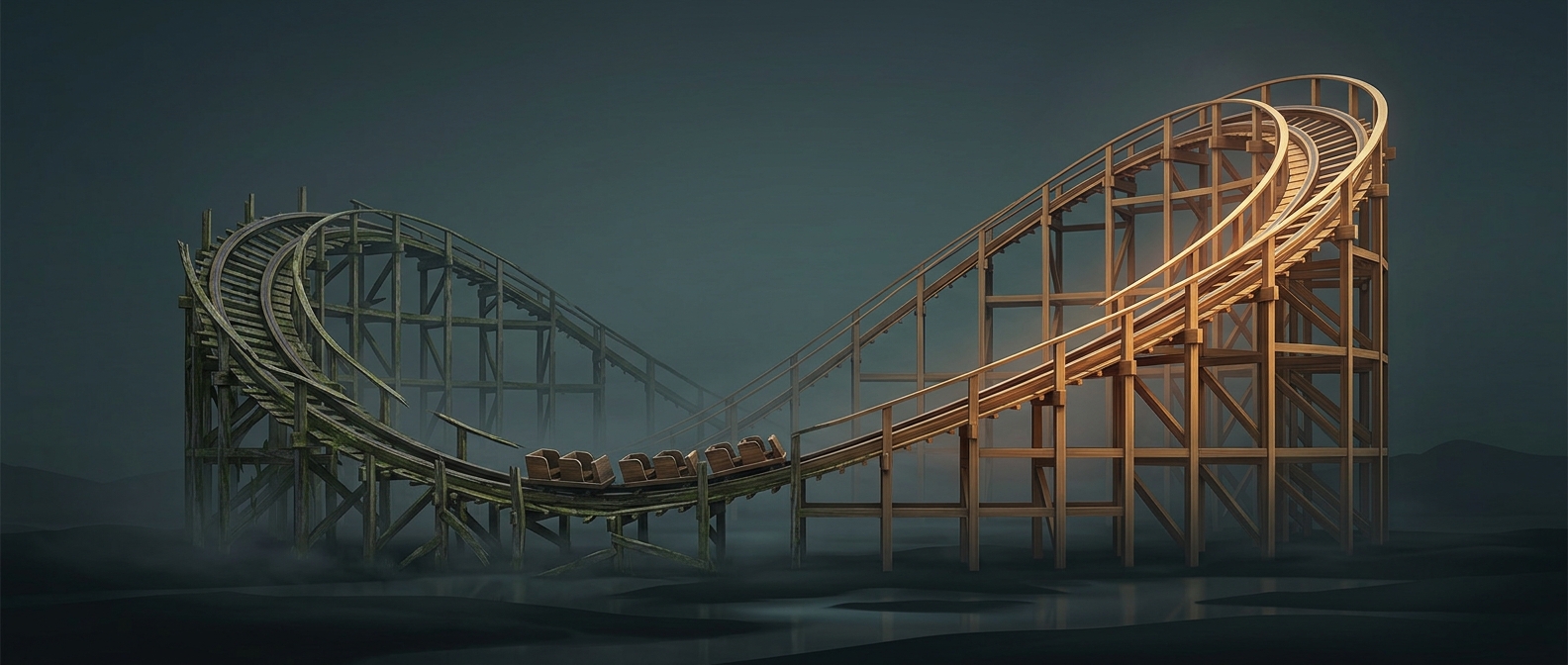
A roller coaster’s path is determined by its track and the forces acting on the train. On a lift hill, a chain or other drive system pulls the cars upward; after a drop, gravity converts height into motion. The track then redirects the train, while friction and air resistance gradually take energy away.
A passenger’s scream is tiny by comparison. Moving air through the throat and mouth, even loudly, produces far too little force to change the train’s motion in any noticeable way. Riders also make up only a small part of the moving train’s total mass, so an individual’s movements cannot steer it or meaningfully alter its speed.
Why It Can Feel Like Taking Control
A sudden drop can make the body tense, and a shout is something a rider can choose to do while the car follows a fixed course. That choice may make the moment feel more active, but it doesn’t change the ride’s velocity—its speed and direction. The train still reaches the same bend or braking section on the same track, whether the car is full of screams or quiet.
The distinction is easy to feel on a steep drop: your voice belongs to you; the forces carrying you down the track do not.