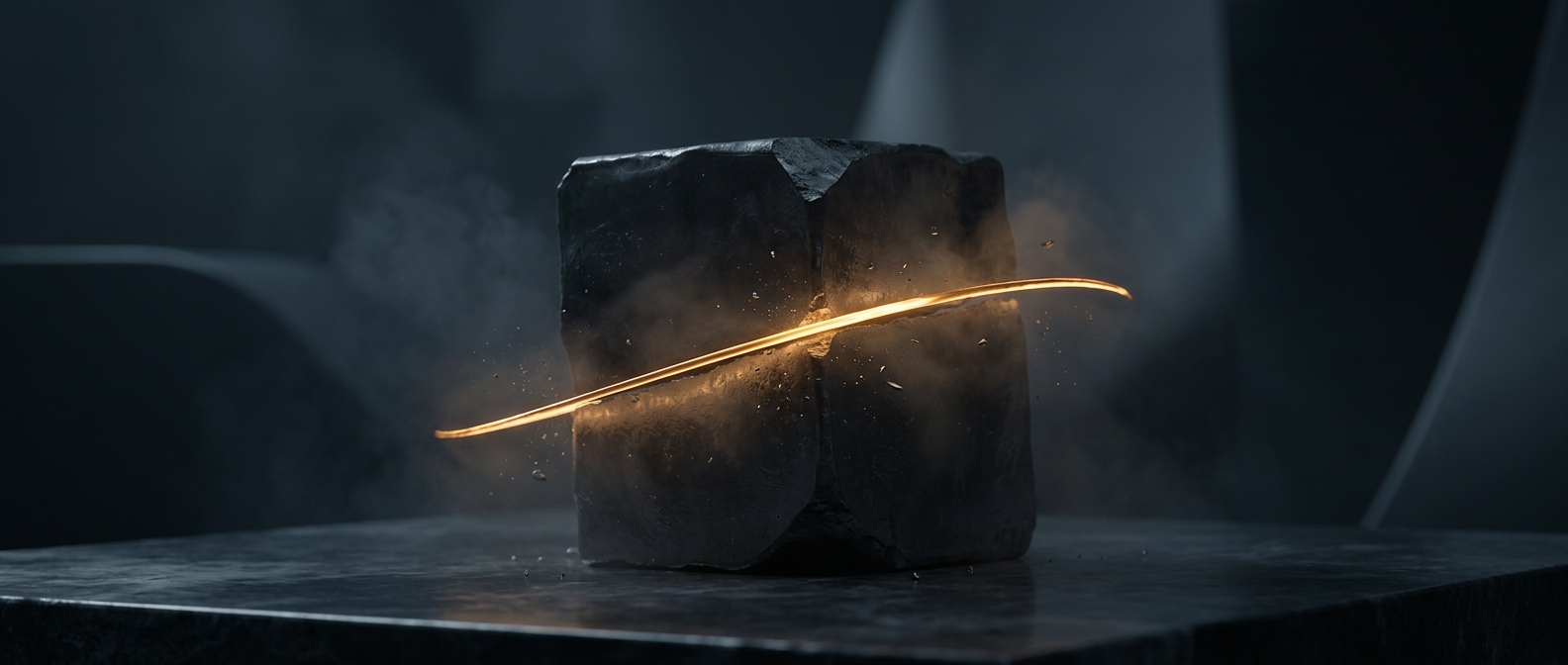
Why Calcium’s Shine Is Hard to See
A newly exposed piece of pure calcium has the bright, reflective surface people associate with metals. That appearance is brief in ordinary air: calcium atoms readily react with oxygen and moisture, forming a duller coating on the surface. The metal underneath can still be silvery, but the coating hides its shine.
What Makes Calcium a Metal
Calcium belongs to a family of elements called the alkaline-earth metals. Like other metals, its atoms can give up some of their outer electrons, leaving them positively charged. Those mobile electrons help metals conduct electricity and reflect light; when light hits a clean calcium surface, it is reflected rather than absorbed, producing the metallic gleam.
Calcium is less reactive than some familiar metals, such as sodium, but it is still reactive enough that a freshly cut surface does not stay pristine for long. Water can react more strongly with calcium, producing hydrogen gas and calcium hydroxide. That is one reason a sample must be handled and stored carefully if its metallic surface is to be preserved.
The Same Element, Different Chemical Forms
In everyday materials, calcium is usually bonded to other elements. In limestone and chalk, it is part of calcium carbonate; in bones and teeth, calcium is incorporated into mineral compounds that give them strength. These substances do not have the properties of a chunk of calcium metal, because the atoms are joined in a different chemical arrangement.
The striking contrast is that the calcium important to living bodies and the silvery metal are the same element—but not the same material. To see calcium’s metallic luster, you need a freshly exposed surface, before reactions with its surroundings cover it.