Why a Small Piece of Lead Feels So Heavy
Lead packs a remarkable amount of mass into a given volume. Its atoms are relatively massive, and they sit close together in the solid, so a compact chunk can weigh more than a similarly sized piece of many familiar metals. Density describes that mass per volume; it does not tell you how hard a material is.
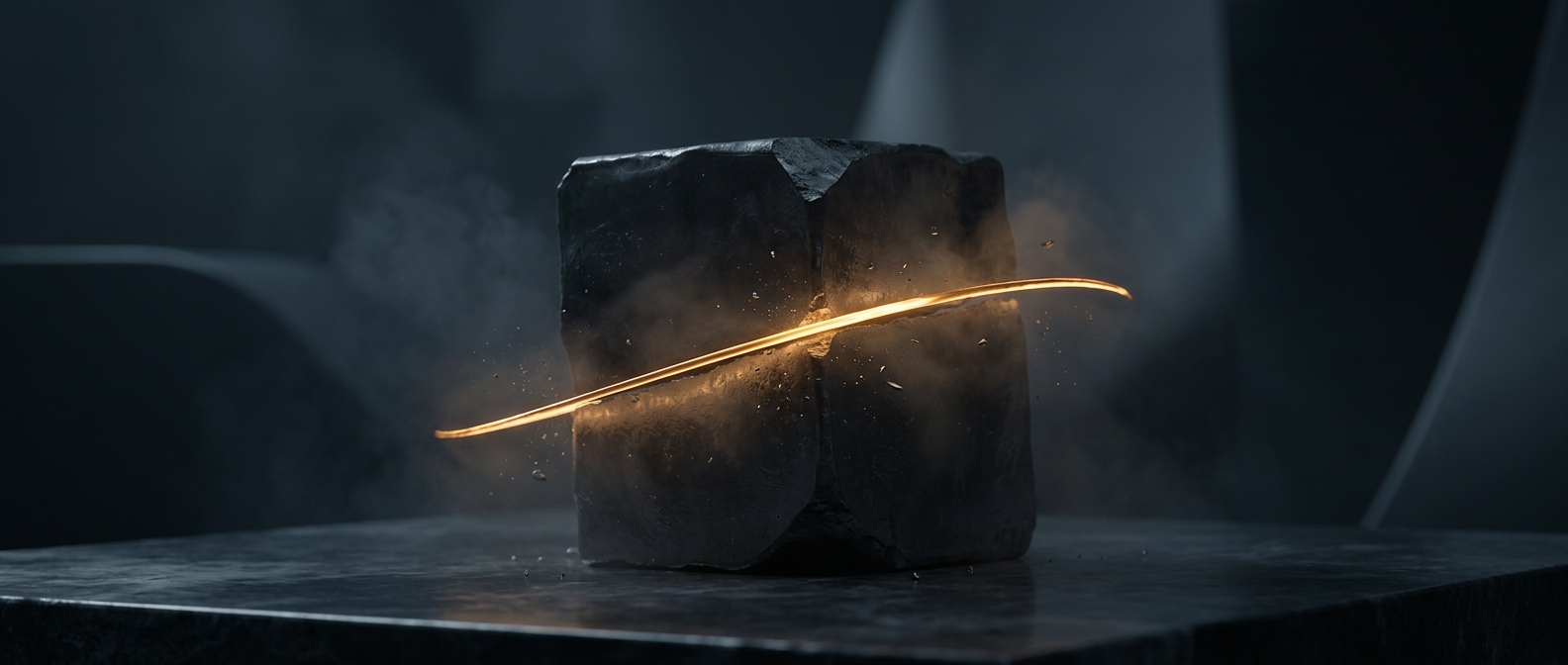
That distinction explains the surprise when a knife can cut lead. A metal can be tightly packed yet still resist changes in shape only weakly.
How Lead Gives Way Under a Blade
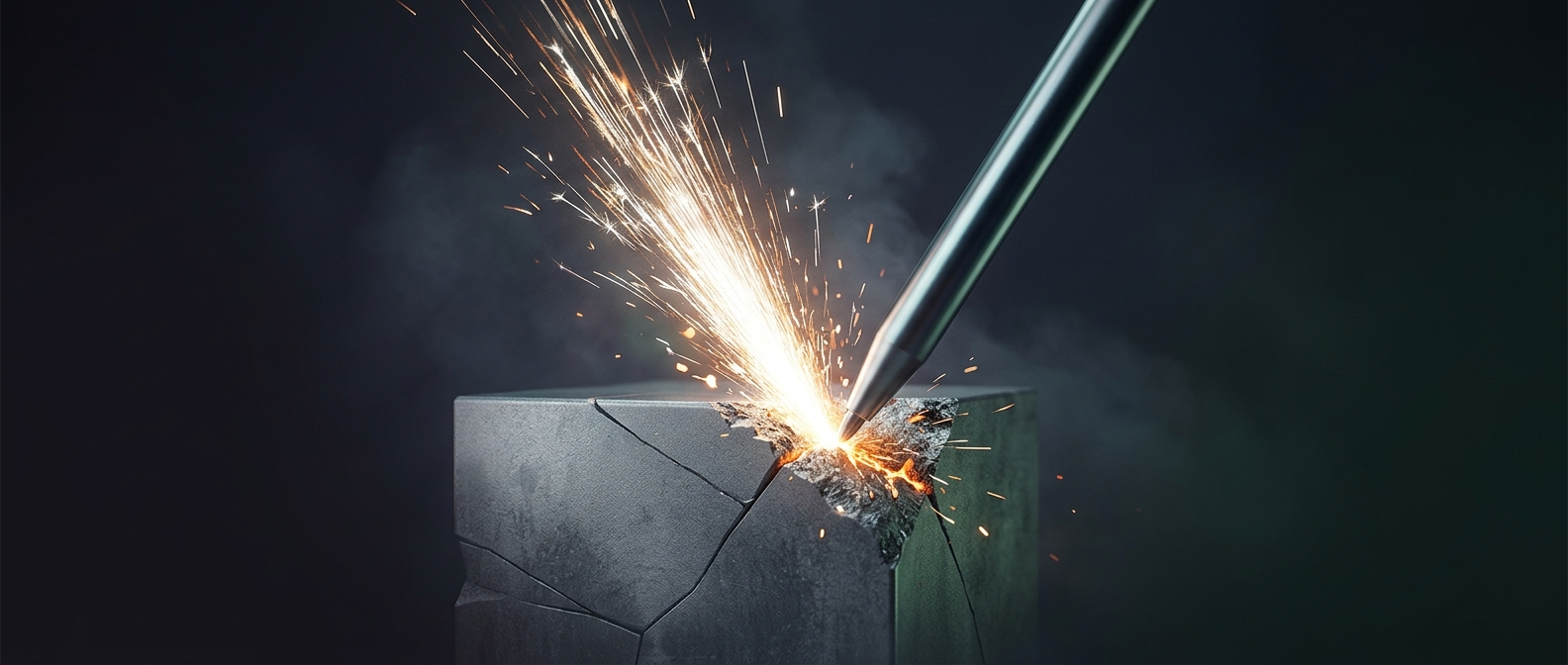
In solid metal, atoms form an orderly arrangement. When force is applied, defects in that arrangement—called dislocations—can move, letting layers of atoms shift without the whole structure having to break apart. In lead, those shifts happen relatively readily at room temperature. A blade concentrates force along a narrow edge, pushing the metal aside and leaving a cut rather than breaking it like a brittle solid.
Lead is also soft compared with many common structural metals. Its atoms are held together by metallic bonds, but softness is not simply a measure of how heavy those atoms are: it depends on how the metal’s atomic structure responds to force and how easily it deforms.
Density and Softness Are Separate Properties
The same piece can therefore be difficult to lift for its size and easy to scratch or shape. This combination is useful to remember when comparing materials: weight comes from mass packed into space; hardness comes from resistance to deformation. Lead’s unusual feel is the result of those two properties pulling in opposite directions.