What the airport’s enormous footprint measures
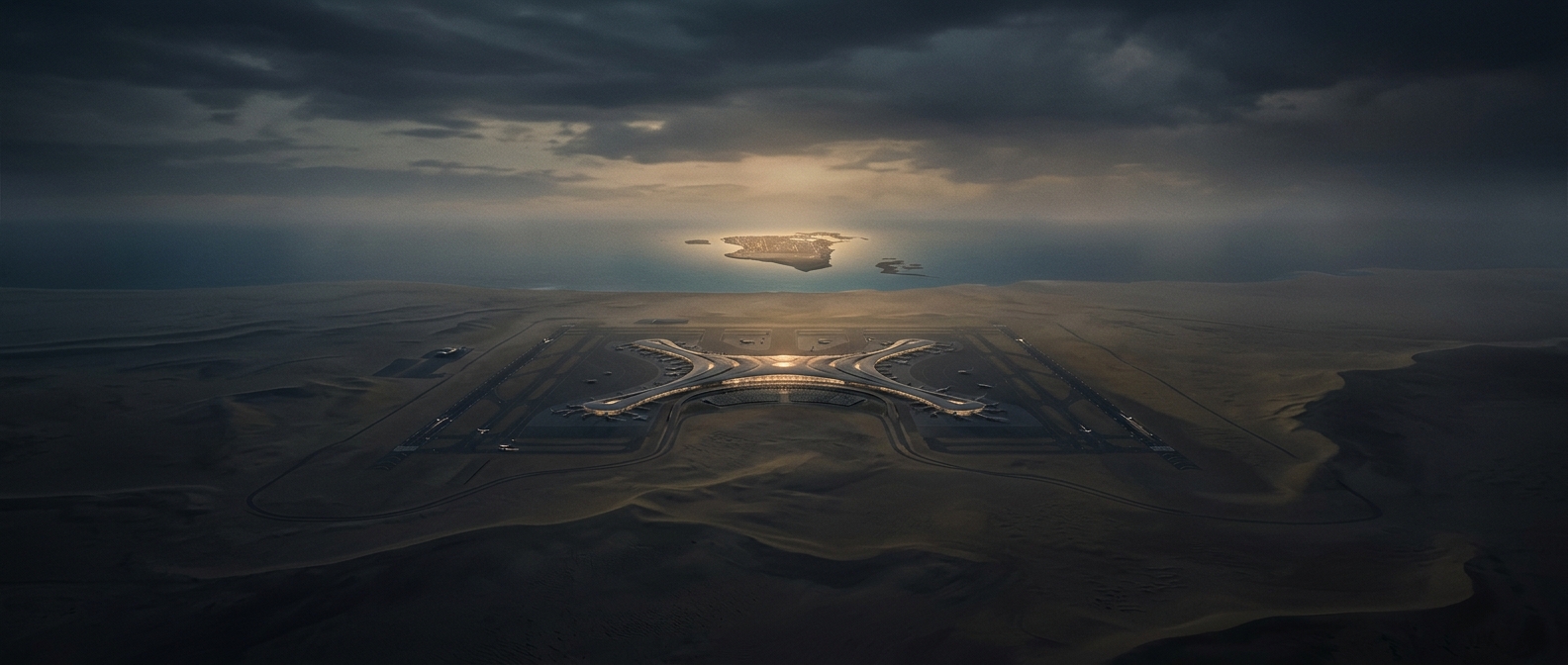
King Fahd International Airport sits inland from Dammam in Saudi Arabia’s Eastern Province. Its often-cited area of about 300 square miles refers to the airport’s whole site, not just the runways, terminals, and other buildings passengers see. The comparison with Bahrain is about land area: the airport’s property is commonly described as larger than the neighboring island country.
That distinction matters. Only part of the site is occupied by active airport infrastructure. The rest includes open land and space that can separate facilities or leave room for future development. A huge boundary on a map does not mean a huge amount of concrete—or that every acre is busy.
Why put an airport on so much land?
Airports need more than terminal floors and runway pavement. Aircraft require clear approaches and safety margins; roads, parking, cargo operations, and maintenance facilities also take space. Keeping those functions within one broad site can make expansion possible without having to build immediately against dense urban development.
King Fahd International opened in 1999, serving Dammam and the wider Eastern Province. Its setting outside the city helps explain how such a vast airport property could be assembled: the land available around a growing urban center is different from the land available in a crowded city core.
The striking detail is that the airport’s scale is largely invisible to a traveler inside the terminal. The statistic describes the room set aside around the airport as much as the working complex itself—an expanse big enough to make an international border seem like a useful measuring stick.