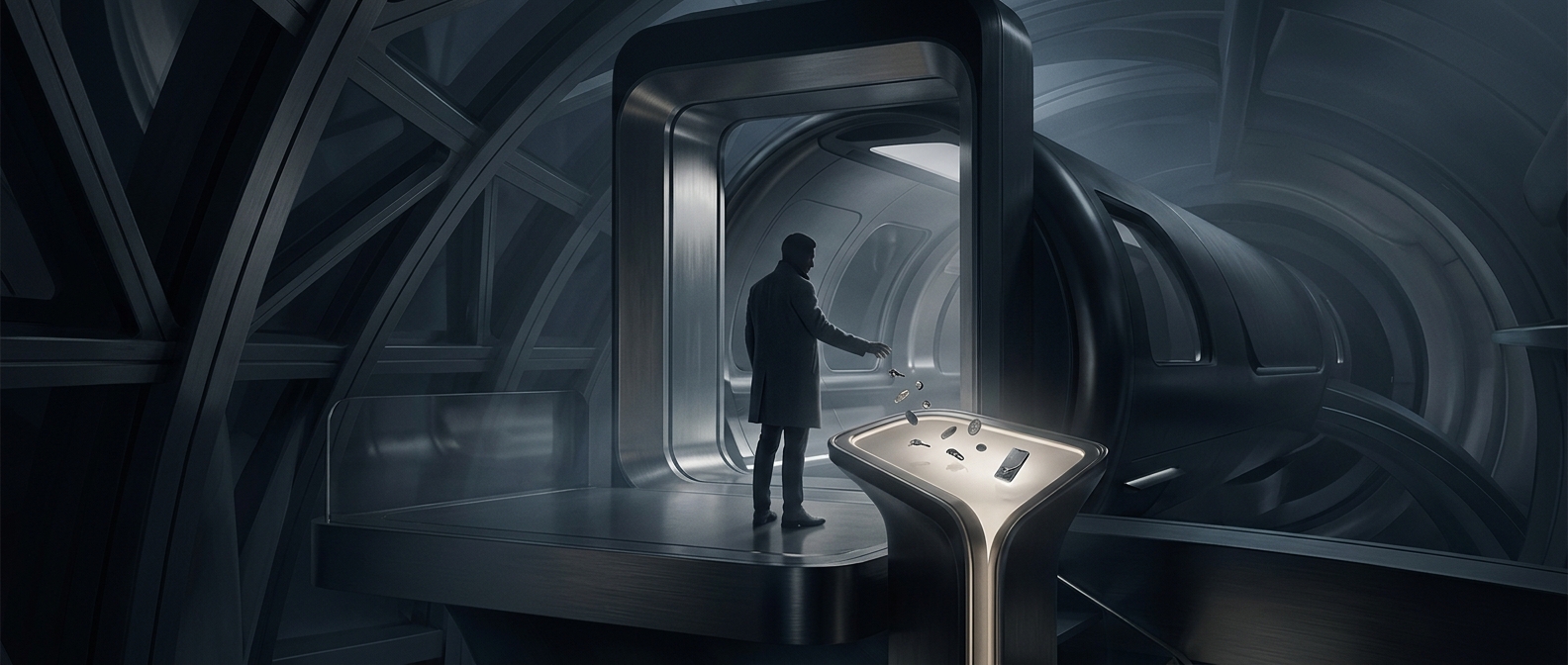
Why the checkpoint turns pockets into a separate inspection
Security screening works by examining passengers and their belongings through different channels. Bags and loose items travel through an X-ray scanner, where their contents appear as shapes and densities for officers to assess. Passengers pass through a detector or body scanner; an alarm can lead to a closer check. Separating metal objects, bulky clothing and pocket contents helps make those checks easier to interpret and reduces the chance that an ordinary item will trigger an alarm.
Each item creates a different problem
A belt buckle may set off a metal detector, while a phone or coins can obscure what is in a pocket. Shoes can be difficult to inspect while worn, so some screening procedures require them to go in a bin. Water bottles are handled differently: restrictions on liquids mean a filled bottle generally cannot pass through the checkpoint, though an empty one may be allowed. The exact routine varies by airport, equipment and screening rules.
The bins make the process visible: passengers watch their belongings pass through a machine while they are screened separately. That can make security feel like a deliberate, shared ritual—not just a search, but a public demonstration that people and their things are being checked before boarding. The inconvenience comes partly from making two inspections happen in parallel, with every loose object kept distinct enough to examine.