A game with an extra suit of trump cards
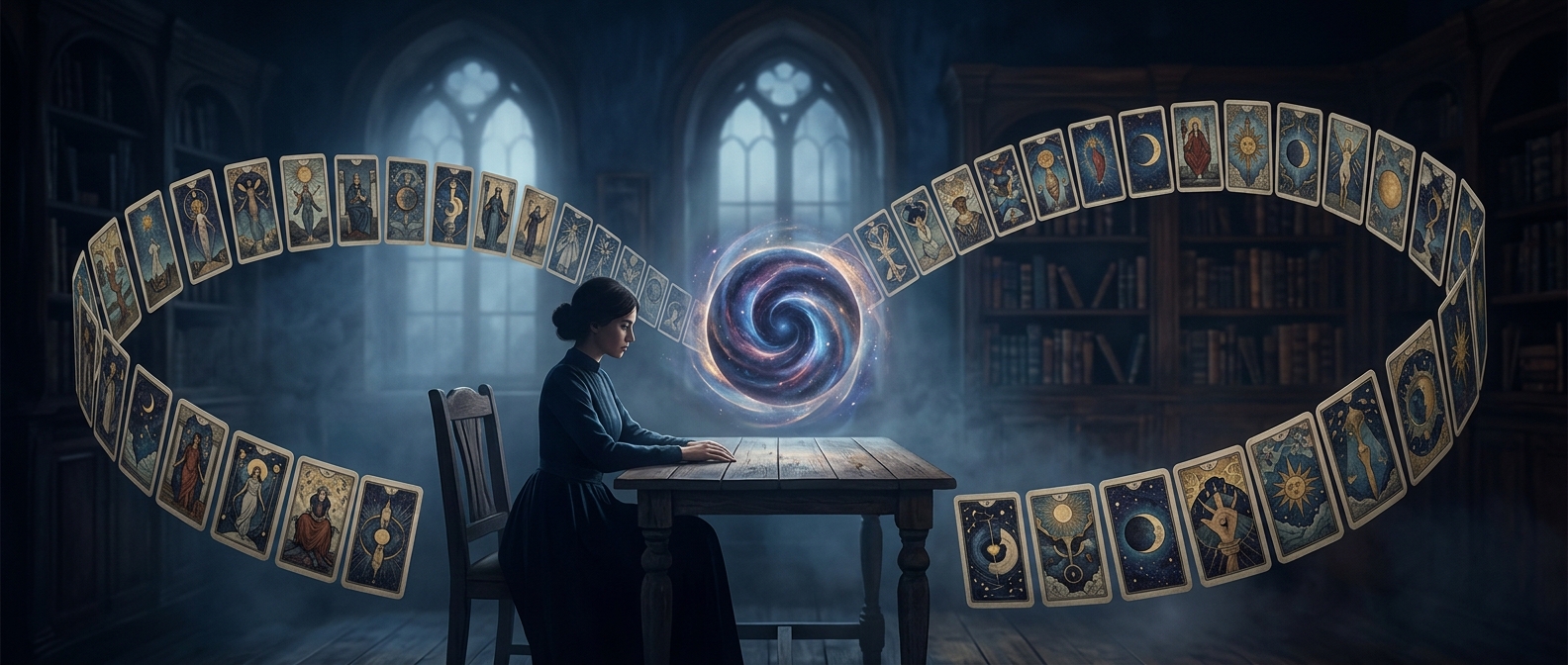
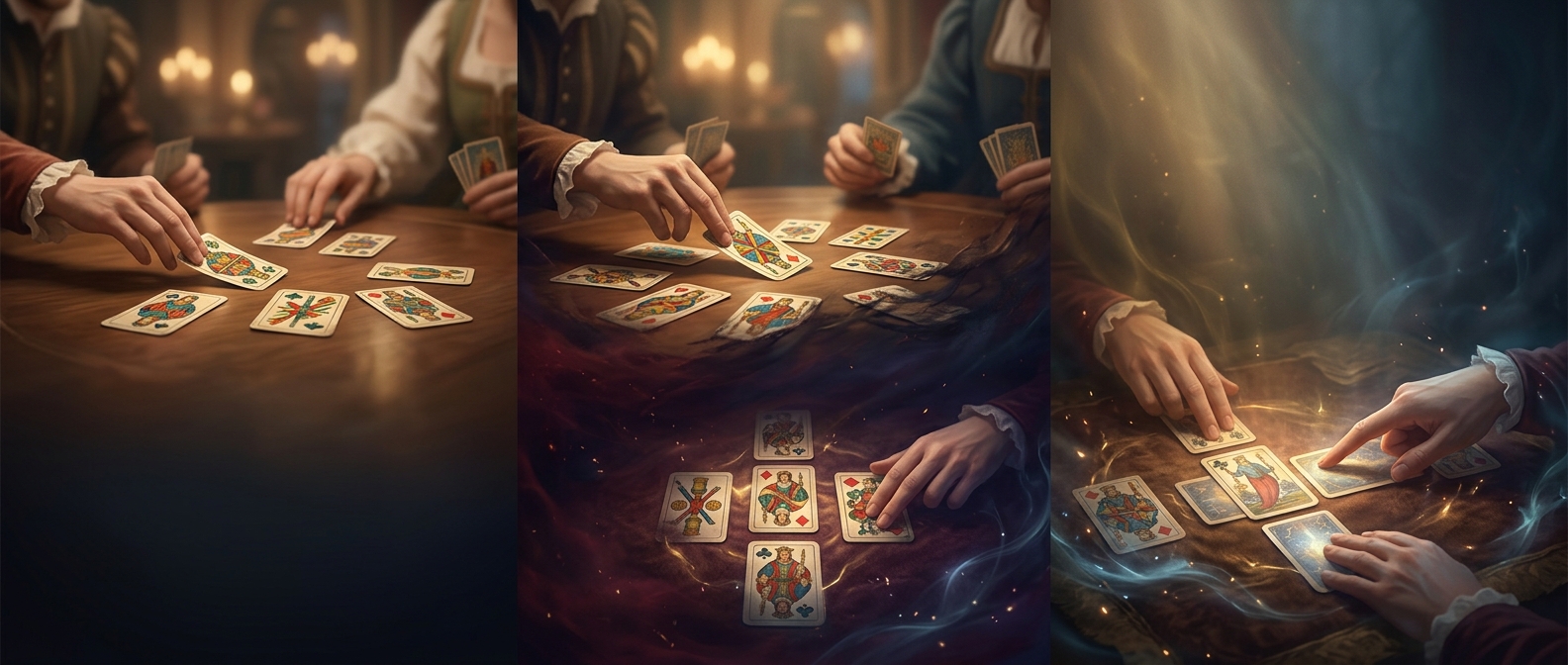
Tarot took shape in 15th-century Italy as a type of playing-card deck. Its distinctive feature was a set of illustrated trump cards: cards that could beat cards from the ordinary suits, much as trumps work in other trick-taking games. Players tried to win tricks—the rounds in which each person plays a card—with the trump cards adding another layer of strategy.
The illustrations were part of the deck, not originally a code for predicting anyone’s future. Early tarot decks were made for play, and tarot games are still played in parts of Europe.
How cards for play became cards for divination
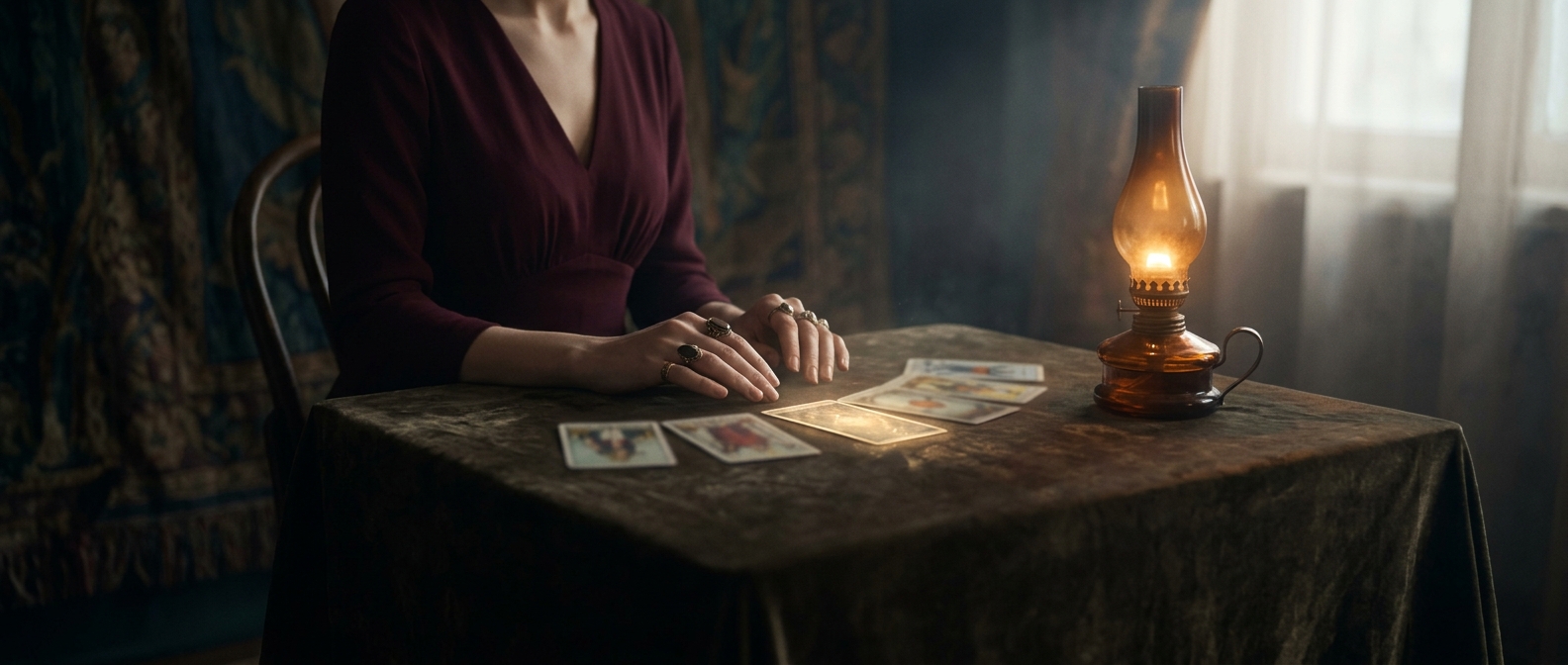
The shift came centuries later. In the late 18th century, French writers began assigning occult meanings to tarot’s images and using the cards for divination. Once the deck was treated as a symbolic system, a spread of cards could be read as a narrative about a person’s circumstances or possible future rather than as a hand in a game.
That later practice changed how many people understand tarot, but it did not erase the deck’s earlier purpose. The cards’ fortune-telling role was an adoption, not the reason tarot was invented. The same images could move from a game table to a reading because their sequence and symbols invited interpretation—while their original trump-card structure remained intact.