Why an FM radio picks one station
A radio tuned to a frequency is listening for a carrier wave: the signal that carries a station’s program. If two stations transmit on the same frequency, their waves arrive together, but an FM receiver usually does not reproduce both programs at once. It tends to follow the stronger signal. This behavior is known as the capture effect.
The reason lies in how FM encodes sound. A station conveys audio by changing the carrier’s frequency, not its strength. Inside the receiver, circuitry limits fluctuations in signal strength before decoding those frequency changes. When one station’s signal is stronger, it can dominate that process, leaving the weaker station’s audio greatly reduced or effectively inaudible.
When the contest is close
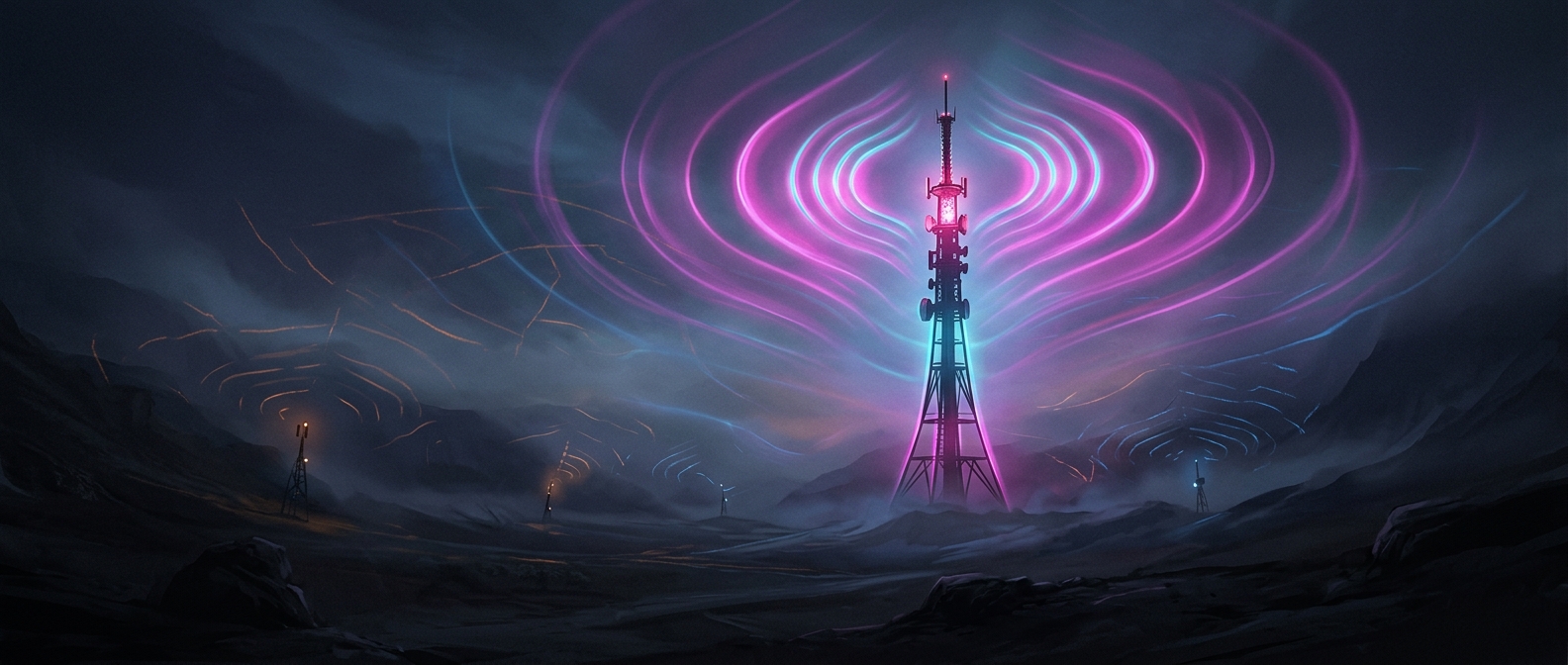
“Capture” is not an all-or-nothing switch. If the signals are nearly equal in strength, the receiver may struggle to settle on either one. The result can be noise, distortion, or a wavering mixture as the balance shifts. Terrain, buildings, and reflections can also alter which signal is stronger at a particular spot, so the station that wins may change as a car moves.
AM radio behaves differently because it encodes sound through changes in signal strength. When two AM signals overlap, those changing amplitudes can interfere with each other more directly, making both programs or their interference audible rather than allowing one to cleanly suppress the other.
The practical consequence is that a small difference in received strength can determine which voice comes through on an FM frequency—while moving a short distance may be enough to change the winner.