Why the squeal picks one note
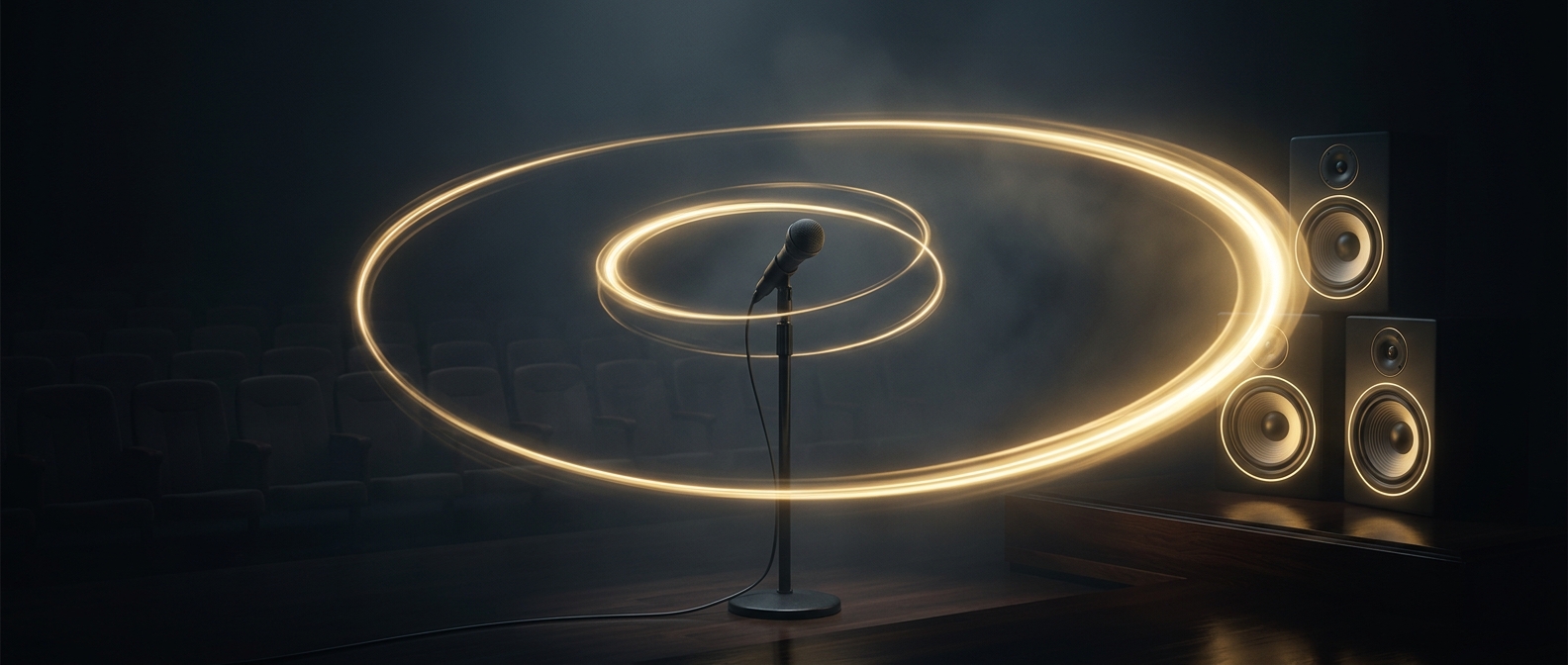
A sound system does not amplify every sound equally. A microphone converts nearby sound into an electrical signal, and an amplifier boosts that signal before sending it to a speaker. If some of the speaker’s output reaches the microphone, the system forms a loop. Each pass can reinforce a particular pitch, while other pitches fade into the background.
The room helps determine which pitch takes off. Walls and surfaces reflect sound, and the spacing between the microphone and speaker affects which frequencies return strongly. When a returning sound lines up in timing and pitch with the signal being amplified, the loop adds energy instead of canceling it. Once that frequency grows enough to dominate, it is heard as a sustained squeal.
The balance that prevents feedback
The key is to keep the loop’s returning signal from gaining strength on each trip. Sound engineers do this by aiming speakers away from microphones, moving microphones closer to the person speaking, and lowering the system’s volume or amplification. These steps reduce how much speaker sound gets back into the microphone.
For larger systems, an equalizer—a control that can raise or lower selected frequency ranges—can reduce the narrow pitch most likely to ring. This is why feedback may disappear after a small adjustment: the goal is not to eliminate all sound, but to weaken the troublesome frequency enough that it no longer builds from one pass to the next.