How a cargo airship could lift timber out of steep country
A logging road is more than a strip of cleared ground. On a mountain slope, it can require cuts and embankments, and it gives heavy trucks a route through terrain that may otherwise be hard to reach. The Flying Whales concept changes the transport problem: instead of bringing a truck to the trees, a large cargo airship would carry timber from the harvest area to a collection point.
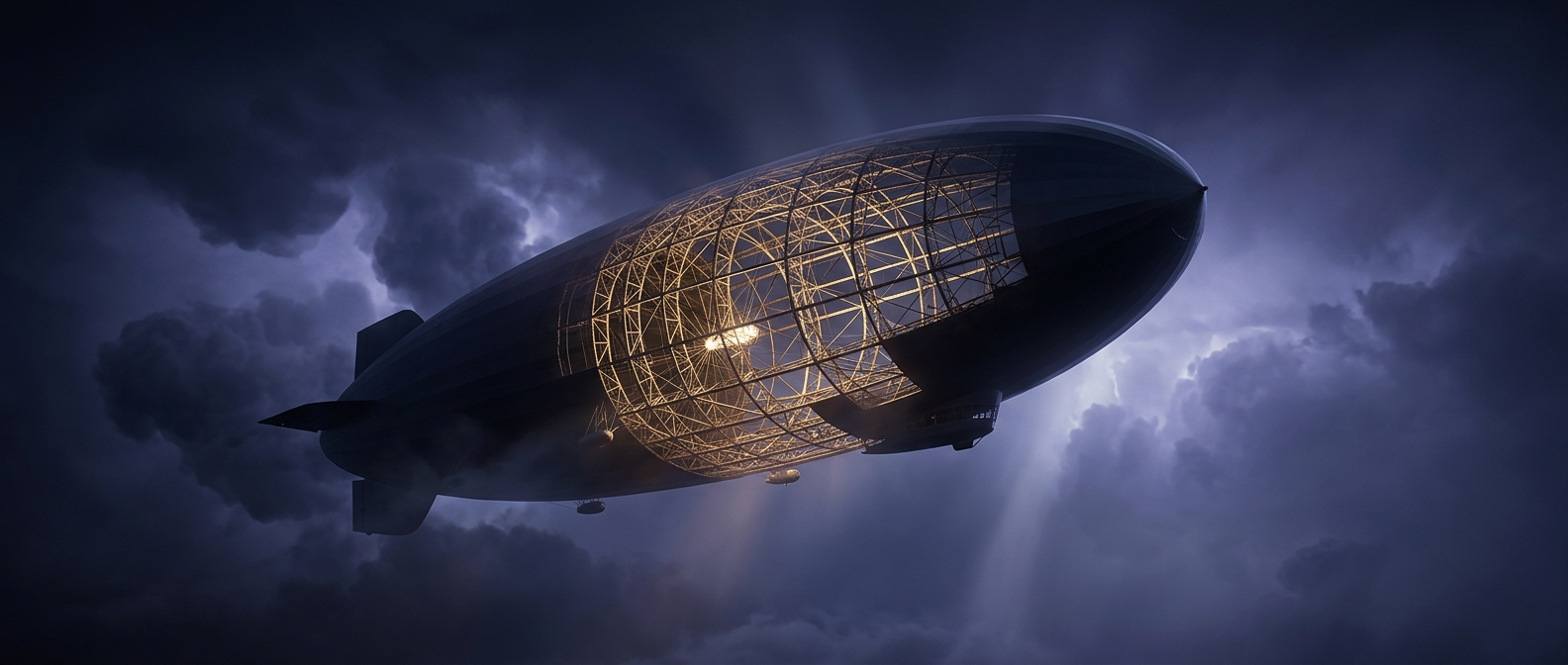
The proposed LCA60T is designed to lift loads of up to 60 tonnes. Its envelope—the large gas-filled body—uses helium for buoyancy. Helium supplies lift, but it does not steer the craft or hold it precisely in place. Engines and control systems would have to counter wind and keep the airship positioned while a cable and winch lower to the load and raise it back aboard.
The road disappears; the hard parts do not
A suspended load swings, and wind can push both the timber and the aircraft off position. The crew must manage the changing weight as wood is lifted, while the airship remains stable near uneven terrain. A practical operation would also need suitable places to assemble the craft, service it, and transfer its cargo. Those requirements shape where the system could work; it is not a way to collect timber from any slope in any weather.
The environmental tradeoff is therefore specific. Airlifting could reduce the need to build roads into some remote or steep areas, limiting the ground disturbance associated with those roads. It would not make forestry impact-free: trees still have to be harvested, and the airship, its support facilities, and the timber’s onward transport still matter. The key test is whether lifting loads through the air is workable where the cost and footprint of road access are especially high.