How a Blimp Pushes Back Against the Wind
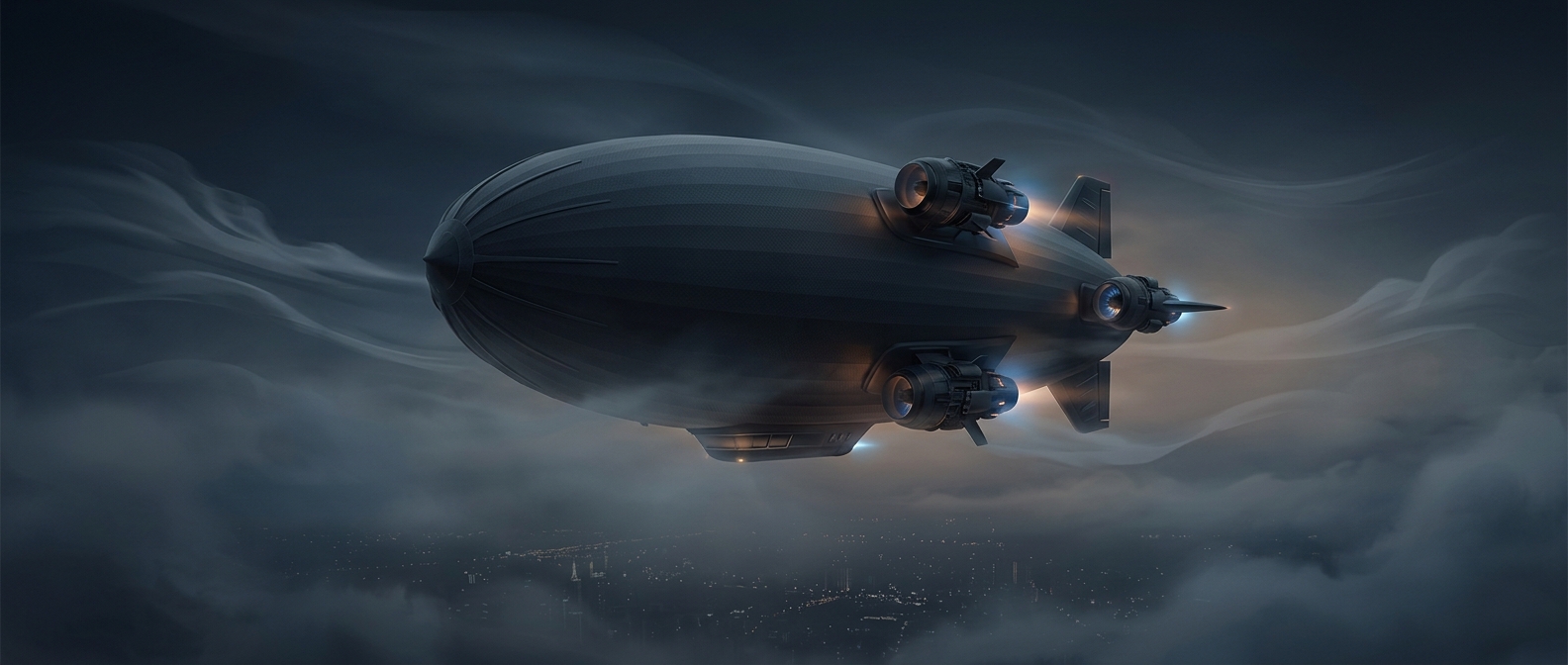
A blimp can be buoyant and still drift. Its gas-filled envelope provides most of the lift, but buoyancy does not anchor the airship to a spot over the ground. If the surrounding air is moving, it carries the blimp along with it.
Vectoring engines help solve that separate problem. Instead of sending all their thrust in one fixed direction, the engines can swivel so their propellers push air at an angle. To resist a breeze, the pilot aims thrust against the wind; the resulting force counters the wind’s push and can keep the blimp nearly stationary relative to the ground.
Lift Is Not the Same as Staying Put
The distinction is like holding a buoyant object at the surface of a stream: its ability to float does not stop the current from carrying it downstream. On a blimp, buoyancy supports the vehicle, while engine thrust provides the force needed to maneuver or resist drift.
That control takes power, and it has limits. If the wind pushes harder than the engines can counter, the airship will move. When the wind is mild, however, swiveling the thrust can let a blimp hover without relying on forward motion to steer. The useful trick is not making the wind disappear, but aiming the engines so their push balances it.