Why the A-10’s cannon shaped the airplane
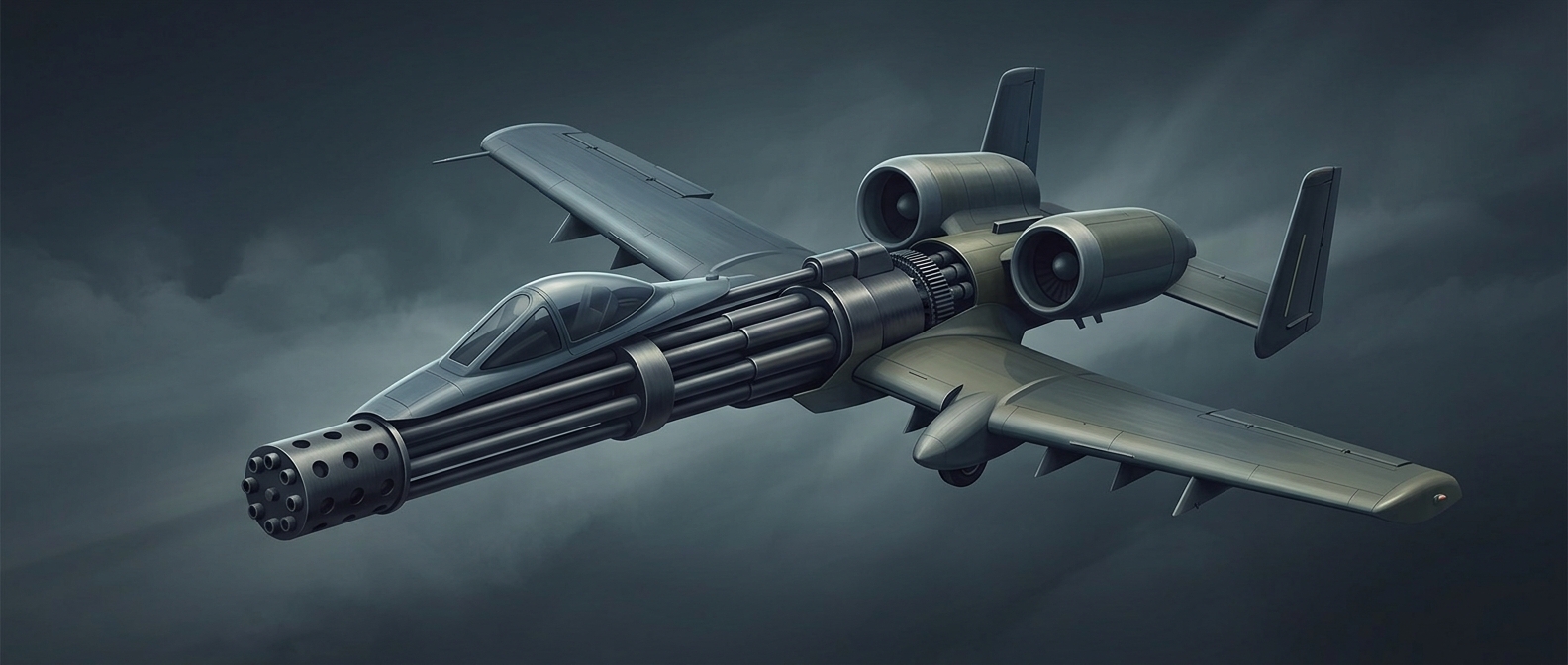
The GAU-8 is a seven-barrel rotary cannon designed to fire 30-millimeter rounds. Its size and recoil force made it more than a weapon that could simply be added to an existing aircraft: the A-10’s structure had to accommodate the gun, its ammunition, and the loads produced when it fires.
That arrangement affected the whole nose. The cannon sits on the aircraft’s centerline, while the cockpit is offset to the left. The front landing gear is also positioned to the right, leaving room for the gun’s barrel assembly. These choices keep the weapon aligned with the plane rather than forcing it into an awkward position.
Making recoil manageable
When a cannon fires, the force pushing the rounds forward also pushes the aircraft backward. The A-10’s designers had to account for that recoil in the airframe and in how the gun was mounted. The gun’s firing cycle is timed so that a round leaves the barrel at the intended point in the cycle, helping the aircraft remain controllable during a burst.
A rotating barrel cluster distributes firing across several barrels instead of making one barrel handle every shot. That helps manage heat and wear during rapid fire. The tradeoff is a substantial system that needs ammunition and a carefully engineered mounting—not a lightweight component that can be tucked into any nose.
The aircraft follows the weapon
Putting the cannon at the center of the design shaped the A-10’s layout, but it did not make the rest of the airplane incidental. The wings, engines, and controls still had to let it fly and operate around the gun. The result is a striking engineering compromise: a conventional-looking aircraft whose cockpit and landing gear are visibly arranged around the demands of its cannon.