Why the Facets Helped Hide an Aircraft
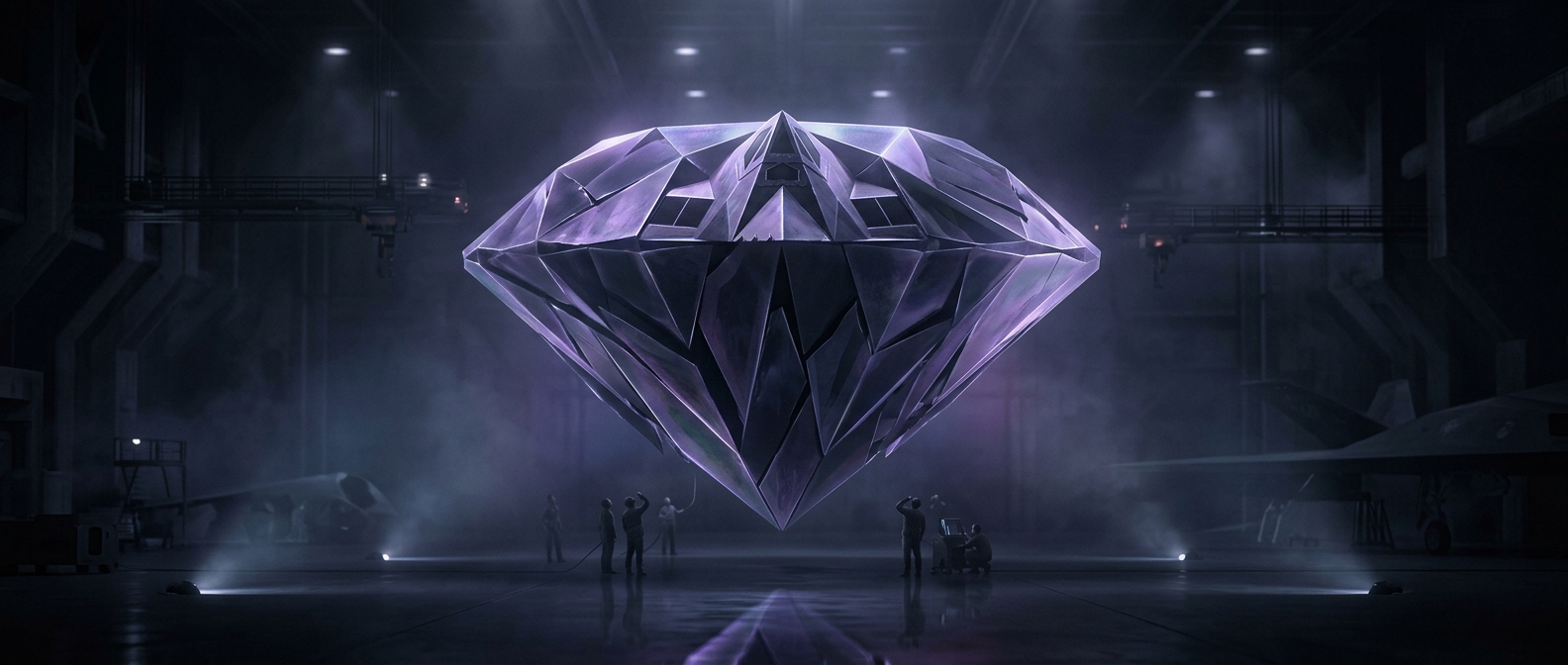
Radar works by sending out radio waves and listening for energy that bounces back. A smooth, rounded aircraft can reflect those waves in many directions, including toward the radar. Early stealth designers instead arranged broad, flat panels at carefully chosen angles. The panels acted more like tilted mirrors: much of the incoming energy was redirected away from its source, leaving a weaker return for the radar to detect.
The diamond-like outline was part of a larger geometry. Designers also had to consider how the edges of the panels were oriented, because edges can scatter radar energy too. The goal was not to make the aircraft invisible, but to reduce its radar cross section—the strength of the echo it presents to a radar—over useful viewing angles.
A Shape With Flight Costs
Those angles constrained the aircraft’s design. Curves and rounded transitions can help an airplane move smoothly through the air, while the flat facets favored by early stealth designs could increase drag and complicate handling. Designers had to balance radar signature against lift, stability, speed, and the space needed for engines and other equipment. The result was a silhouette shaped as much by the need to manage reflections as by the need to fly.
Stealth is also directional: an aircraft can be harder to detect from some angles than others. That makes the diamond shape a practical compromise, not a cloak. Its striking appearance records a specific engineering choice—accepting aerodynamic and design constraints to make less radar energy return to the receiver.