A Pilot as Part of the Airship’s Balance
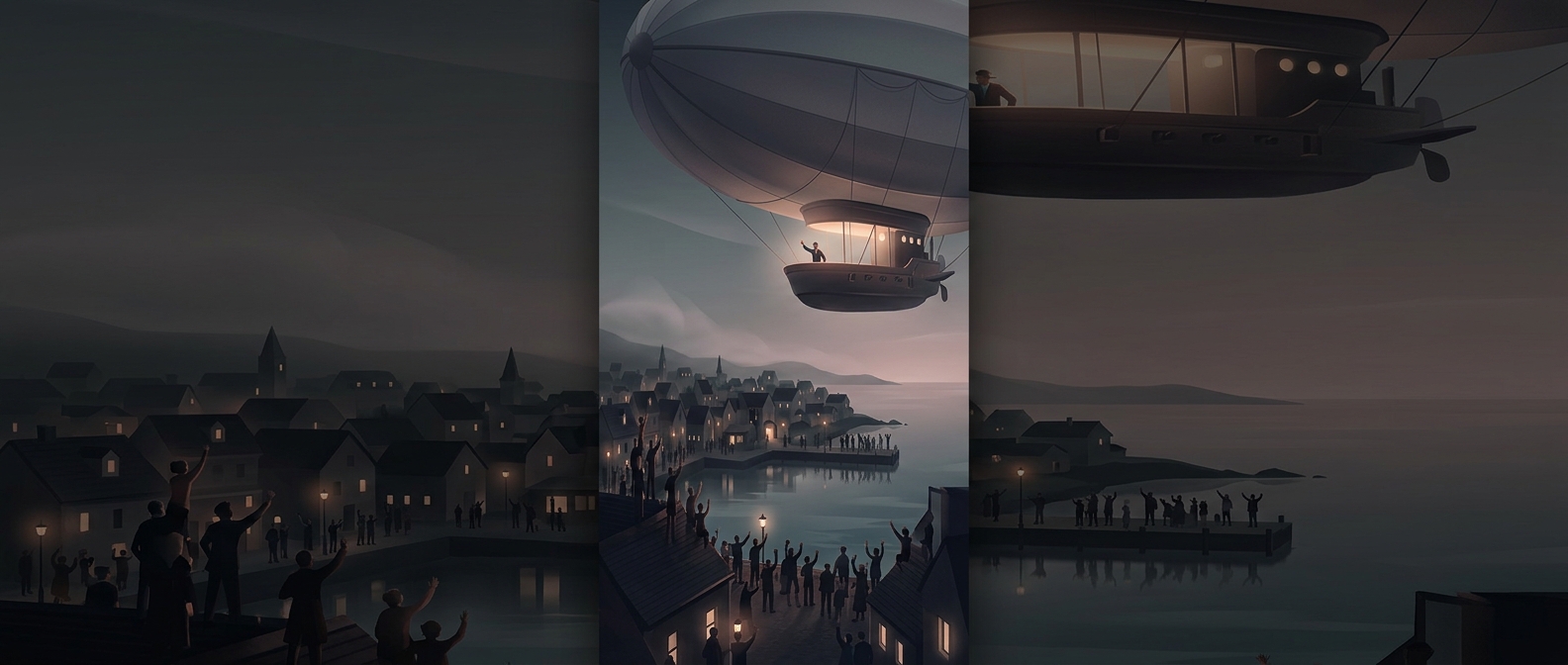
In a small early airship, the pilot was not simply sitting at a bank of controls. Moving within the gondola shifted the craft’s center of gravity—the point where its weight effectively acts—relative to the buoyant lift of the gas-filled envelope. That change could tip the airship’s nose up or down, much as shifting your weight changes the balance of a seesaw.
The effect was modest, but it mattered in a vehicle with little engine power and limited control equipment. A pilot could help alter the craft’s attitude, or the angle at which it traveled, by becoming movable ballast rather than relying only on a lever or wheel.
Tilting the Nose Wasn’t the Same as Turning
Changing the nose’s angle did not, by itself, make an airship turn like a car. The craft still needed forward motion and control surfaces—such as a rudder—to direct its path. Weight shifting was one way to influence the airship’s balance and orientation, not a substitute for propulsion or steering altogether.
That distinction captures the ingenuity and limits of early airship handling: when machinery could do only so much, the pilot’s own position became part of the control system. A change as ordinary as leaning or moving across a cramped gondola could help shape how the whole craft sat in the air.