From Captain Kirk to Michael Myers
The blank face behind Michael Myers began as a mask of William Shatner as Captain James T. Kirk from Star Trek. For Halloween (1978), production designer Tommy Lee Wallace altered the store-bought mask rather than having a custom monster face made—a practical choice for a low-budget film.
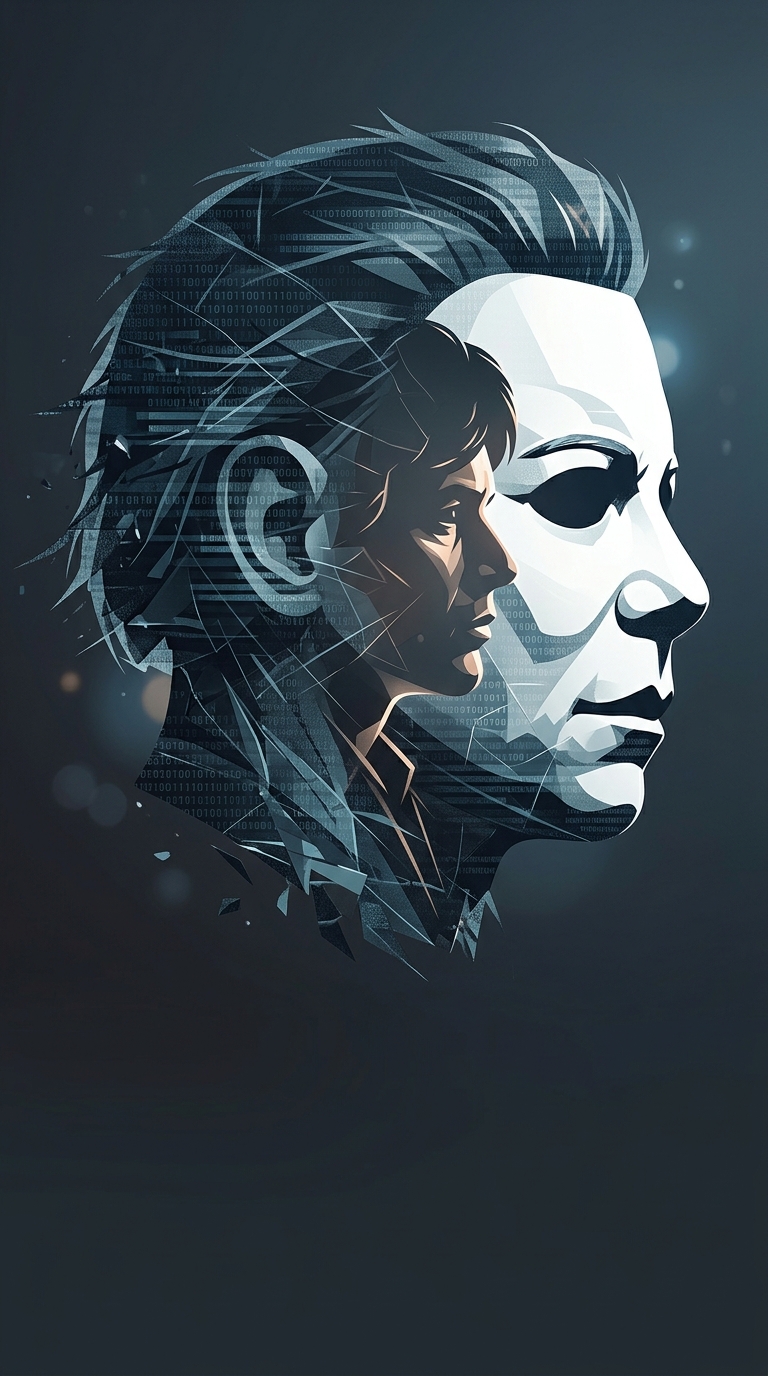
Wallace removed the mask’s hair, enlarged its eye openings, and changed its color. Those alterations stripped away the recognizable features of Shatner’s face and left a pale, nearly expressionless shape. The result was not a snarling creature’s face but something closer to an ordinary human face with its personality erased.
Why the plainness feels disturbing
A face normally gives viewers clues: a glance, a frown, a hint of recognition. Myers’s mask offers almost none. Its fixed features do not reveal what he is thinking, so the audience cannot read his intentions or connect with him in the way it might with a visibly emotional villain.
That emptiness also made the mask work at a distance. In dim scenes, viewers could register a pale face without seeing the actor’s expressions underneath. A familiar television star’s likeness had been reduced to a few simple shapes—and, with that, turned into a face that seemed familiar but gave nothing back.