Why a Buggy Needs a Warning Before a Driver Can Judge Its Speed
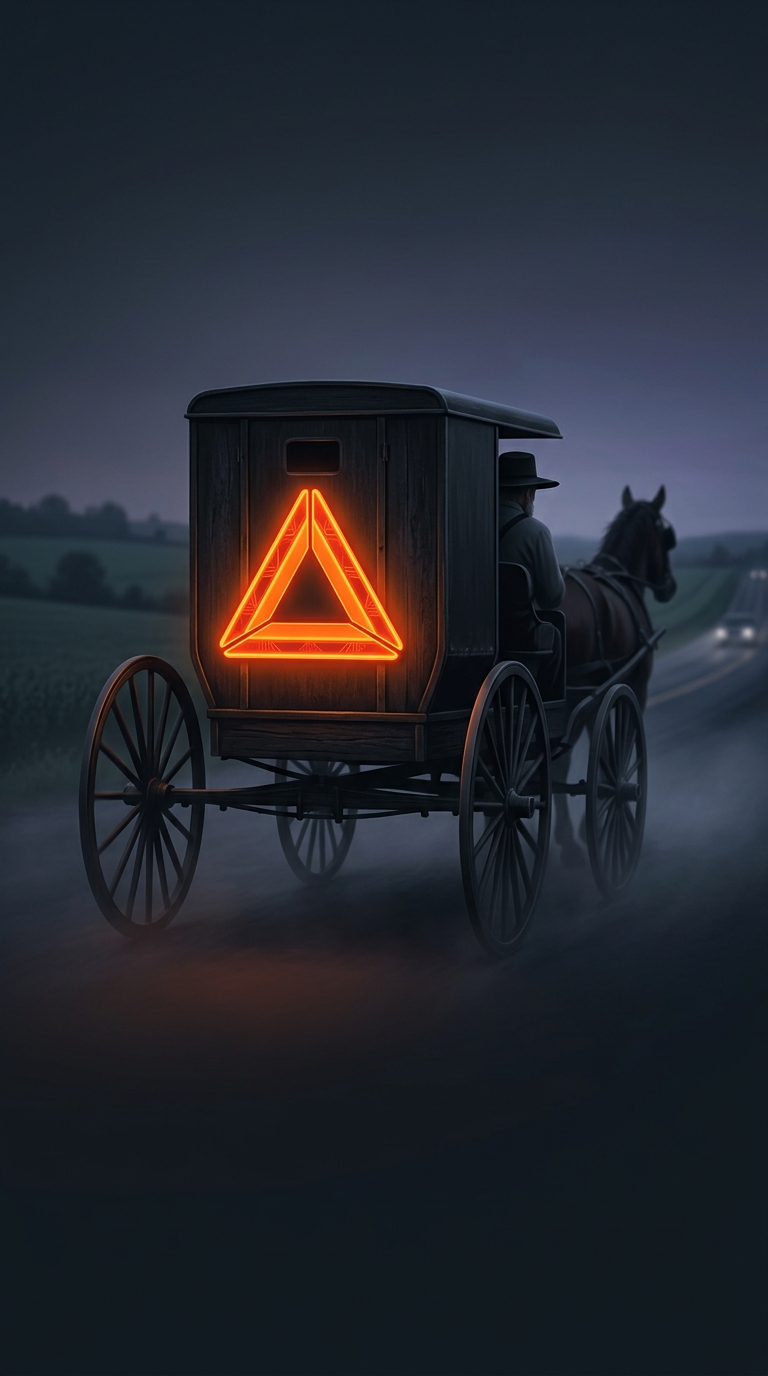
A horse-drawn buggy can be difficult to read from behind. Against a dark road, its wooden shape may blend into the background, and a driver approaching at highway speed can close the gap far faster than the horse can travel. The orange slow-moving-vehicle emblem gives drivers an unmistakable early cue: this is a vehicle moving much more slowly than the traffic around it.
Pennsylvania requires the emblem on horse-drawn buggies. It is a standardized triangle, not merely a bright patch of color. Its fluorescent orange center stands out in daylight, while a reflective red border returns light from headlights toward the driver after dark. Those features help the marker work in different conditions, though they cannot replace a driver’s attention or safe following distance.
A Small Marker Changes the Time Available to React
The emblem does not make a buggy faster or make a collision impossible. Its job is to help an approaching driver recognize the speed mismatch sooner—before the buggy’s size and pace become obvious at close range. That extra recognition time can matter when a driver needs to slow down, wait for a safe passing opportunity, or account for oncoming traffic.
The marker is a practical compromise on roads shared by vehicles with very different speeds. It lets a traditional horse-drawn vehicle remain visible within modern traffic without changing how it is powered. The triangle’s important work is not decoration: it tells the driver behind the buggy what kind of road user lies ahead, early enough to respond.