Paris built a new arrival system for the exposition
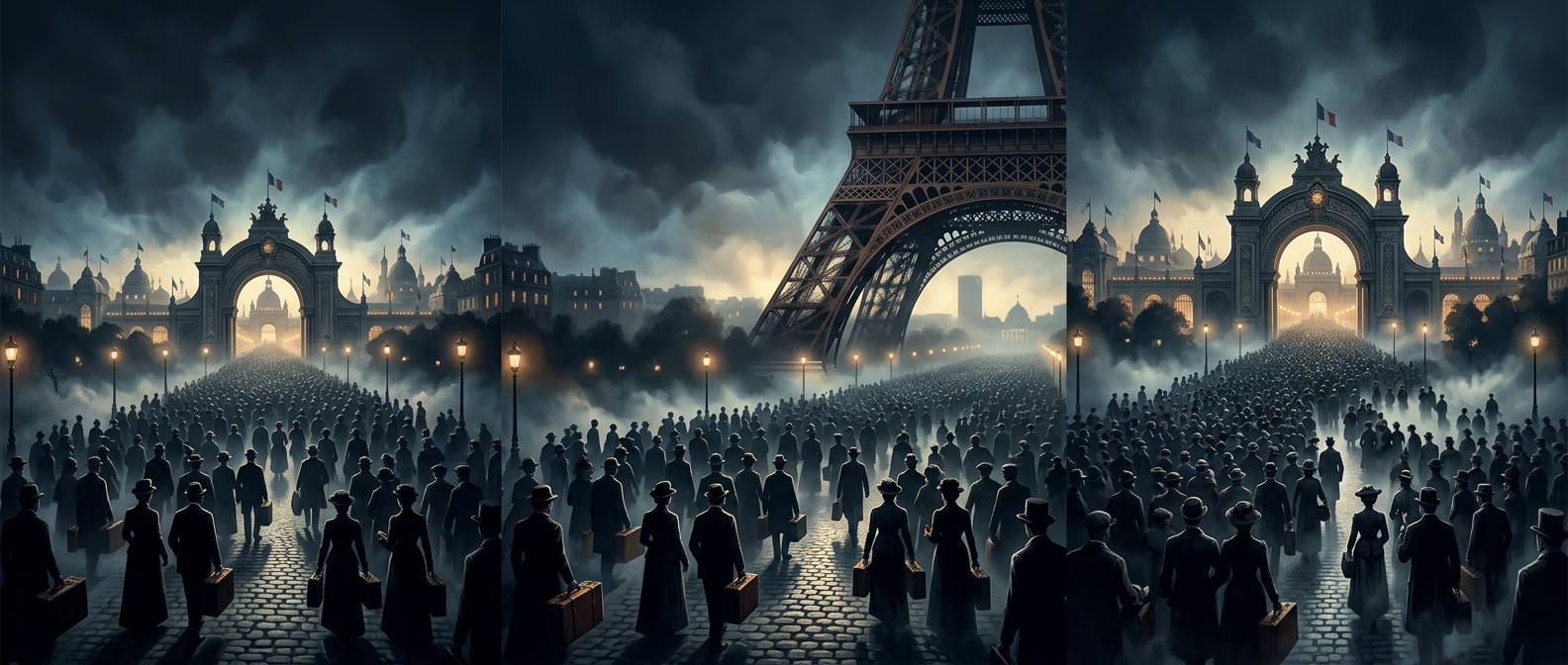
The 1900 Exposition Universelle spread across a large stretch of Paris, with attractions on both sides of the Seine. Visitors arriving by long-distance train still had to get from the city’s railway terminals to the exhibition grounds—and then move between sites. The challenge was not simply bringing people into Paris; it was carrying them through it.
A railway station brought trains closer to the center
Gare d’Orsay gave trains from the southwest a new terminal near the river and the exposition area. Its great iron-and-glass train hall was enclosed behind a grand stone façade, making a modern transport building fit into the historic cityscape. The station’s central location shortened the onward journey for visitors who otherwise would have arrived farther from the main attractions.
The Métro made the city itself part of the route
Paris also opened the first section of its Métro during the exposition, in July 1900. Its route connected Porte Maillot in the west with Porte de Vincennes in the east, offering a way to cross the city without relying on crowded streets and surface transport. Because it opened after the fair began, it did not solve the initial rush—but it became part of the infrastructure that helped Paris handle movement on a much larger scale.
The lasting change was practical: a major international event helped bring both a new rail terminal and an underground city railway into service, turning the trip between Paris’s gateways and its attractions into a more direct journey.