A fixed set creates an unpredictable deal
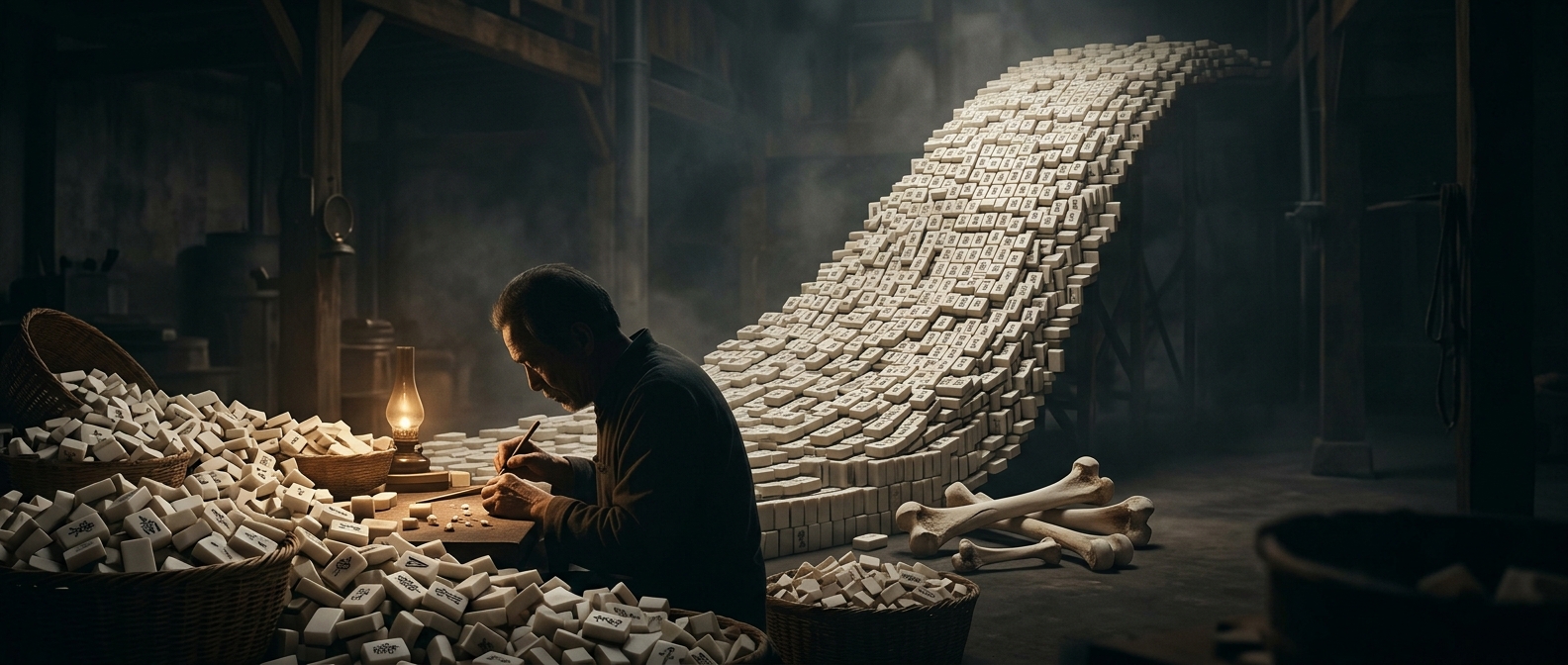
A standard 144-tile set is not a pile of interchangeable pieces. It contains four copies of each numbered tile in three suits, four copies of each wind and dragon, and eight flower and season tiles. Those counts shape what hands are possible: a player can collect matching tiles or build sequences from consecutive numbers, but there are only four copies of any particular tile to go around.
At the start, tiles are shuffled and dealt, leaving the rest face down as the wall. Players draw from that wall and discard tiles they do not want. The tile mix is fixed; which player receives which tiles, and in what order the rest appear, is not. A promising hand can become difficult to finish if the needed tiles are held by opponents or never drawn in time.
Discards offer clues, not certainty
Every discard becomes public evidence. If someone throws away a tile, they cannot still have that copy in their hand. A player who repeatedly keeps tiles from one suit may be pursuing a hand built around it. Skilled opponents use these clues to estimate what others need and avoid feeding them useful tiles.
But the evidence is incomplete. The tiles in opponents’ hands and the wall remain hidden, and the same discard can fit several plans. A player may keep a tile for a hand that is not obvious—or change course as new draws arrive. Reading the table is therefore a matter of probabilities, not knowing another hand outright.
Skill narrows the odds; chance still matters
Experienced players improve their chances by choosing discards that keep more possible hands open, tracking visible tiles, and judging when a risky discard is worth making. Yet no decision controls the next draw or the choices of three opponents. A novice can happen to draw exactly what is needed, while a stronger player waits for a tile that never arrives.
That tension is built into the tile supply: its repeated patterns make planning possible, while the hidden distribution keeps every plan vulnerable to chance.