Quantum teleportation moves a state, not a body
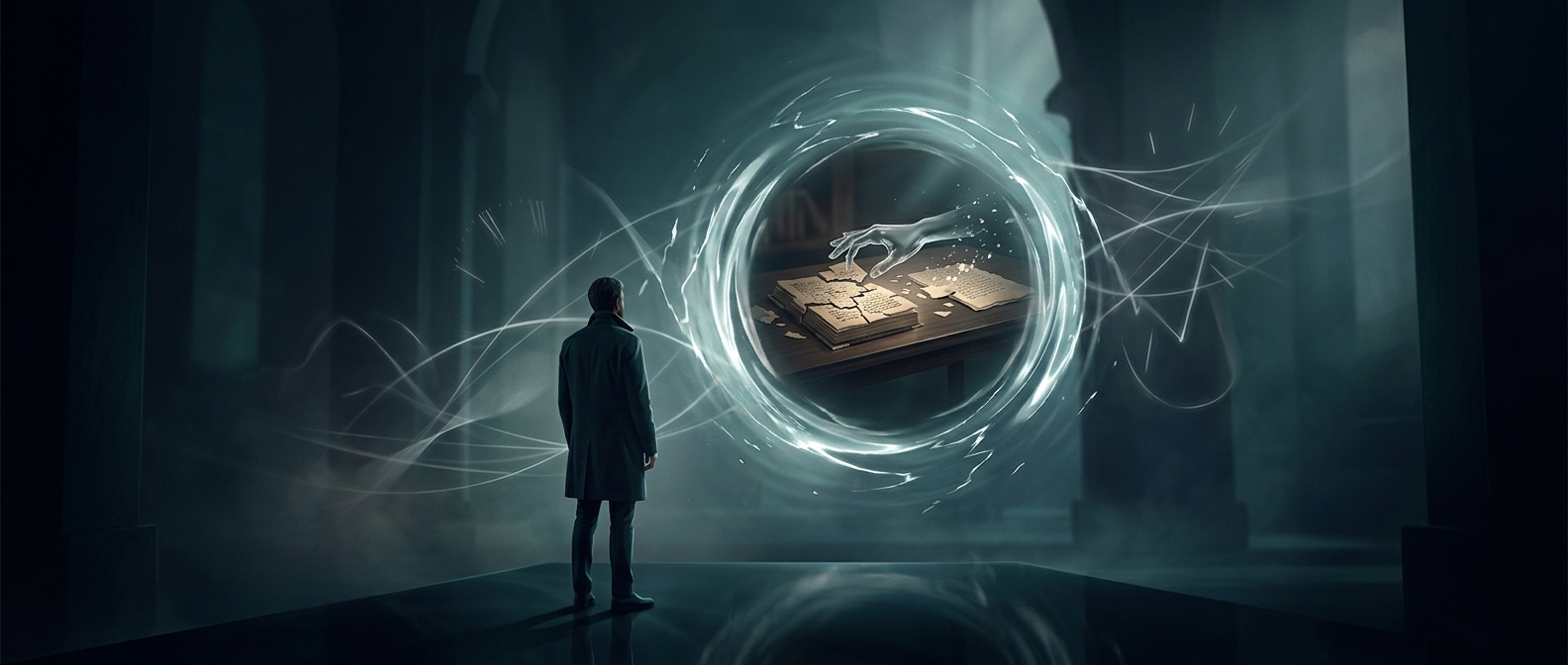
The word “teleportation” makes the process sound like transportation. In physics, quantum teleportation transfers the state of a particle—the information describing its quantum properties—to another particle. The matter itself stays where it is: the sender’s particle is not shipped across space, and the receiver’s particle was already there.
Why the original state cannot simply remain
The sender and receiver first share a pair of entangled particles, whose quantum properties are linked. The sender then measures the particle whose state is to be transferred together with their half of that pair. That measurement changes the original state, while producing an ordinary measurement result that must be sent to the receiver through a conventional communication channel.
Once the receiver gets that result, they use it to make a corresponding adjustment to their particle. The receiver’s particle can then take on the state the sender’s particle had. The measurement erases the original state in the process, so this is not a way to make a perfect second copy while leaving the first untouched.
Why it does not teleport a person
A person is not just one quantum state or a parcel of matter. Reproducing a person this way would require transferring an immense amount of information about an enormously complex physical system, with the necessary quantum resources and measurements. The protocol does not gather up atoms, move them, or assemble a body at the destination.
So the “destroy the original and print a copy” image is a science-fiction extrapolation, not a consequence of the laboratory technique. Quantum teleportation’s striking tradeoff is narrower: the original quantum state is consumed, but the particle that receives it is a different particle already waiting elsewhere.