The Support Has to Disappear From One View
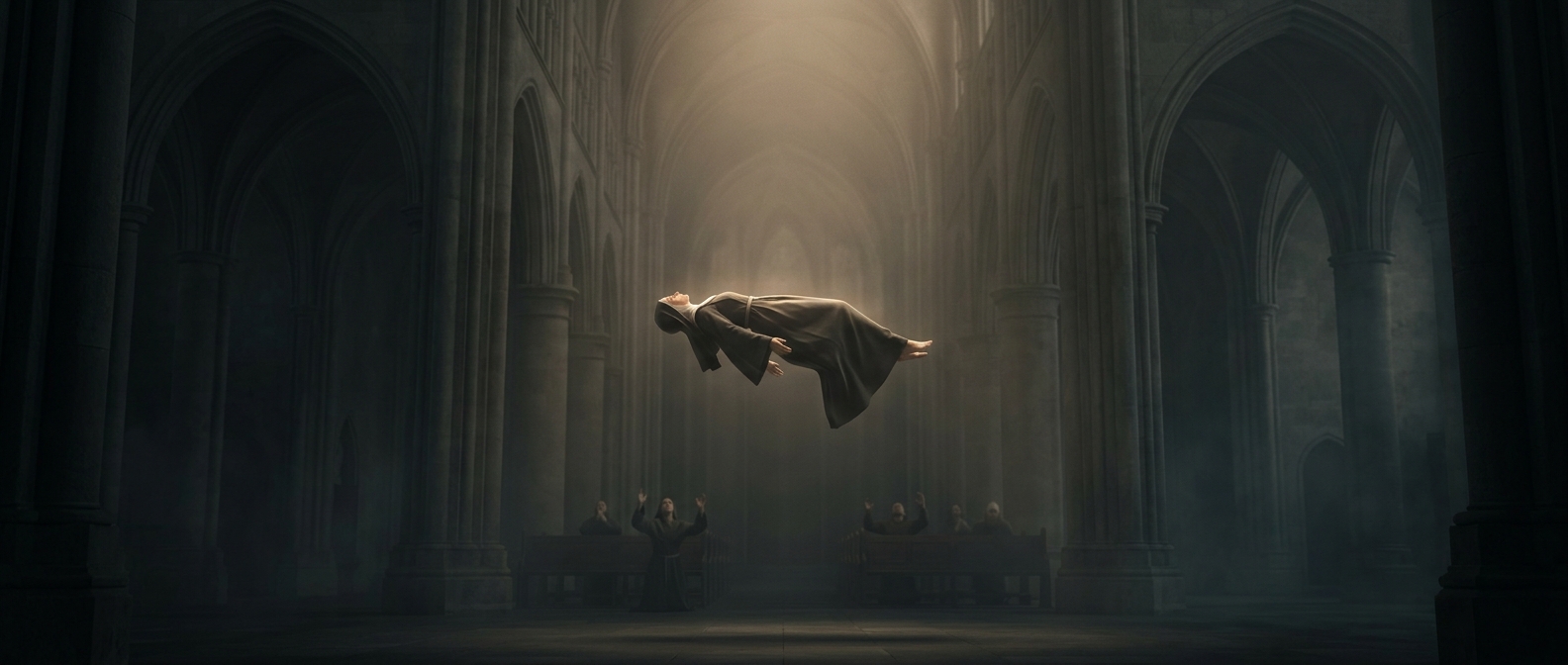
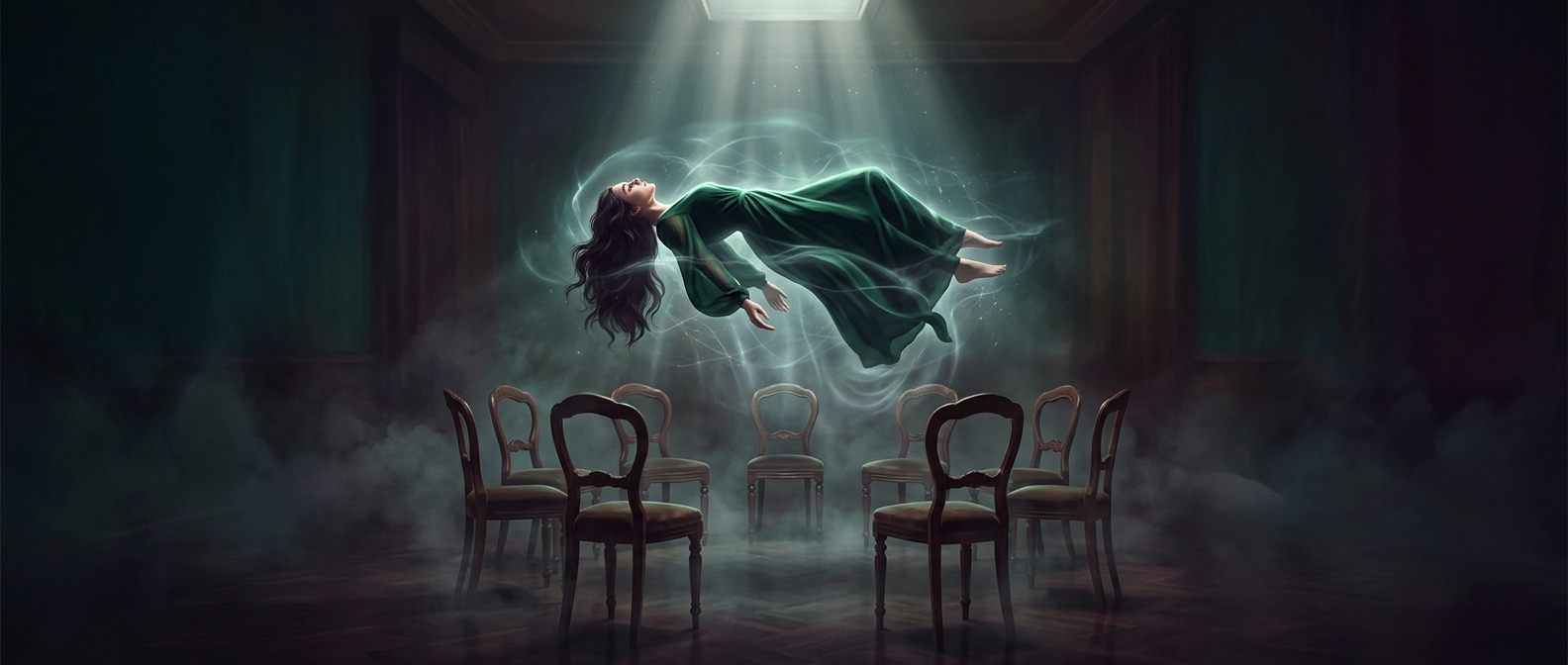
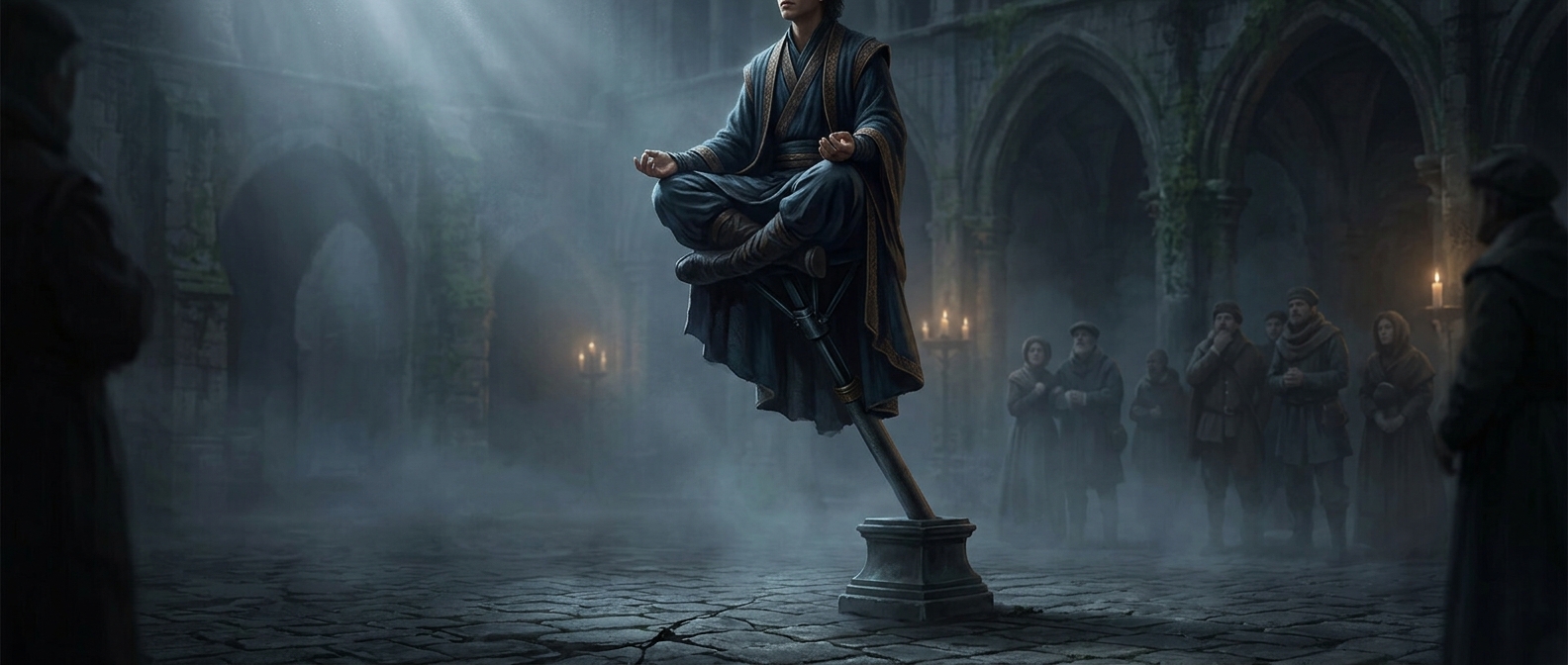
In some levitation acts, the performer is held up by a rigid steel support positioned where the audience is least likely to see it. The trick is not that the steel vanishes; it is that the stage picture hides the connection between performer and support. From the intended viewing angle, the body appears to float while the structure blends into a dark background, costume, or other part of the setup.
The support carries the performer’s weight and keeps the body steady. That stability matters: a visible wobble or a glimpse of metal can reveal the illusion more quickly than the audience can work out how the trick is built. The performer’s pose and stillness help make the suspended position look deliberate rather than supported.
Sightlines Complete the Illusion
A sightline is the path between a viewer’s eyes and the stage. The apparatus can be hidden for people seated in one area yet exposed to someone standing off to the side. Lighting, stage layout, and the audience’s attention therefore matter as much as the steel itself. A magician may direct attention toward the performer’s face or gestures while keeping the support in a visual blind spot.
That is why these effects are designed for a particular viewpoint, not as objects that look impossible from every angle. The audience sees a convincing image of unsupported flight because the support is real but concealed. Move outside the carefully controlled view, and the apparent miracle can become an arrangement of metal, posture, and perspective.