When Teresa’s Ecstasy Became a Public Event
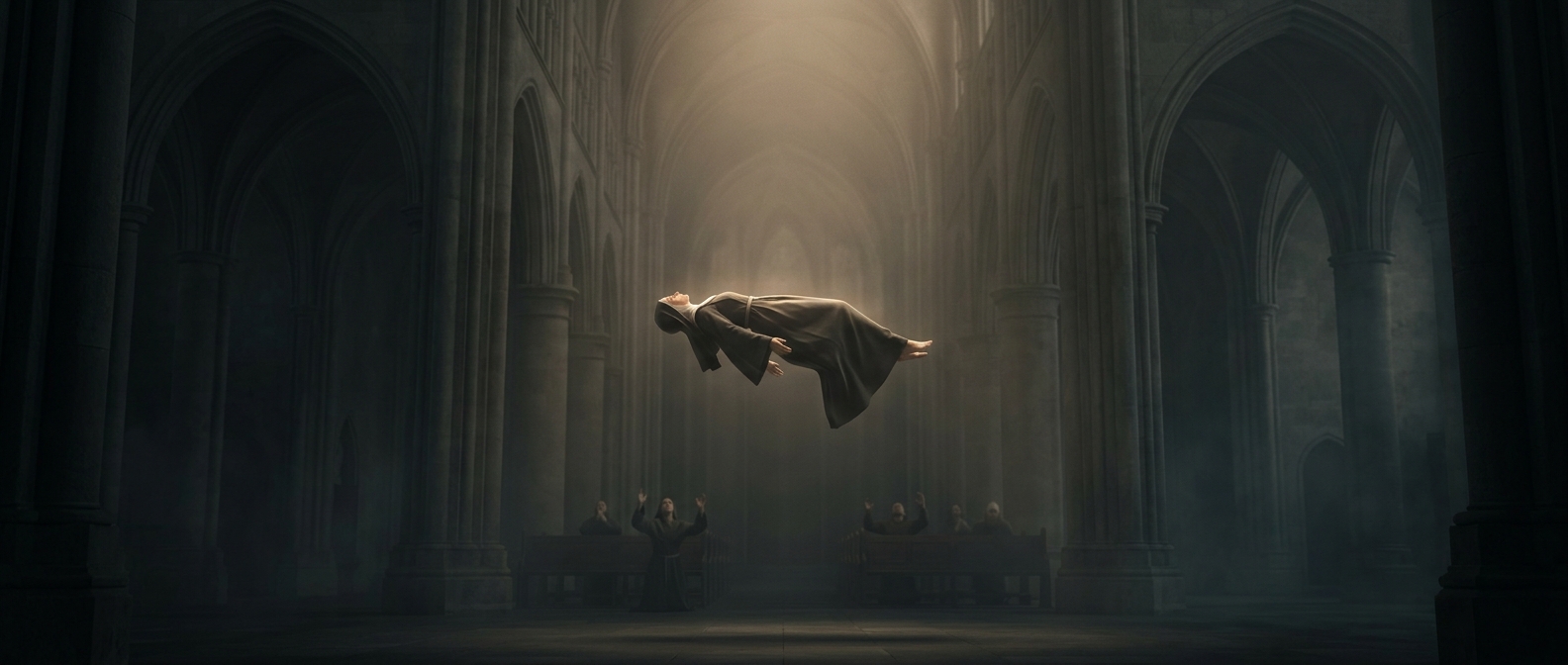
Teresa of Ávila’s reported levitations belonged to a larger pattern of intense prayer experiences she described as raptures: moments when, in her account, the soul was drawn so powerfully toward God that ordinary awareness and bodily control seemed to recede. The startling part was not simply that she felt transported. Her body could become conspicuous to everyone around her, turning a private spiritual experience into a practical problem during worship.
Why the Episodes Troubled Her
In a sixteenth-century convent, religious devotion was lived in a close community, under shared routines and the eyes of fellow nuns. A body rising or becoming difficult to control during Mass could interrupt prayer and attract attention. Teresa’s reported embarrassment reflects a tension in mystical life: an experience understood as sacred might still feel unwelcome when it exposed the person having it.
Her request that the other nuns hold her down also shows how she tried to respond. Rather than treating the episodes as a performance or seeking attention, she wanted help keeping her body in place. The community’s role was therefore practical as well as spiritual: the sisters could steady her when she feared she might rise.
What “Levitation” Meant in Her Story
Teresa’s account is best understood as part of the religious language and experience of her time, not as a claim that can be settled by describing the physics of flight. Christian mystics used “rapture” for an overwhelming experience of union with God; reports of bodily movement made that inward experience visible and unsettling. For Teresa, the remarkable feature was its involuntary character: she described being carried beyond her control, not choosing to demonstrate a miracle.
That detail changes the familiar image of a saint floating serenely above the ground. In Teresa’s telling, the moment called for other people to intervene—sometimes by holding her firmly through the very service in which she was trying to pray.