A Reported Wonder Beside a Scholastic’s Desk
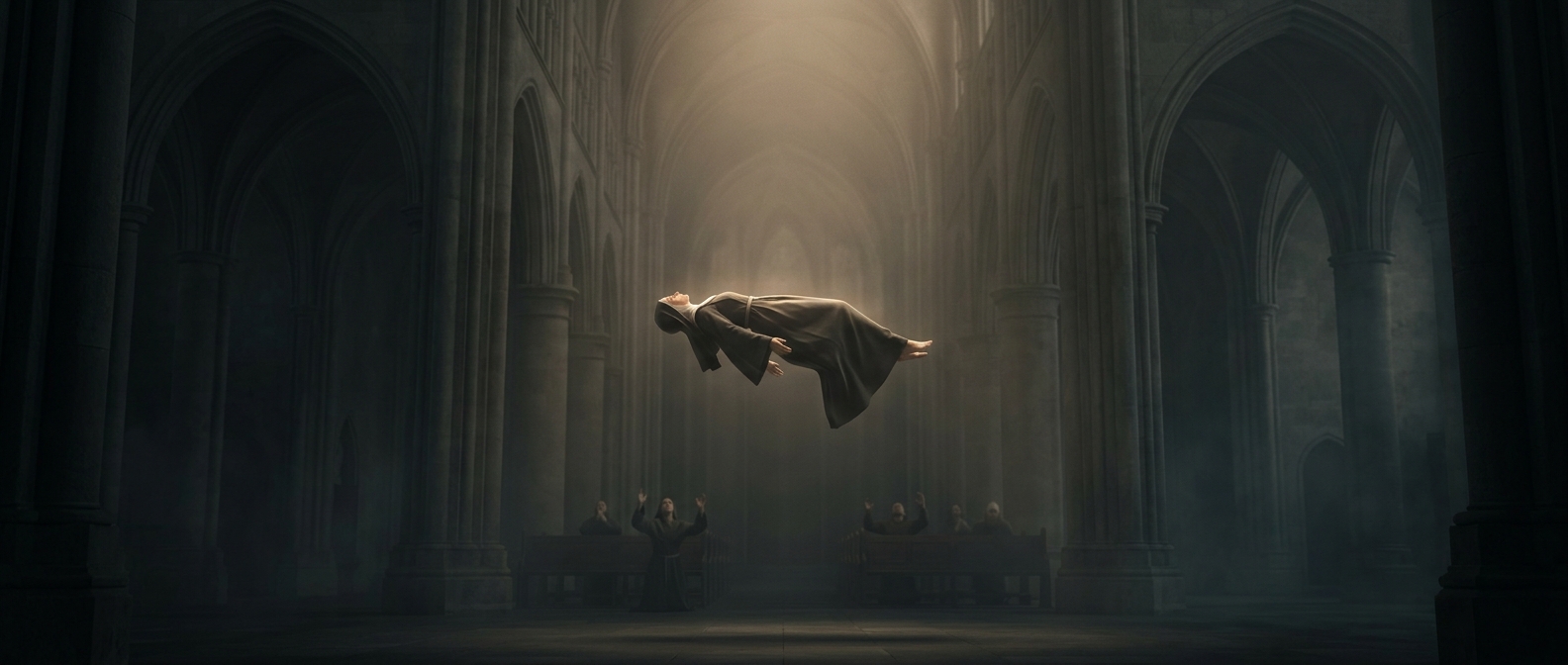
Stories of Thomas Aquinas rising from the ground during prayer set an extraordinary physical event against an intellectual reputation: he was known above all for carefully reasoned theology. In the accounts, the contrast is the point. The scholar whose work made difficult ideas orderly was also portrayed as absorbed in prayer beyond ordinary awareness.
What the Story Meant
In medieval Christian writing, reports of a holy person’s body behaving unusually could signal intense devotion or divine favor. The reported floating was presented as an outward sign of an inward experience, not as an argument Aquinas used to prove a theological claim. His ideas stood or fell through reasoning; the prayer story belonged to a different kind of account, one about holiness and contemplation.
That distinction helps explain why such a tale could accompany the image of a practical, disciplined thinker without replacing it. The story invites readers to see intellectual work and prayer not as opposites, but as parts of one life: rigorous thought in public, profound absorption in private. Its enduring force lies in that unexpected pairing—not in making levitation the measure of Aquinas’s importance.