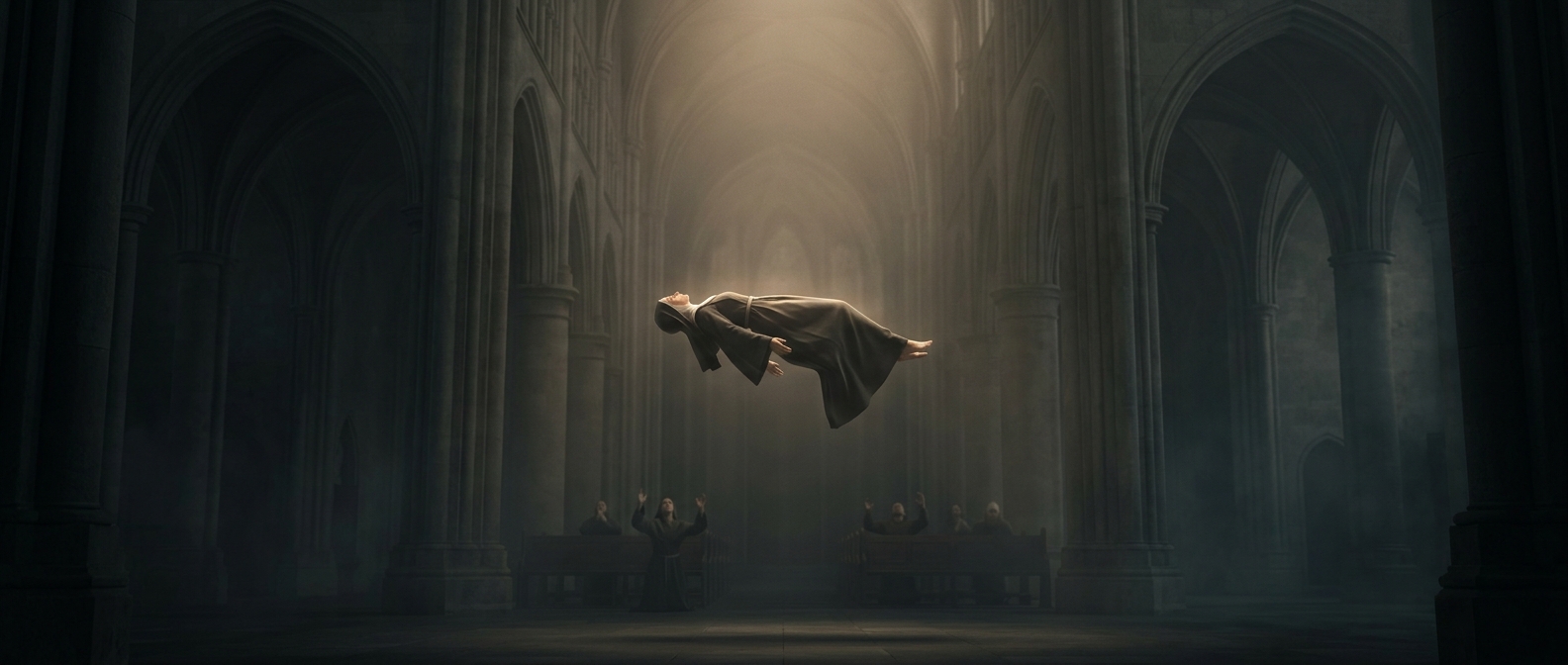
A reported rise during religious ecstasy
Accounts of Douceline of Digne describe a striking reaction to sacred language: hearing a holy word—or even an ordinary mention of God—could send her upward. “On command” can make this sound like a feat she deliberately performed. The reports instead present it as an involuntary bodily response to intense religious feeling.
Why words mattered in the story
For a deeply devout listener, a reference to God was not merely a sound; it called attention to the presence and importance of the divine. In accounts of mystical experience, overwhelming devotion could be described through visible bodily changes. Douceline’s reported rising turned an inward state—religious absorption—into something witnesses could see.
That distinction matters. The story does not describe a repeatable technique, with Douceline choosing a cue and controlling the result. It depicts a response that others said could happen when sacred language reached her.
From unusual event to evidence of holiness
Medieval accounts of holy people often used extraordinary bodily episodes to make spiritual intensity legible to an audience. A reported levitation could therefore do more than startle: it offered a vivid sign, within the story’s religious framework, of how completely a person was absorbed in devotion. The episode also made words themselves seem powerful—not because every mention of God had the same effect, but because the account portrays Douceline as unusually susceptible to their meaning.
The detail worth remembering is the trigger: not a ritual apparatus or a carefully staged performance, but language. In the account, even a casual reference to the divine could abruptly reveal the force of Douceline’s devotion.