Why streetlights are hard to sell one person at a time
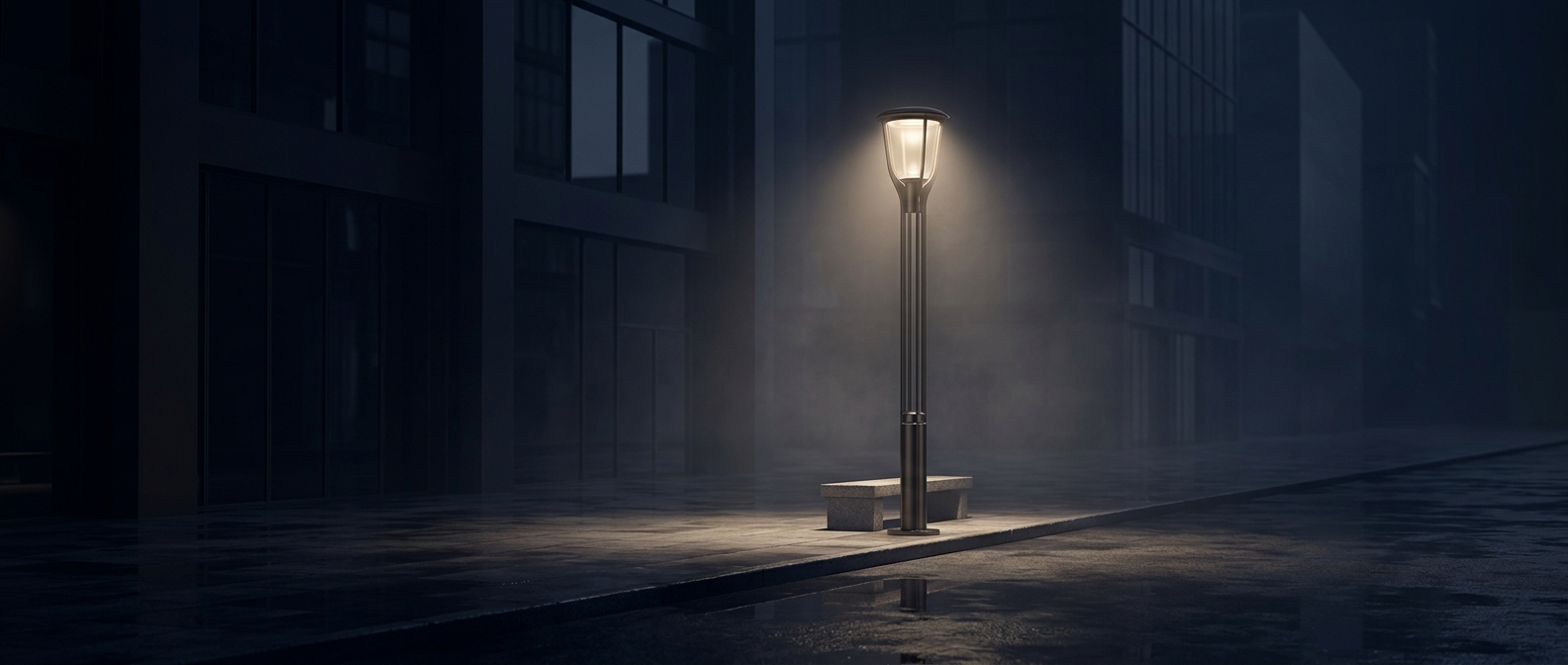
A streetlight illuminates a patch of sidewalk for everyone nearby at once. If one pedestrian uses that light to see a curb, the light remains available to the next person; one person’s use does not meaningfully reduce another’s. Economists call this nonrival consumption.
It is also difficult to exclude people who have not paid. A city cannot readily switch off a lamp whenever an unpaid passerby walks beneath it. That makes streetlighting a public good: a service whose benefits are shared and whose users are hard to charge individually.
The free-rider problem—and the city’s solution
If a private provider had to collect payment from each person who benefited, many people could wait for others to pay while still using the illuminated street. This is the free-rider problem. It can leave a service underprovided even when residents collectively value it, because no single user has enough reason to cover the cost alone.
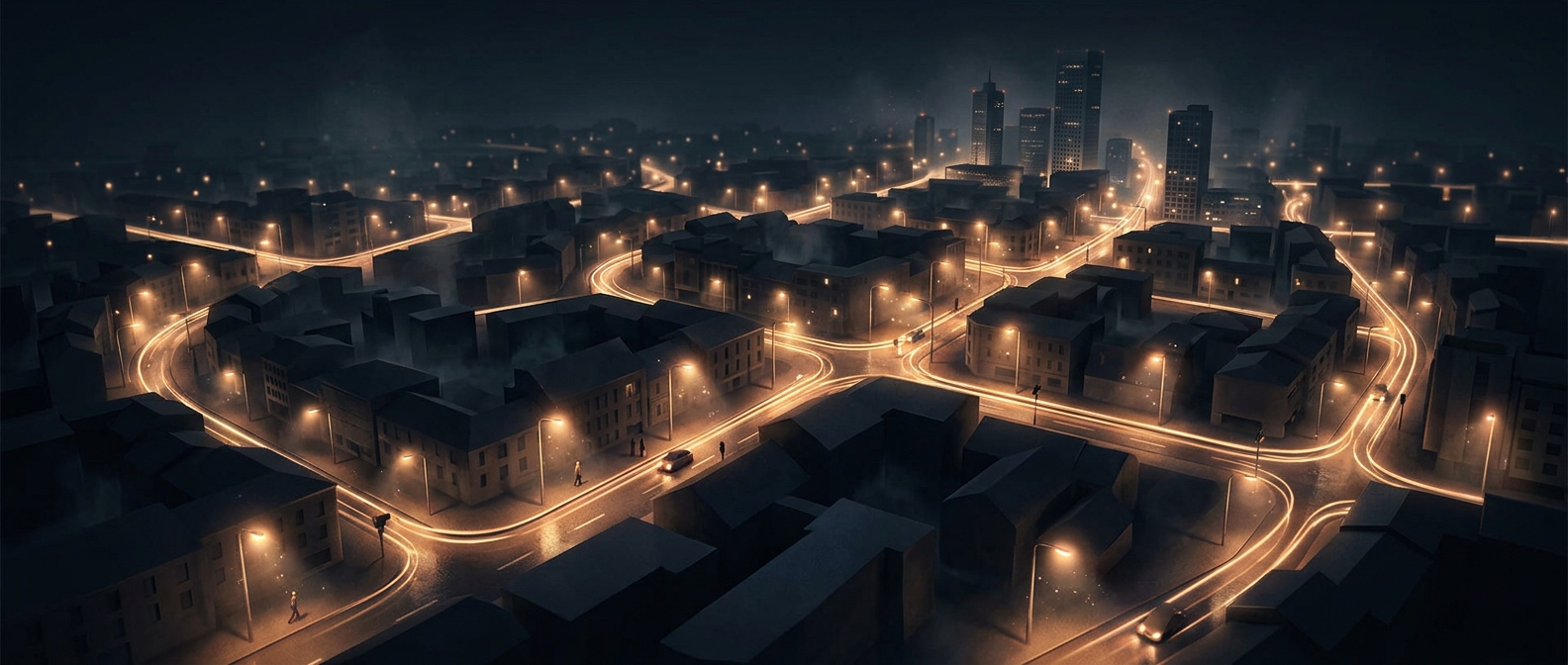
Cities address that mismatch by funding streetlights collectively, usually through public budgets supported by taxes and other revenues. The decision shifts from asking each pedestrian to buy a moment of light to deciding whether the neighborhood’s combined benefits justify the costs of installing, powering, and maintaining lamps.
That does not mean every street needs the same lighting. Public provision still involves choices about where lights go, how bright they are, and how much upkeep to fund. The key economic point is that the light can be shared, while the bill must still be paid. A lamp on a neighborhood corner turns collective funding into a benefit that each passerby can use without diminishing it for the next.