A bottle can read as a comment on the meal
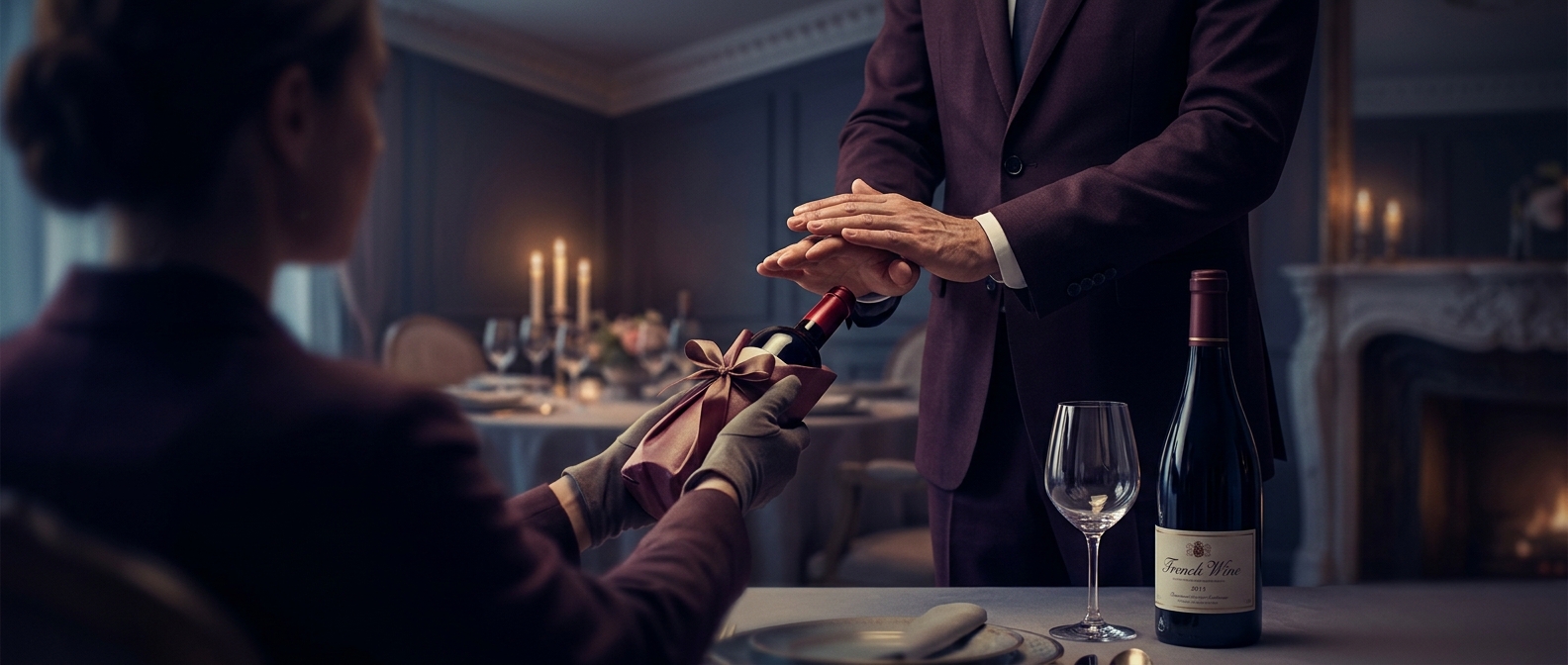
A dinner host often chooses the wine to suit the food and the occasion. Arriving with another bottle can therefore create an awkward question: should it replace the wine already chosen, be opened alongside it, or be saved for later? Even when the guest means only to be generous, the gift may seem to second-guess the host’s plans—or suggest the meal needs an improvement.
That is why wine is not always treated as a neutral present at a French dinner. It is closely tied to the meal itself, so bringing it can feel more like making a contribution to the menu than offering a simple thank-you.
Choose a gift that leaves the menu alone
Flowers or chocolates are less likely to interfere with what the host has planned. They can be received as a separate gesture rather than an implicit request to change what will be served. A small, thoughtfully chosen item is usually more important than its price.
Custom varies by household, and a host may be delighted by a bottle—especially if they know the guest’s taste or have asked them to bring one. When in doubt, ask beforehand. Otherwise, a non-food gift avoids making the host decide, at the doorway, whether your wine belongs on the table or in the cellar.