The boundary is part of the attraction
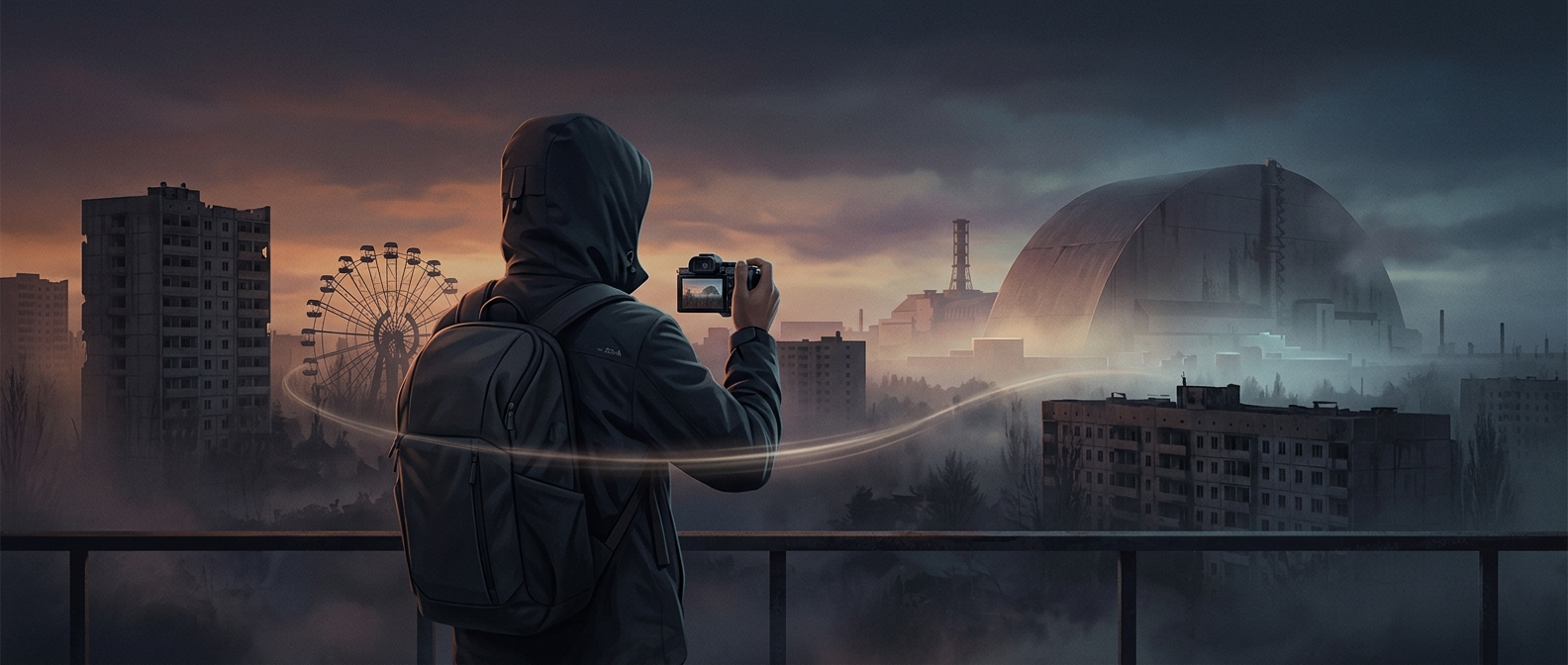
A nuclear wasteland is not simply a place with a grim past. It is a place where the past can seem physically present: in abandoned buildings, altered landscapes, or signs marking areas people once could not enter. Visiting turns an abstract catastrophe into a setting the body can register—quiet, empty, and close enough to explore.
That closeness is paired with a boundary. A guide, a permitted route, or a controlled return journey signals that the visitor is not facing the disaster on its original terms. The result is a psychological tension: the place feels forbidden, while the visit feels manageable.
A brush with danger, at a distance
People can be drawn to this kind of trip by curiosity about what happened and what remains. But curiosity alone does not explain the particular pull. The controlled setting lets visitors approach a threatening subject without surrendering the sense that they can leave. The experience combines emotional proximity with practical distance.
That arrangement resembles a common way people engage with fear: they seek an intense encounter while keeping an exit in view. Here, the “thrill” need not mean excitement or pleasure. It can be unease, fascination, or the shock of seeing an ordinary landscape marked by extraordinary events.
The visit changes what the past feels like
Walking through a damaged or emptied place can make catastrophe harder to treat as a distant statistic. The visitor has to interpret visible traces, but those traces do not explain themselves. A guide or the site’s history can connect what is seen to the decisions and lives behind it, shifting attention from eerie scenery toward human consequences.
The return ticket matters, too. Leaving restores the ordinary world, but the contrast can sharpen the memory of the place: it was possible to stand near a history of mass danger and then cross back into everyday life. That uneasy crossing—not danger alone—is what makes atomic tourism so compelling to retell.