Why an Ancestor’s Place Can Feel Different From a Name
A family tree is usually encountered as a chain of names, dates, and documents. Visiting a town, farm, cemetery, or street associated with a relative adds physical surroundings to that record. The traveler can see the distance between places, the shape of the land, and the buildings or landscape that may have framed an ancestor’s daily life. Those details give the past a setting, even when they cannot reveal exactly what that person saw or felt.
The Mind Turns Evidence Into a Story
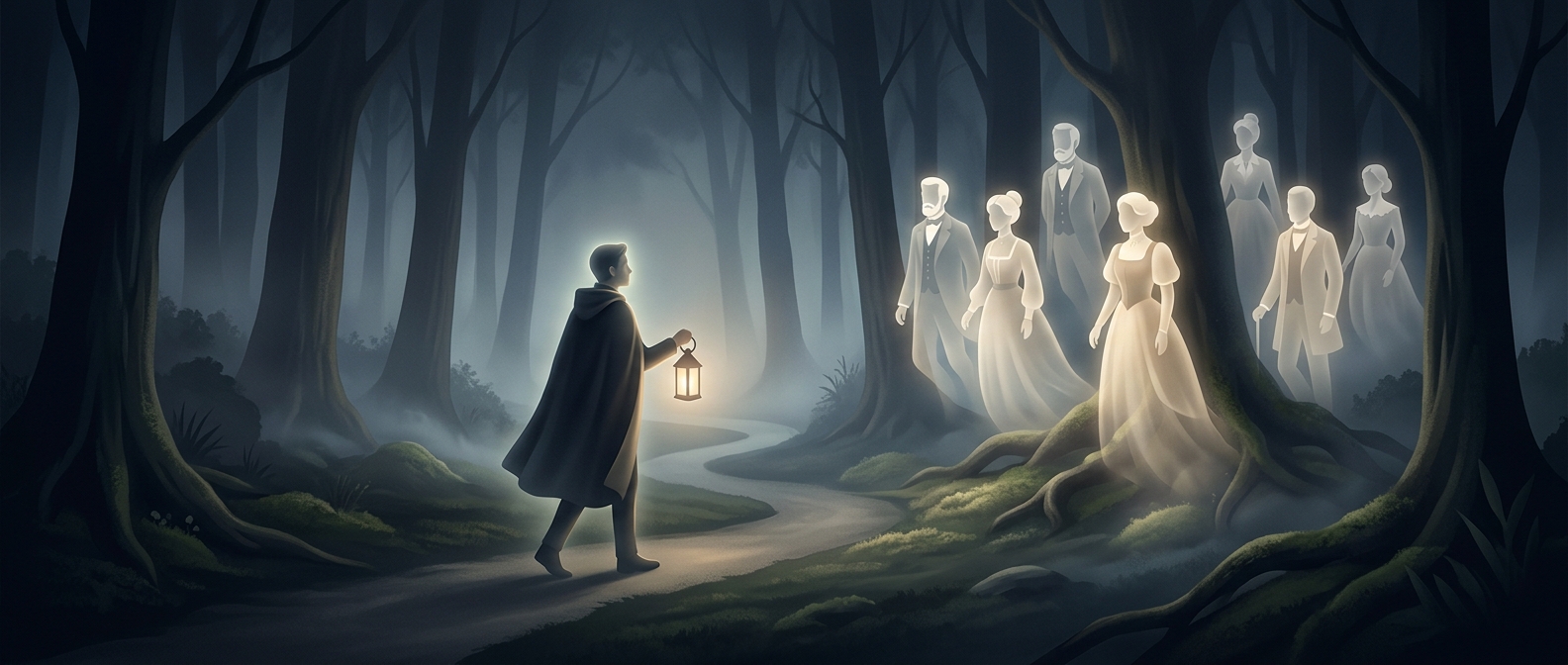
People make sense of family history by fitting fragments into a narrative: someone moved, worked, married, or left. A journey can make that narrative easier to imagine because it supplies concrete cues. A road on a map becomes a route through actual terrain; a place name becomes somewhere a person can stand. The emotional force comes partly from that shift—from knowing that a relative existed to picturing the world in which they lived.
The visit does not make a traveler’s interpretation certain. A landscape may have changed, and a surviving building may not be the one an ancestor knew. But the trip can sharpen questions and connect records to a real geography, turning research into an experience rather than a list of findings.
What the Traveler Is Really Paying For
Genealogy tourism is not simply sightseeing with a family name attached. The cost may cover travel to an ancestral region, time in local archives, or help locating relevant records and places. Its payoff is personal rather than a guaranteed discovery: a stronger sense of how family history fits into a broader story of movement and belonging.
Even an ordinary detail—a hill between a village and a neighboring town, or the distance from a home to a cemetery—can change how a family record reads. The ancestor remains a person known through incomplete evidence, but the past is no longer only on the page.