How a family turns small differences into roles
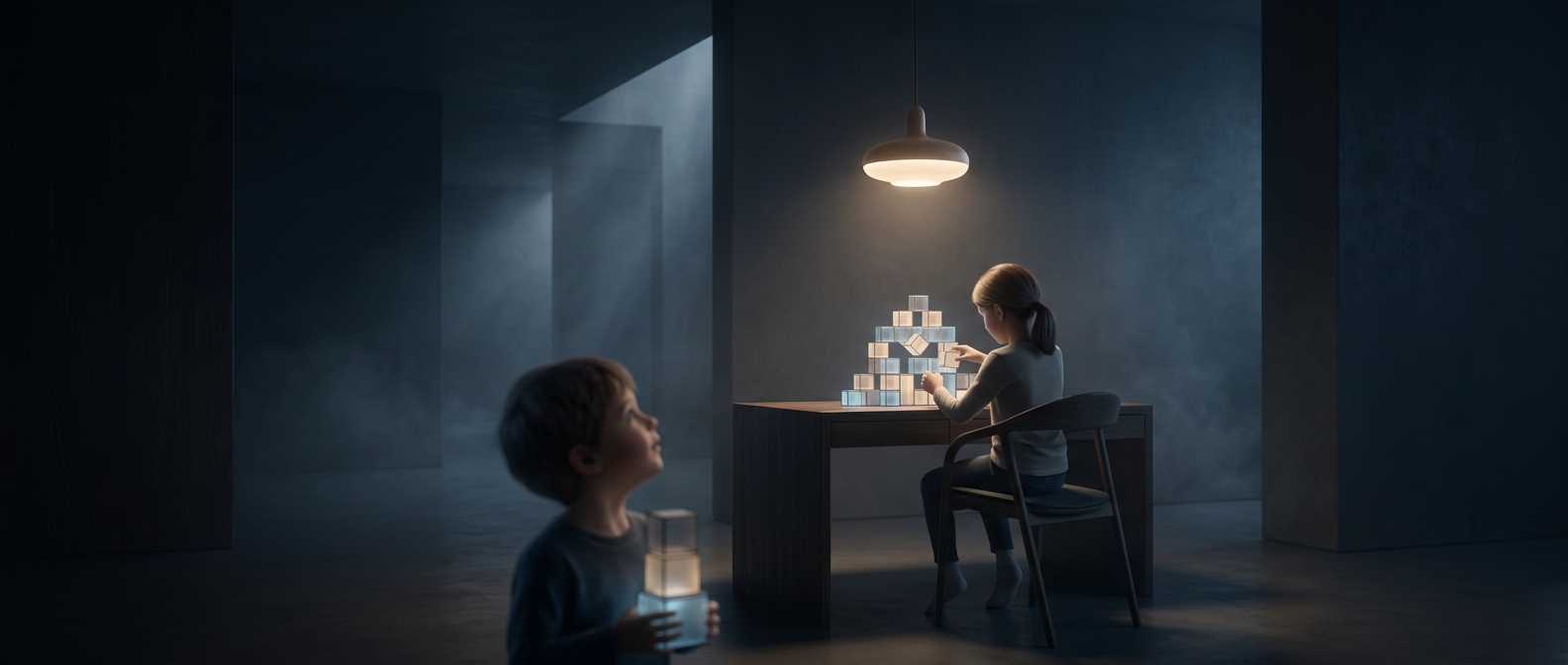
A child who likes drawing and a sibling who prefers taking things apart may begin with ordinary, overlapping interests. But once adults repeatedly describe one as “creative” and the other as “hands-on,” those examples become a family shorthand. The label makes each child easier to distinguish, even when it leaves out everything that does not fit.
This is a kind of social categorization: people sort complex personalities into simple, memorable types. In a busy household, the shorthand can be convenient. It can also change what parents notice. A new sketch may confirm that one child is artistic; a practical suggestion from the other may reinforce the opposite role. Similar behavior can be overlooked or interpreted differently depending on who does it.
Why children may lean into the distinction
Children learn who they are partly through how other people respond to them. If a child is regularly praised for being sensible, adults may turn to that child to solve problems. The child gets practice in that role—and may discover that being dependable earns attention. The sibling, meanwhile, may get more encouragement for imaginative ideas.
That pattern does not mean children are simply performing for their parents. Temperament, interests, and circumstances matter too. But repeated expectations can make one path easier to follow than another. A child who is treated as “the responsible one” may hesitate to ask for help; the “funny one” may feel pressure to keep entertaining everyone.
The cost of a neat family story
Sibling differences are real, but family labels can make them seem sharper and more permanent than they are. They may also obscure a child’s changing interests or a quality both siblings share. Leaving room for exceptions—praising a specific action rather than defining a whole personality—helps keep a useful observation from becoming a job a child feels obliged to keep doing.