Programming the Altair meant setting bits by hand
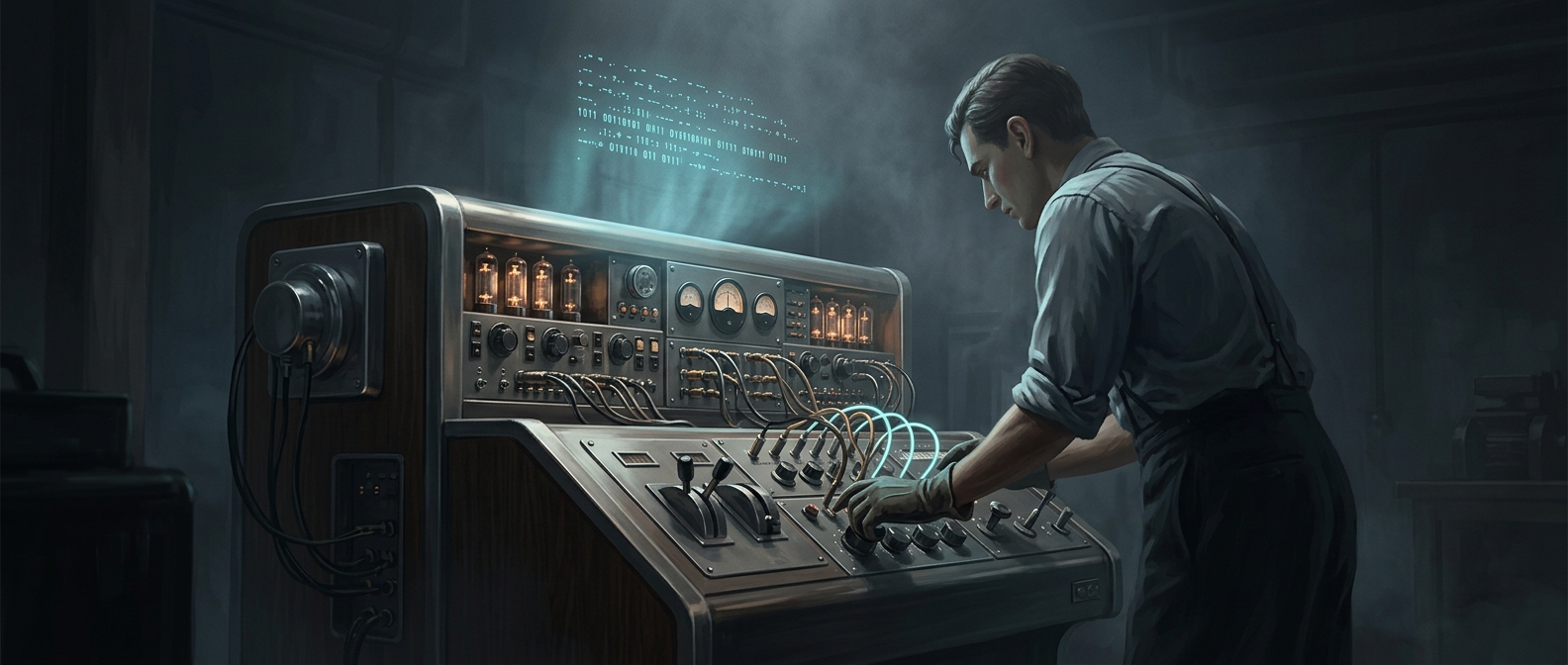
The Altair 8800’s front panel was not just a substitute for a screen. It was a direct control surface for the computer’s memory and processor. A row of switches let a user represent a binary value—zeroes and ones—and select where in memory to put it. Lights showed the selected value or address, and other switches let the user examine or change memory and start the processor.
A short program could therefore be entered one machine-code instruction at a time. Machine code is the numeric form of instructions the processor can execute directly. Instead of typing a command and seeing a line of text, the user had to translate the program into bit patterns, set the switches accordingly, and check the lights for feedback. A single mistake could send the processor through the wrong instructions.
Why a computer started this way
The Altair arrived in 1975 as a kit built around a microprocessor, a compact chip that could perform the computer’s calculations and control tasks. A keyboard and display were not built in; they would have required extra hardware. The switches and LEDs offered a comparatively simple way to communicate with the machine before a user added peripherals.
That made the front panel useful for more than awkward data entry: it could help get the computer started. Once users attached equipment such as a terminal—which provided a keyboard and a text display—they could interact in a more familiar way and run software written in higher-level languages. But the first exchange with the machine could still be a sequence of carefully set switches and blinking lights. The Altair made computing accessible to hobbyists while making its underlying binary logic unusually visible.