The tiny axle problem behind Hot Wheels’ speed
A toy car can look sleek and still crawl. If its wheels rub against the body or its axles drag, friction quickly eats up the little push it gets from a sloped track. That was the problem Hot Wheels set out to solve: the cars needed to roll fast enough to make track racing feel exciting, rather than merely resemble real cars.
The redesign focused on the parts that meet the track. Engineers worked on the axles and wheels so the wheels could turn with less resistance and stay aligned as the car rolled. Less friction meant more of the car’s starting energy went into forward motion instead of being lost as heat and rubbing. On a steep orange track, that difference could carry a small car much farther and faster.
Speed changed what a toy track could do
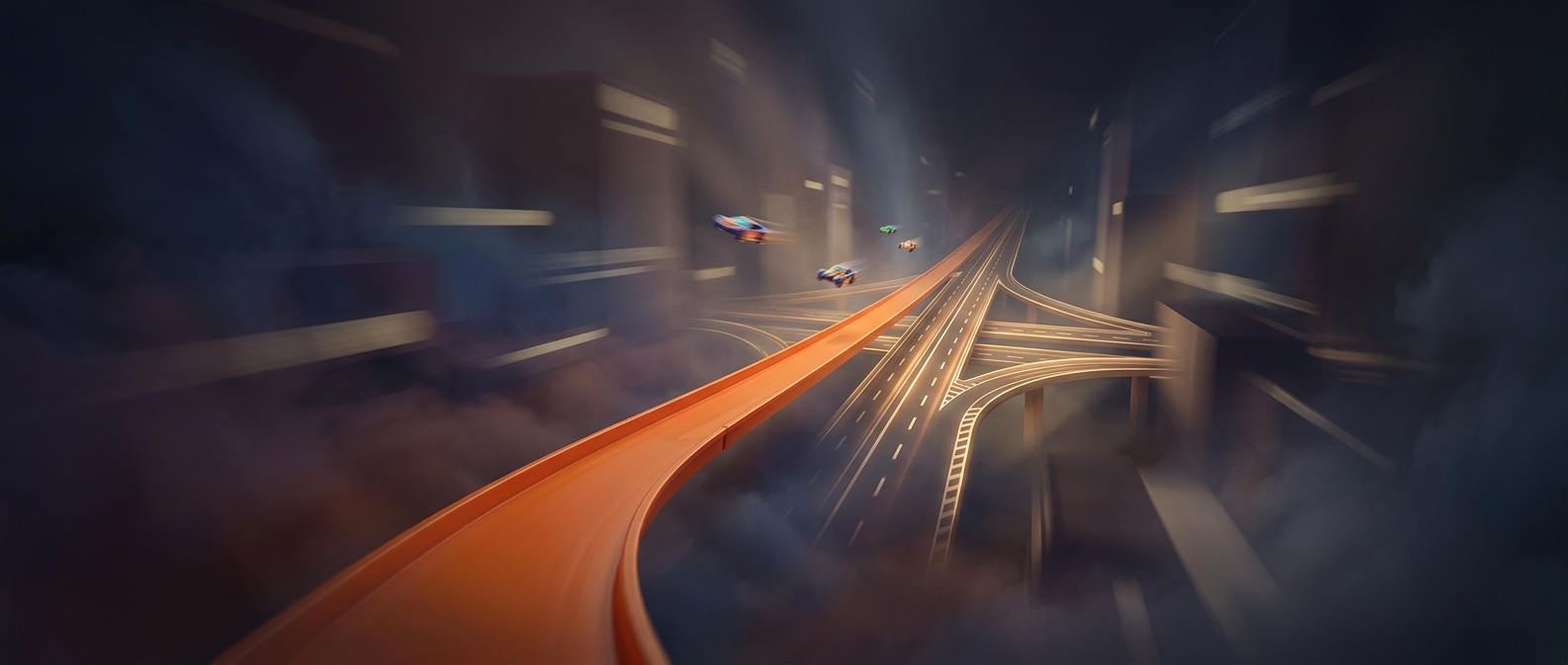
A faster car made the track itself part of the spectacle. Instead of simply guiding a slow-moving miniature around a course, the track could send it through curves, drops, and other demanding sections. The car’s momentum—the energy it carries while moving—helped it blast through those features. With enough speed, it could even leave the track, turning a crash or flight into part of the play.
That was the important design choice: Hot Wheels were built not just to look like cars, but to behave like racers. Their low-friction running gear made the bright track feel like a place where something dramatic could happen, even when the car was only a few inches long.